As part of my ongoing journey to weave photography with the soul of historic art movements, I’ve now stepped into the second chapter—‘Abstract’. This leg of the project draws not just from the eye, but from the deeper currents of modernism where form breaks free from formality.
To step back a bit—abstraction, in its purest sense, is the poetic act of removing the visible to reveal the invisible. It detaches art from the duty of representation, letting emotion, rhythm, and inner vision take center stage. You’ll see its early tremors in Impressionism, Post-Impressionism, and Cubism—each movement a bold whisper that art need not mimic life to feel alive.
If we must trace this lineage to a single, seismic figure, it would be Wassily Kandinsky, whose 1912 works ignited the non-representational revolution. His canvases sang in color and shape, untethered from object or form—a freedom I now seek through the lens.
- shape, form, color and line creating a composition which may exist with a degree of independence from visual references in the world;[1]
- pulling a depiction of imagery away from any literal, representational reference points;
- isolating a fragment of a scene in order to remove its inherent context from the viewer;
- purposely staged to create a seemingly unreal appearance from real objects;
- if you look at a photo and there’s a voice inside you that says ‘What is it?’….Well, there you go. It’s an abstract photograph.”[2]
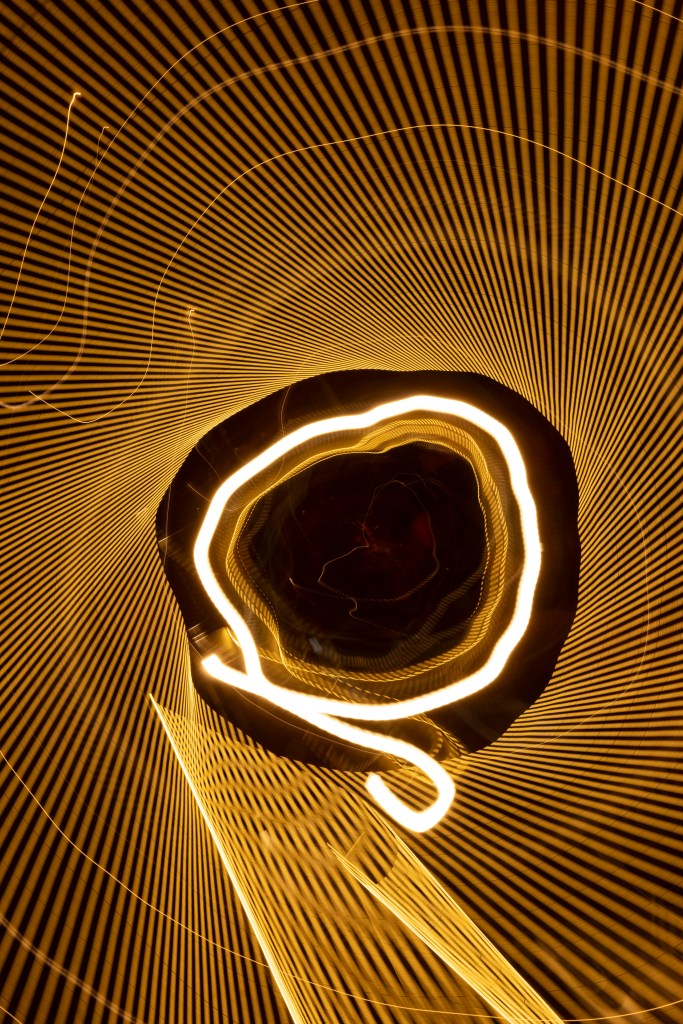
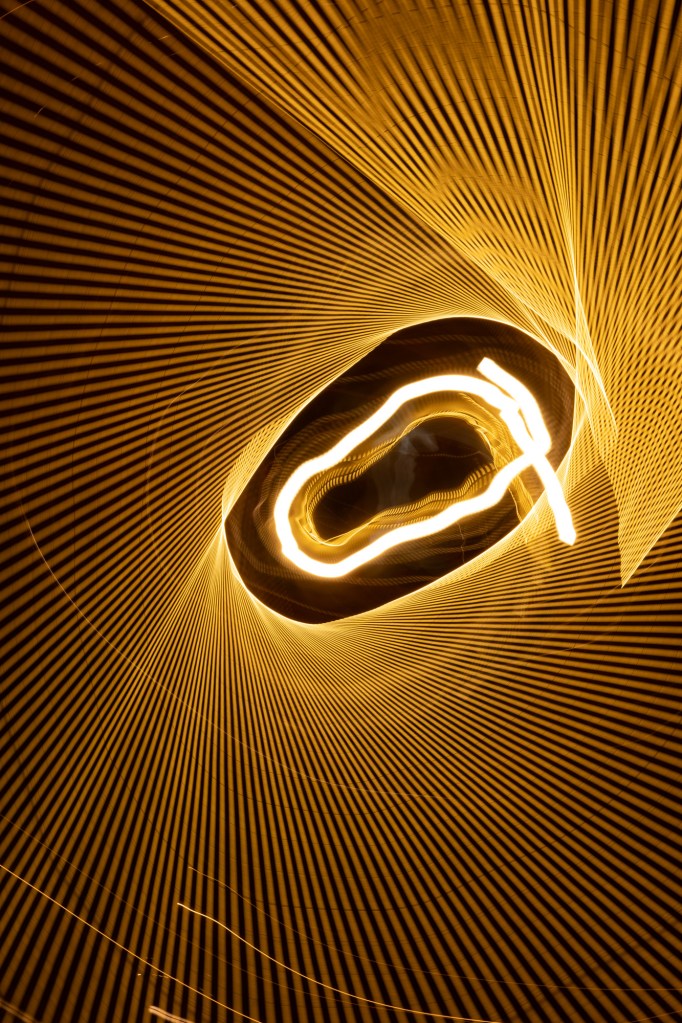
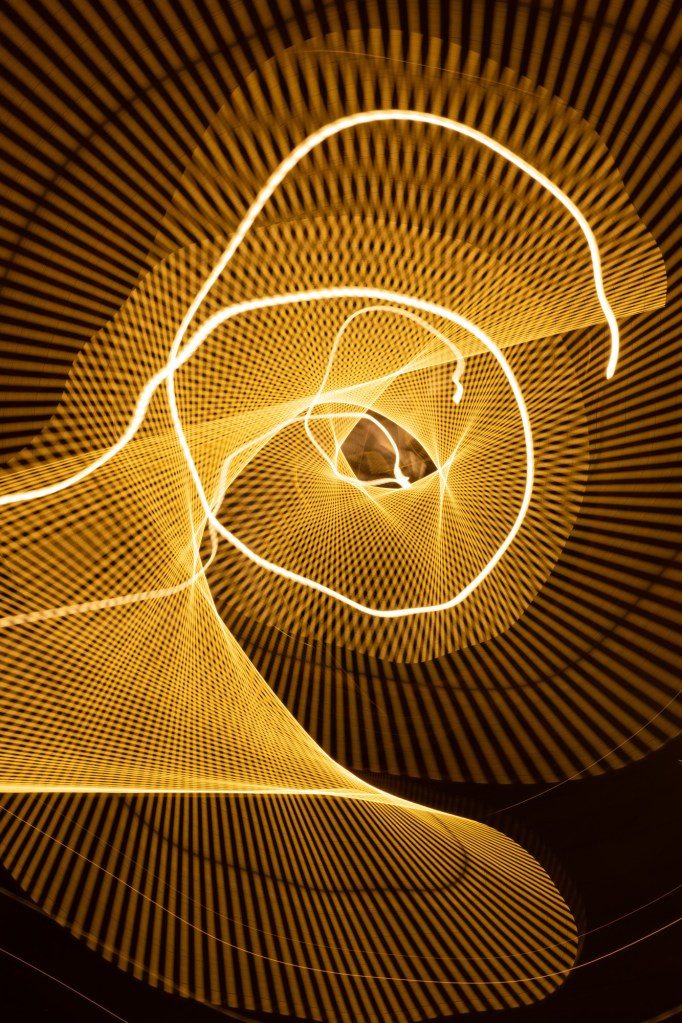
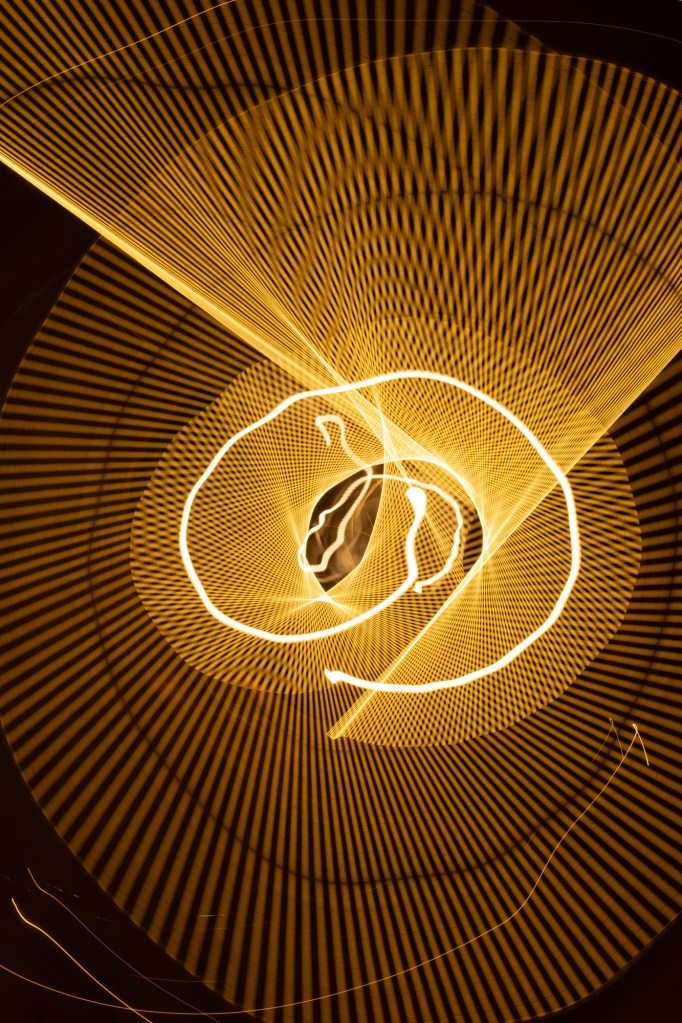
Bending the Light (2025)
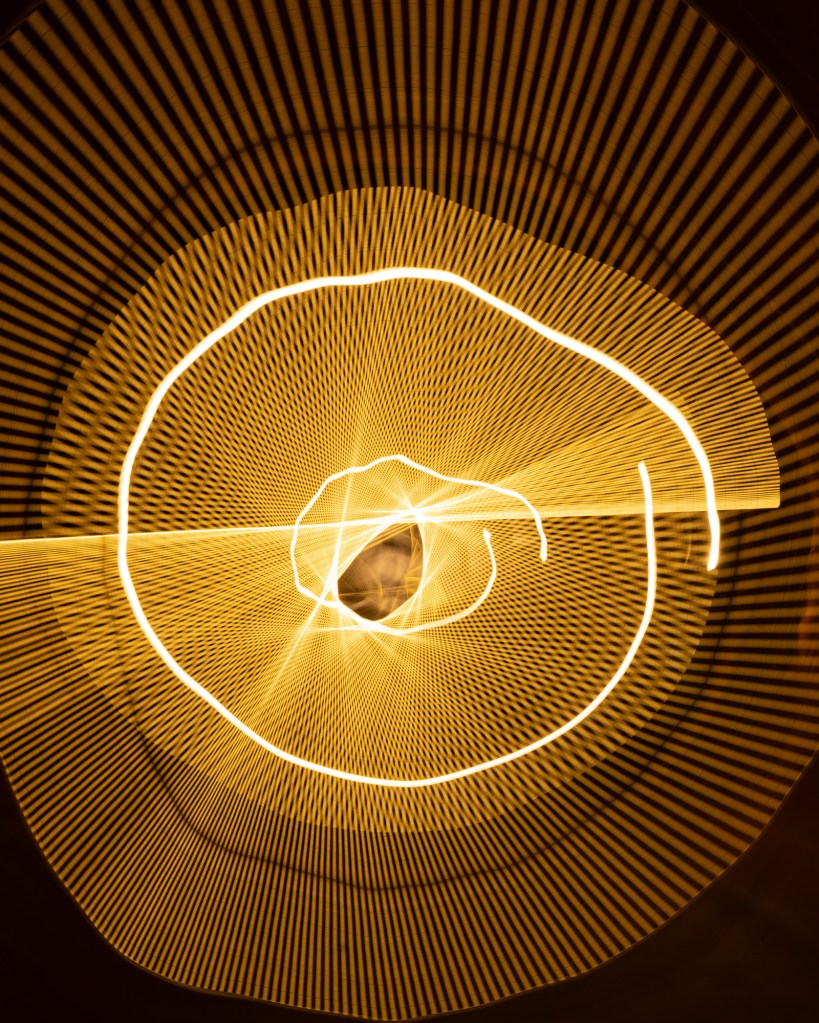
This series is rooted in the spirographic drawings many of us made as children—simple tools, repetitive motion, and the quiet satisfaction of watching patterns emerge. That playful memory is revisited here using light instead of ink. Through intentional camera movement and long exposure, the illuminated décor of a resort becomes a surface for drawing in space.
As the camera moves, light traces spirals and looping paths, forming layered patterns that feel both precise and fluid. Control and chance work together, much like those early drawings where repetition slowly shaped form. By replacing pen with motion and paper with time, the work treats light not as something that reveals, but as something that actively draws—turning a familiar childhood gesture into an abstract visual experience.

Residual Flow (2025)
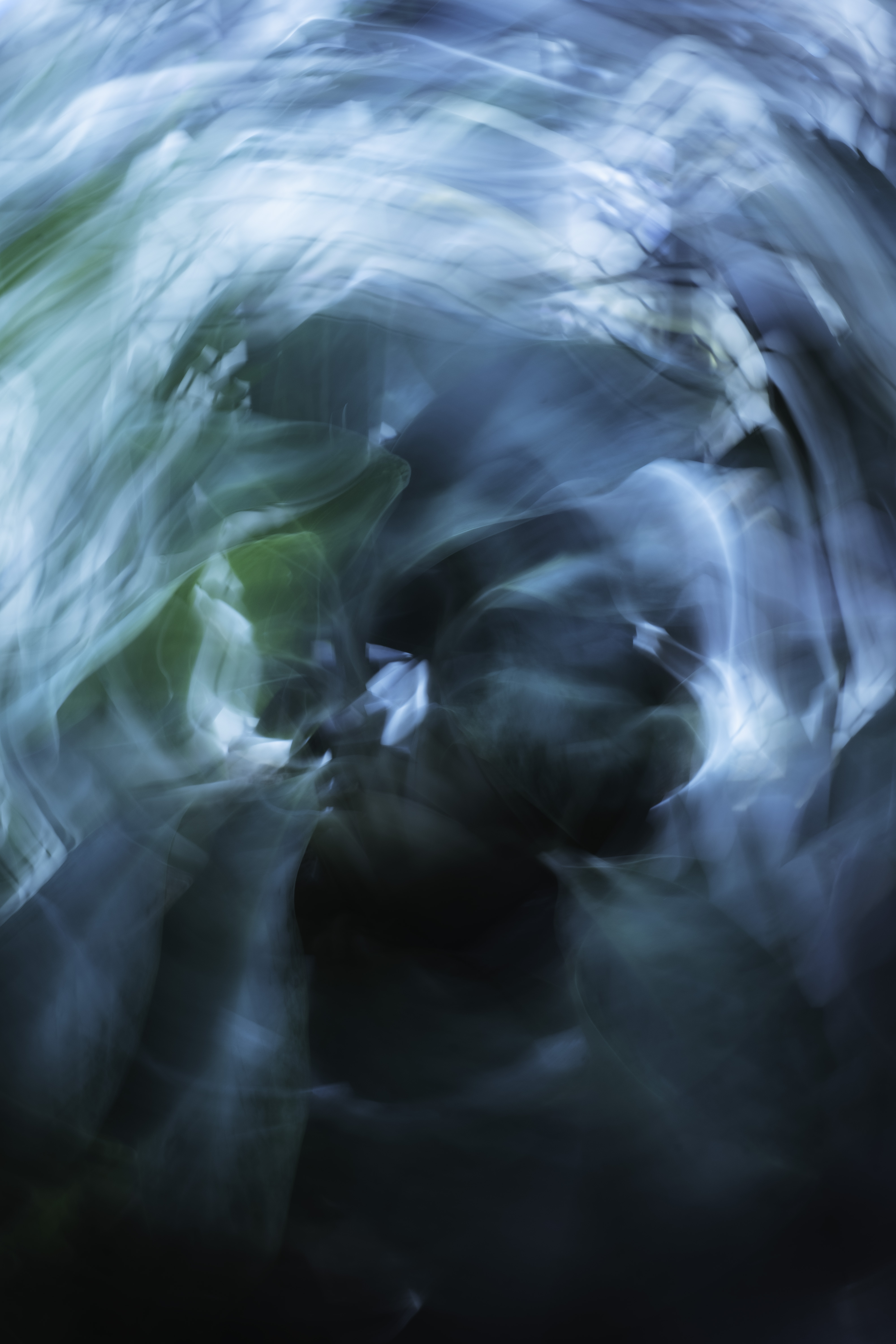
In this series, garden plants act only as a point of origin. Through intentional camera movement and long exposure, familiar green leaves dissolve into swirling fields of light and rhythm, shedding their botanical identity. The camera functions as a gestural tool, allowing time and motion to accumulate within the frame rather than describe form.
Subtle post-processing toward cooler tones introduces turquoise and sea-green hues, shifting the imagery from land toward an oceanic register. What emerges resembles a submerged force—suggestive of a tide or a gathering wave—where the natural world is felt rather than seen. By transforming the recognisable into the abstract, the work invites viewers to experience nature as energy, memory, and movement, challenging photography’s role as mere representation.
The Green Eye of the Forest (2025)
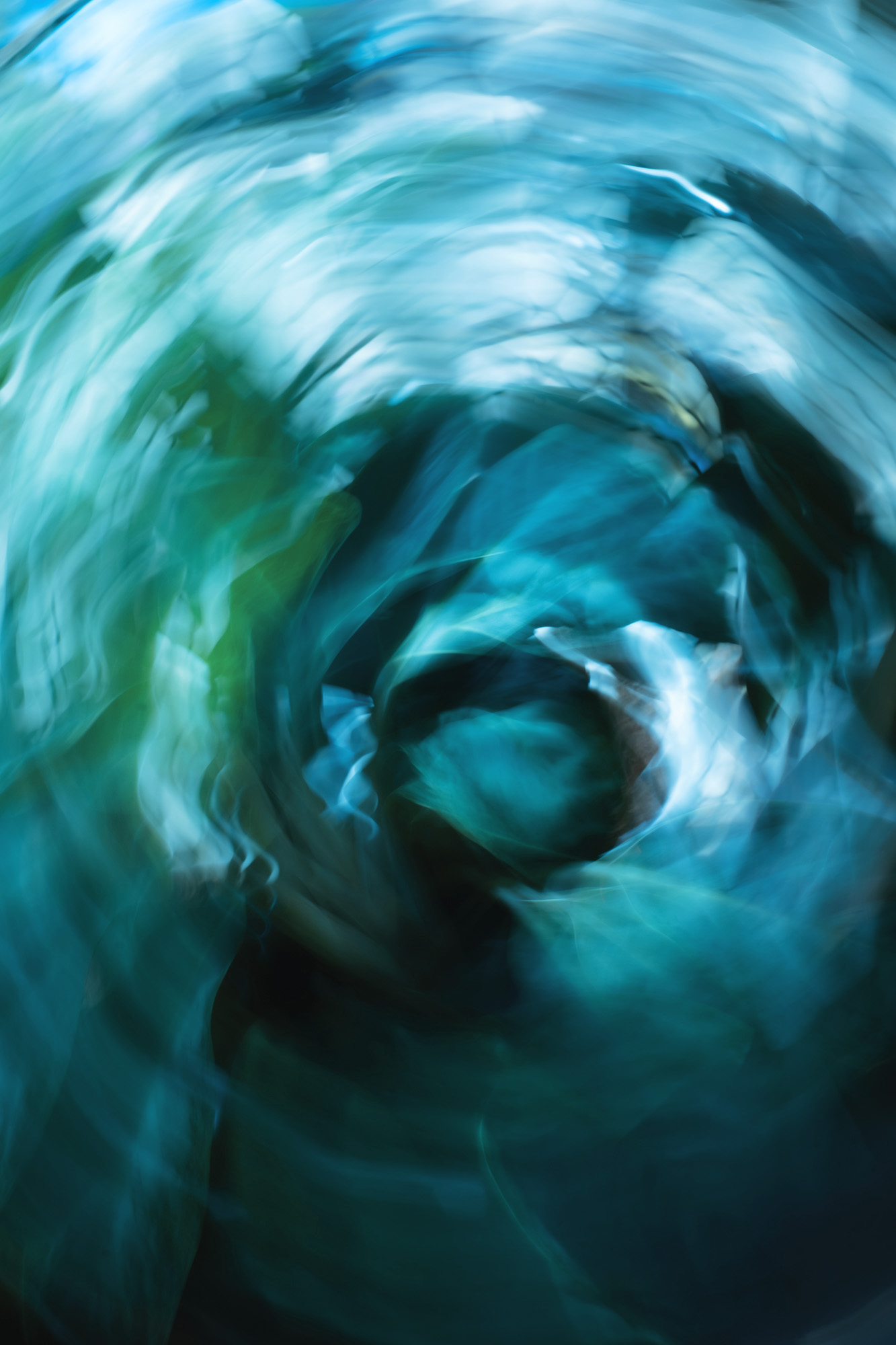
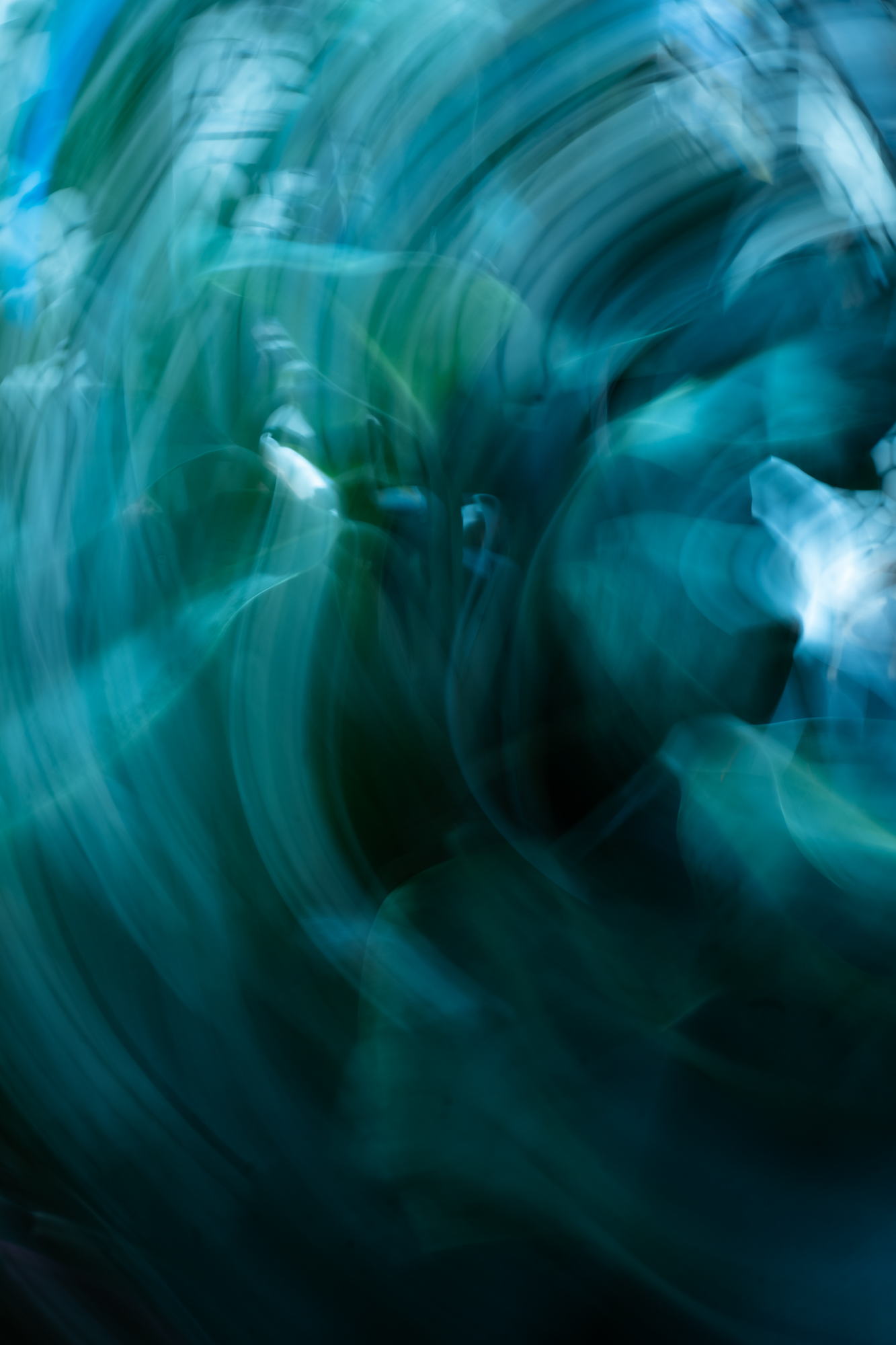
In this series, the forest ceases to be mere scenery and becomes sentient—a living consciousness with a gaze of its own. Through deliberate motion and slow shutter experimentation, the camera transforms into an extension of perception, tracing the pulse of the woods as circular currents of green and light.
Each frame embodies the anatomy of an unseen eye—the iris formed by the dense foliage, the pupil by the darkened core within. This “eye” is not human; it is ecological. It observes quietly, recording every intrusion and every act of renewal. In these spirals of motion lies the suggestion that nature, too, watches, responds, and remembers.
The Green Eye of the Forest invites reflection on our fragile coexistence with the natural world blurring the line between observer and observed.


The Flying Demon (2025)
In this abstract blur of motion, the familiar form of palm trees transforms into something otherworldly—a flying creature born of chaos and imagination. Captured using intentional camera movement at a slow shutter speed, the image morphs into what feels like a flying beast—its jaws wide open, ready to consume its prey. What fascinates me most is how a calm tropical scene can, through motion, reveal a hidden, darker energy.
It’s not just about distortion—it’s about perception. Sometimes the world isn’t changing; it’s just us, shifting how we see it.


The Spaceship (2025)
The ordinary becomes extraordinary when perception is rearranged.
The Spaceship began as a straightforward photograph of my own apartment building. Through a process of duplication, inversion, and mirroring—assembled in a group of four—the structure is reborn as a vast, otherworldly vessel. This transformation is not digital manipulation but a reorientation of perspective, using photography itself as a tool for imaginative reinvention.
Inspired by a lifelong fascination with science fiction and the orbital habitats of series like The 100, the work explores how architecture can transcend its earthly purpose. The familiar becomes speculative, the static becomes cinematic.


At its heart, The Spaceship reflects the elasticity of vision: how perception, once untethered, can turn a home into a starship and memory into myth. It is an experiment in seeing—where the real and the imagined orbit each other in delicate equilibrium.
Yellow Boots (2025)
This work began with the ordinary—a solitary lamp post, its faint light interrupted by a fallen square object, a quiet rupture in an otherwise unremarkable frame. Yet within this interruption lay potential: the moment where the mundane begins to fracture, where seeing turns into seeking.
Through processes of duplication, inversion, and spatial tension, the image was reimagined into a dialogue of opposites—illumination and absence, order and desire, precision and ambiguity. The transformation was not merely visual but psychological: geometry became seduction, light became touch, and the fallen square—once inert—became the site of emotional gravity.
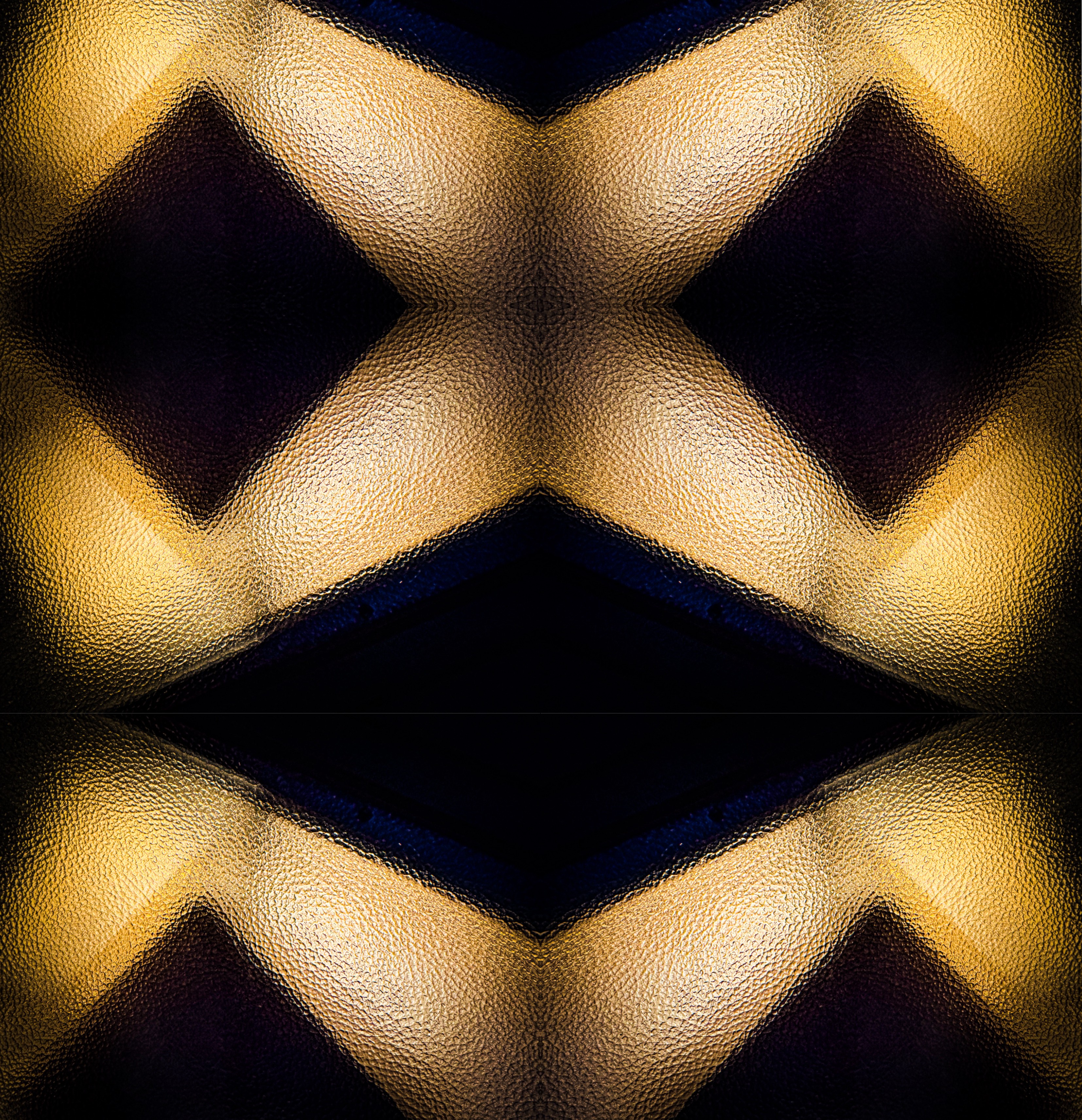
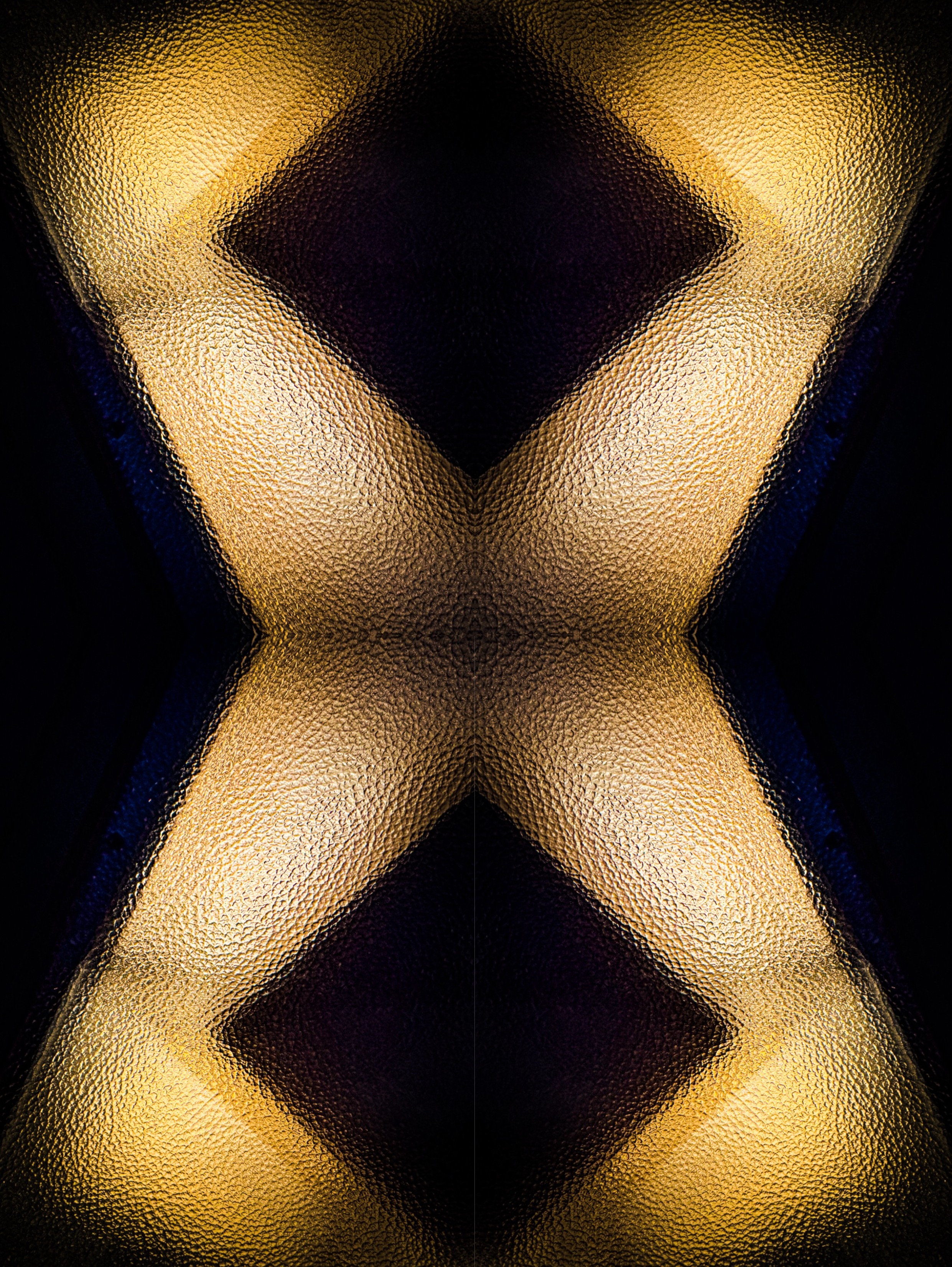
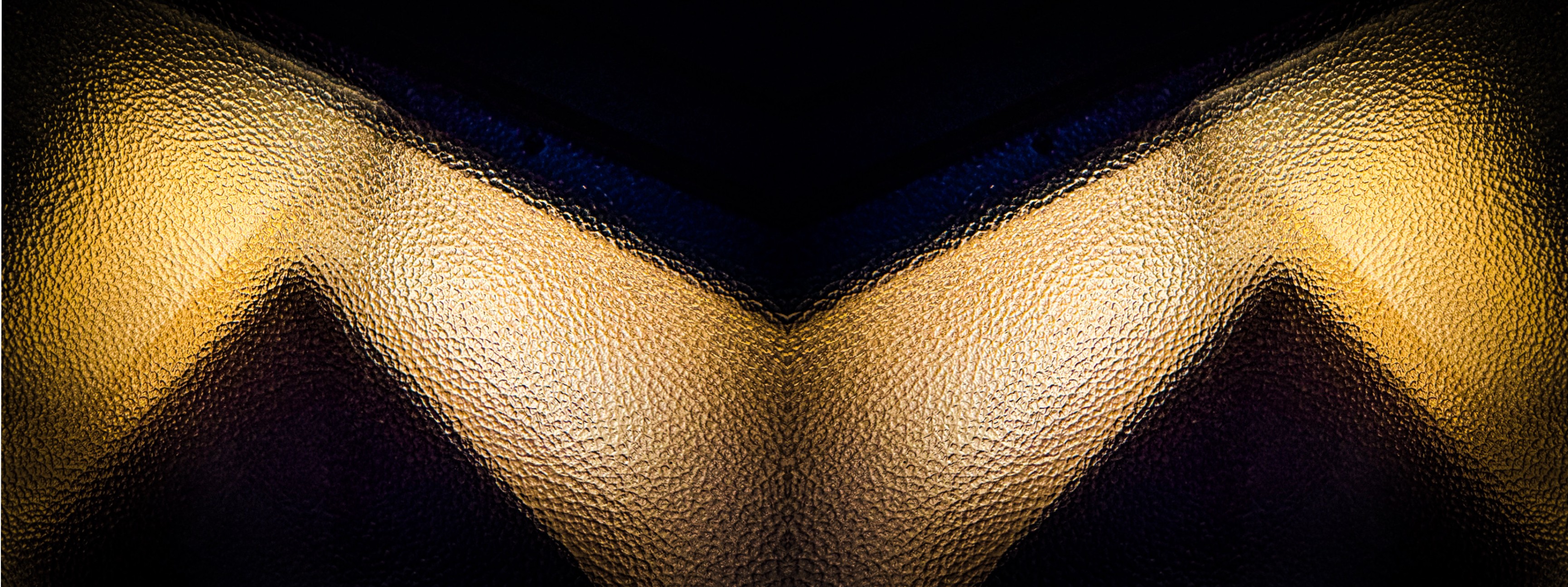
What emerges is less a photograph than an inquiry into perception itself. It asks how repetition reshapes meaning, how inversion redefines emotion, and how even a simple beam of light can evolve into metaphor. The piece explores the threshold where design dissolves into feeling—where form no longer describes the world, but begins to reveal it. In essence, this work is about the alchemy of vision: the way the eye rearranges truth, turning structure into sensuality, and the ordinary into something quietly, inexorably, human.
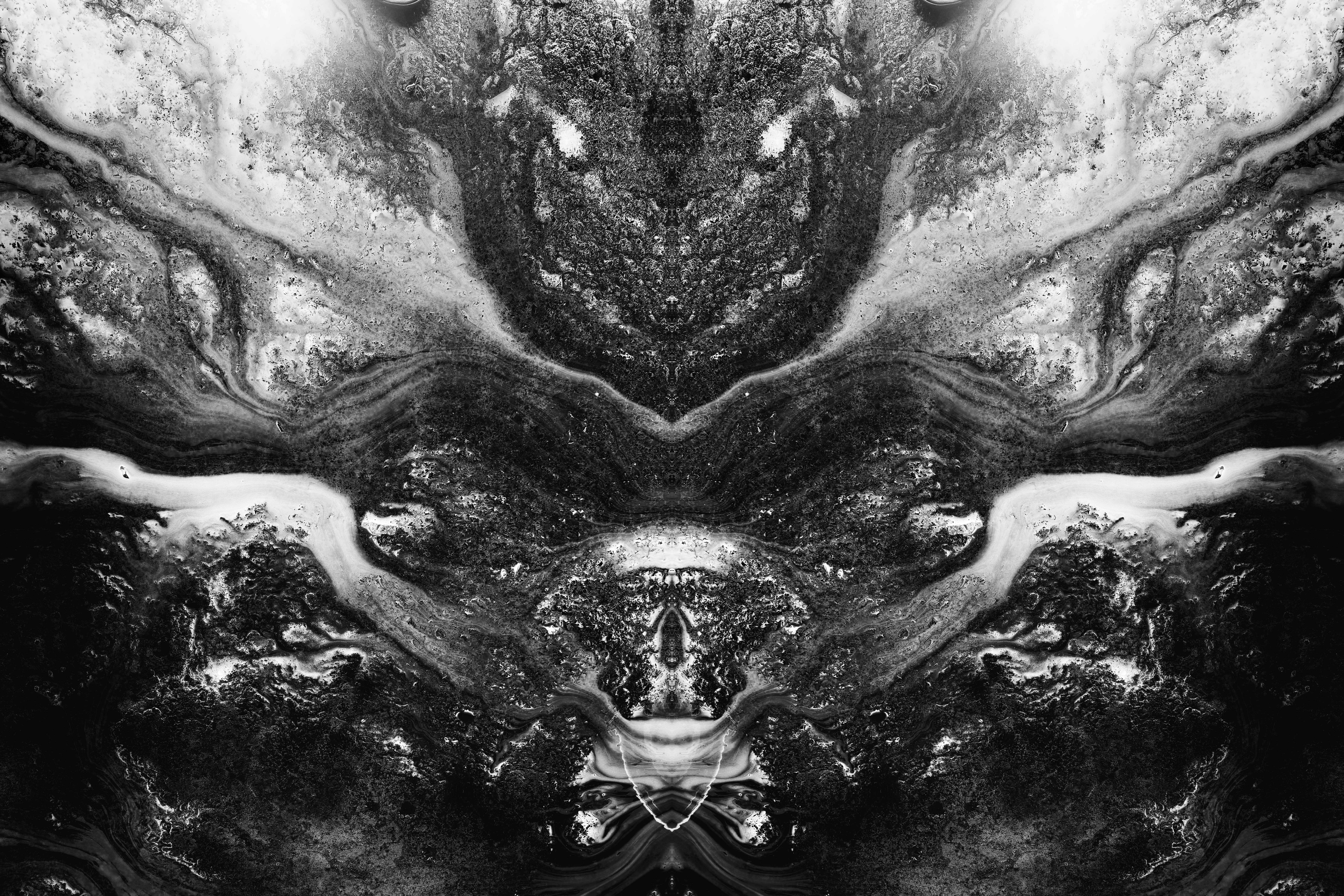
Dragon in the Dark (2025)
At first encounter, Dragon in the Dark conjures the spectral outline of unfamiliar beings—creatures half-remembered from dreams, phantoms risen from the unconscious. The illusion suggests myth and menace, yet its origin is strikingly mundane: soap-laced water drifting across the gritty floor of a motor garage.
Through mirroring and digital refinement, this ordinary residue acquires uncanny presence, where chaos resolves into symmetry and the banal becomes monumental. The work reminds us that beauty and mystery do not dwell only in the extraordinary; they can emerge from the overlooked, the discarded, the forgotten. In the act of seeing differently—of granting attention to the trivial—we uncover hidden narratives, and with them, the raw materials of wonder.
Dragon in the Dark is less a representation of a creature than an invitation: to perceive the unseen worlds that haunt the edges of the everyday, and to recognize how boredom itself can ignite the imagination.
Satellite (2025)
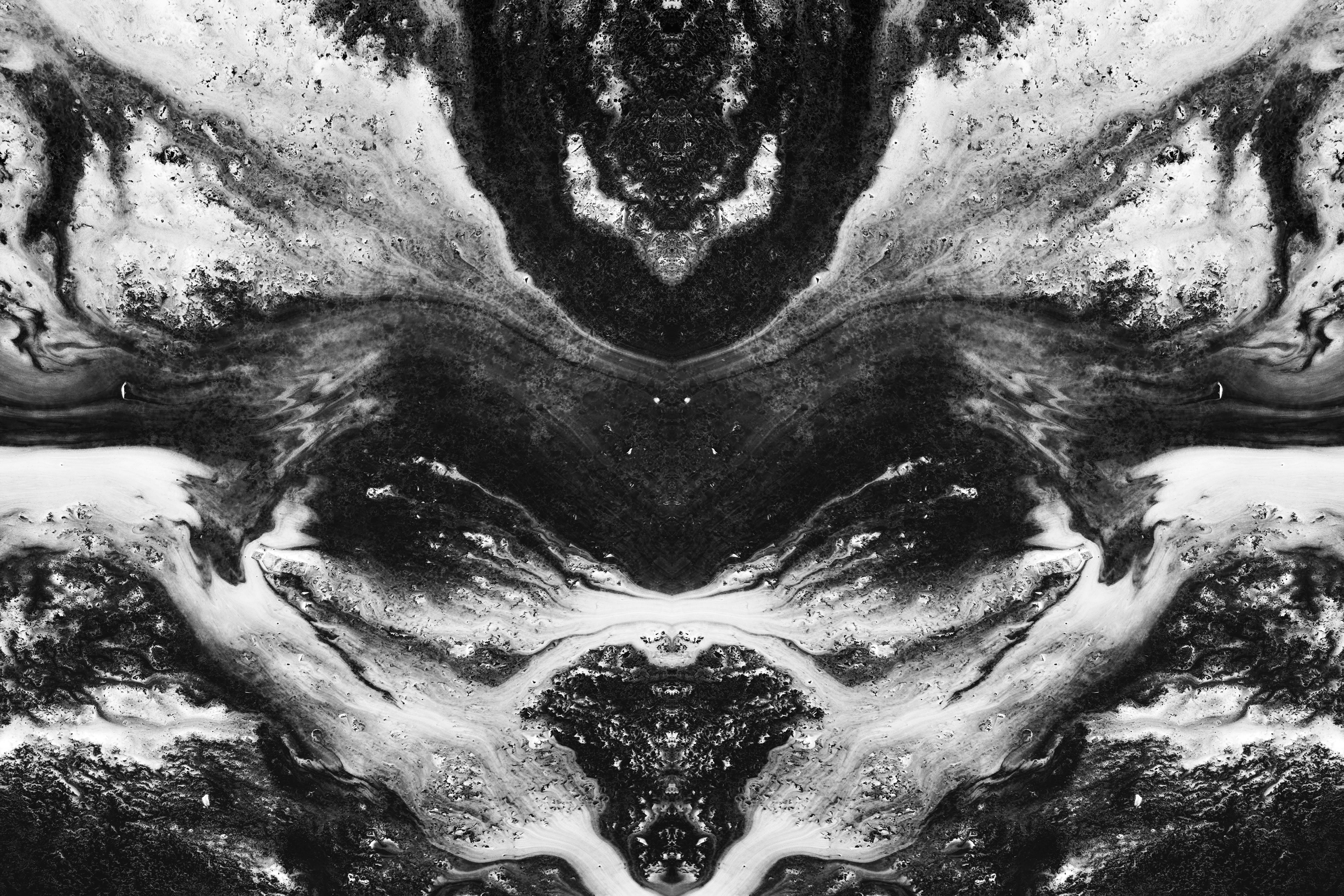
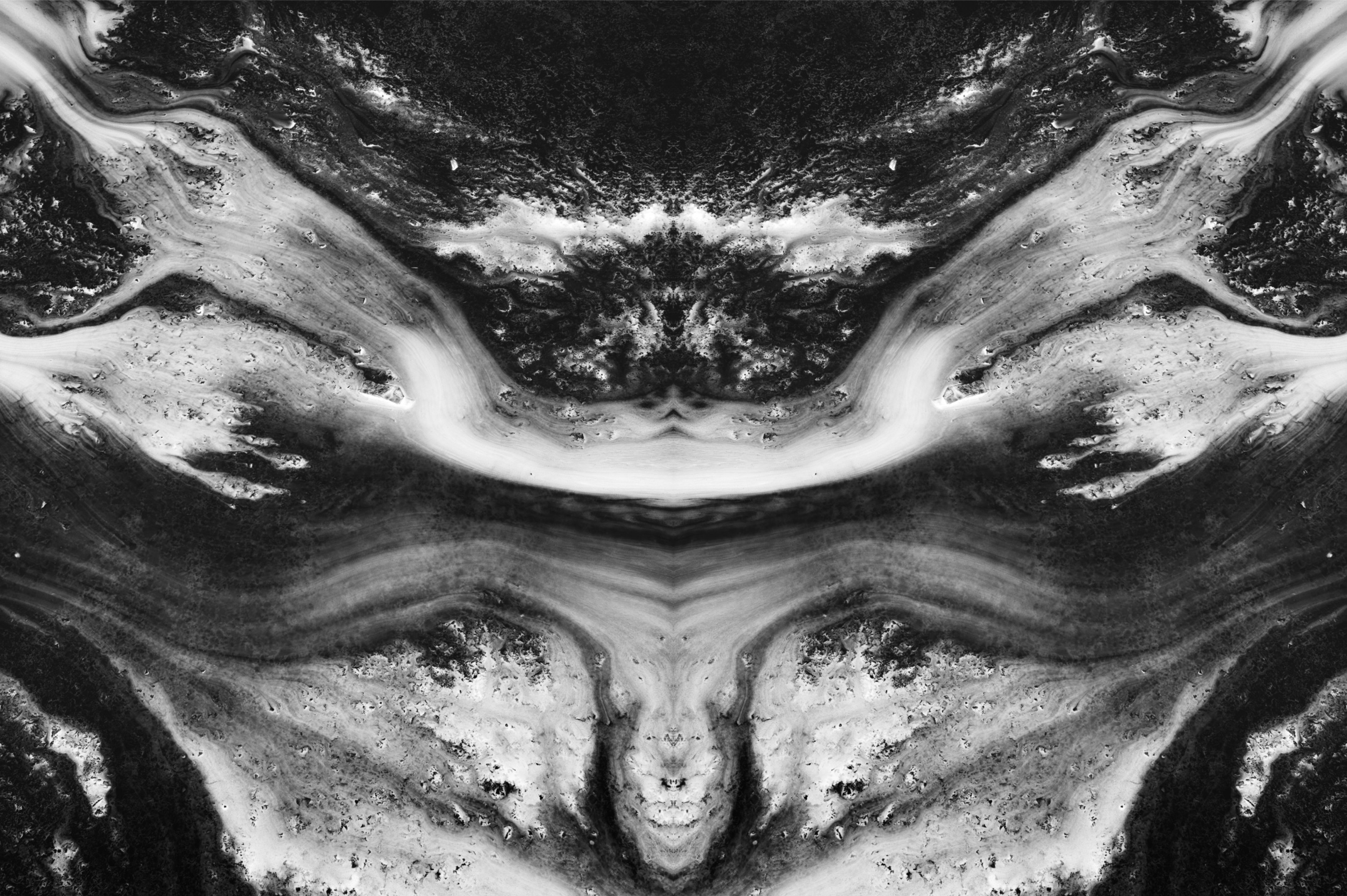
At first glance, these images may evoke the vast turbulence of satellite weather maps—swirls of atmosphere, oceanic tempests, and continental drift. Yet their true origin lies in something far more humble: soap-laced water tracing fleeting paths across the gritty floor of a motor garage.
What unfolds is an illusion of chaos and order, a visual paradox where the banal masquerades as the sublime. Here, surface residue becomes celestial; grime becomes gesture. The transformation is not of subject but of perception—an act of seeing that converts the overlooked into the extraordinary.


This work reflects on the thin boundary between randomness and rhythm, the accidental and the intentional. It invites the viewer to reconsider where beauty resides, and how easily wonder can slip into the spaces we dismiss. Creativity, after all, does not always arrive in moments of intensity—it often dawns quietly, in the stillness of boredom, when the mind finally begins to wander.
The Geometry of Longing (2023)
These images were born in motion — captured with slow shutter speed and deliberate camera movement at an art festival in Mumbai. What began as an act of photographic play evolved into a meditation on impermanence, desire, and the poetry of incompletion.
The swirling shapes — some whole, others dissolving mid-gesture — evoke the restless language of human longing. They move, collide, and blur into abstraction, much like our unfulfilled desires that continue to orbit us, even when left unsaid. Each curve, each trail of light, feels like a sentence interrupted — yet still alive, still in motion, as if carrying the hope that perhaps in another time, another life, it might find closure.
Through this dance of form and light, the work transforms imperfection into grace. The incomplete becomes eternal — a quiet testament that not every story seeks its end, and not every desire is meant to be resolved. Some simply move through us, glowing softly, waiting for another life to finish what this one began.
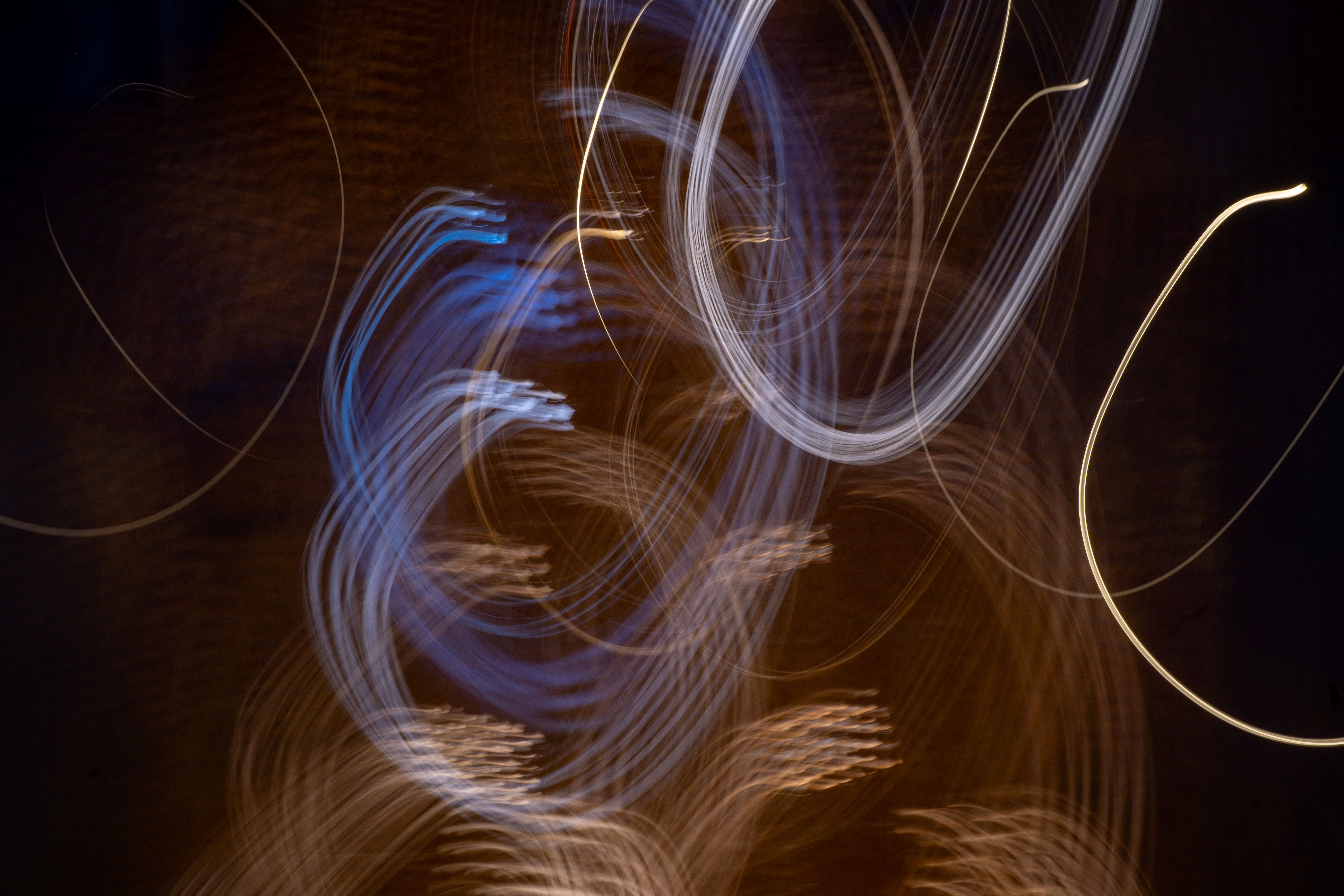
Neural Currents (2022)
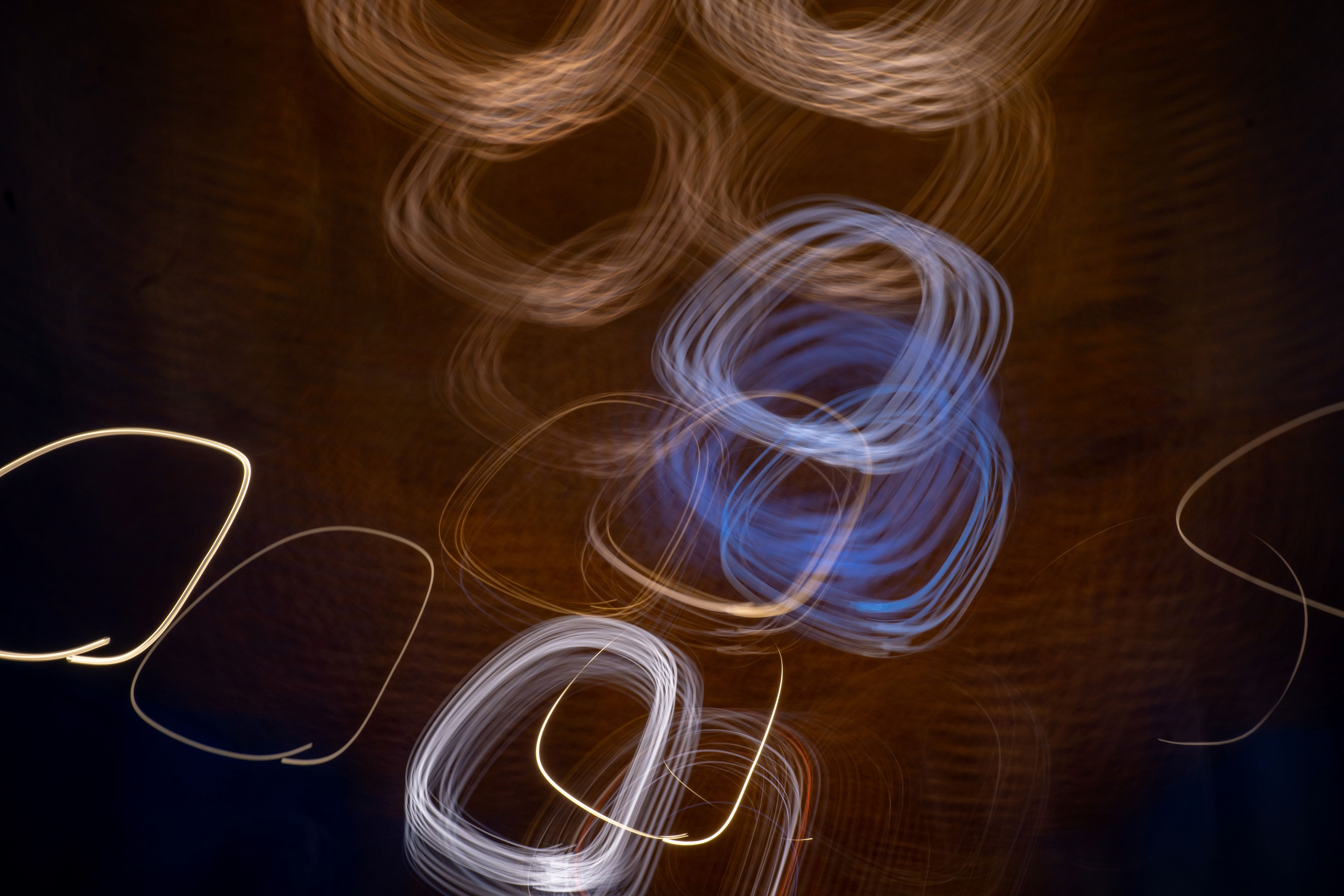
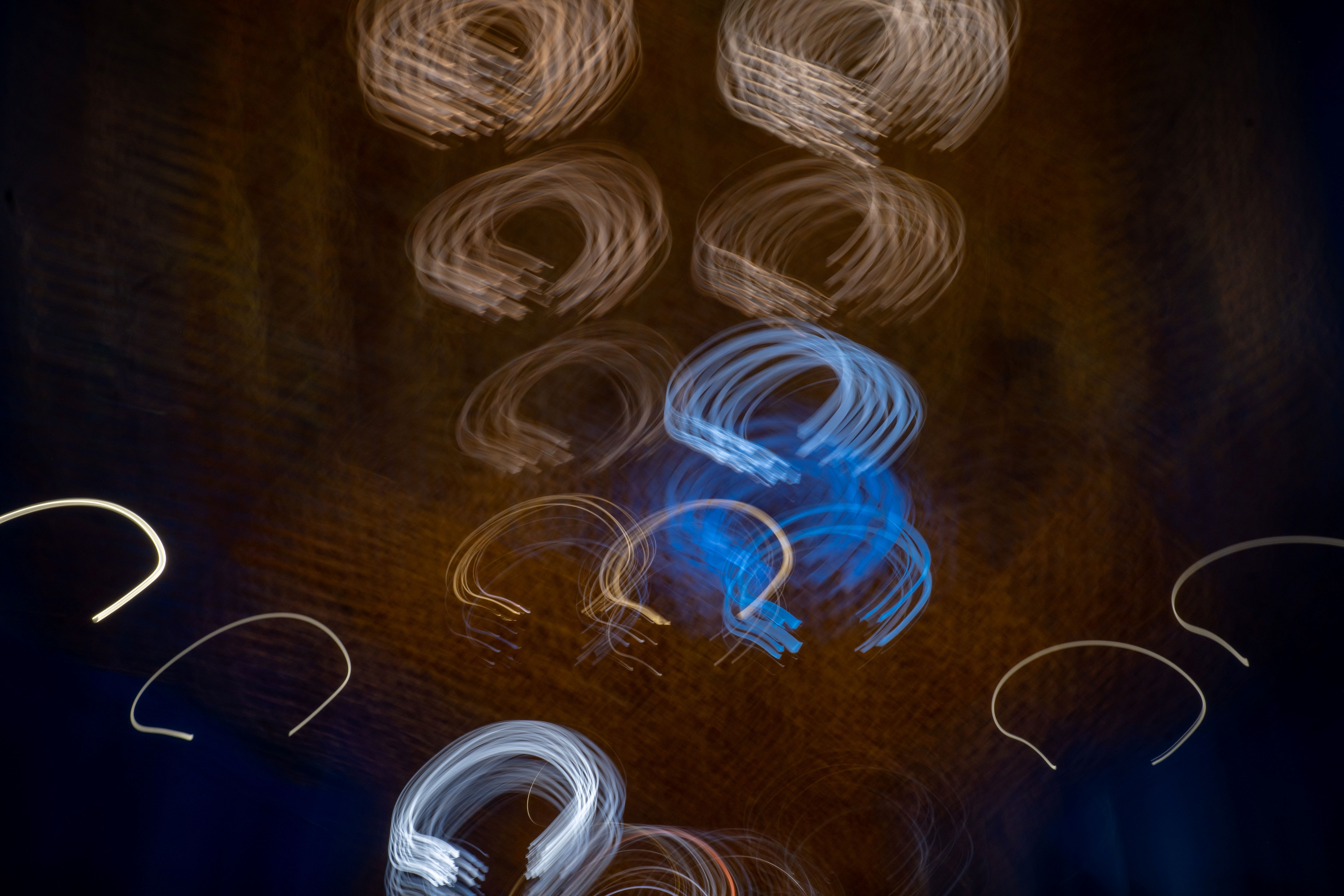
Neural Currents reimagines the act of photography as a study of perception itself — an experiment in transforming motion into meaning. Each image began as a single long-exposure capture of evening lights from beach shacks in Goa, recorded through intentional camera movement. These fleeting traces of light were then reoriented, mirrored, and aligned — never composited — to reveal unseen architectures within a single moment.
Through this process, the photograph ceases to function as mere documentation. It becomes a medium of inquiry — exploring how rhythm, energy, and gesture can construct alternate realities. The mirrored compositions evoke neural networks, cosmic patterns, or the circuitry of thought, mapping the invisible dialogue between chaos and coherence, intuition and structure.
The series unfolds like the birth of an idea: a spark of disorder gradually taking shape until it resolves into harmony. In pushing the camera beyond its descriptive role, Neural Currents becomes less about capturing the world and more about reimagining what photography itself can think, feel, and become.


Celestial Entanglements (2021)
Created in Kolkata using slow shutter speed and intentional camera movement, Celestial Entanglements transforms light into a visual language of thought and emotion. What appears as a dance of glowing threads is, in essence, a meditation on the mind — its chaos, clarity, and constant motion.
The luminous trails resemble tangled constellations or microscopic universes — thoughts intertwining, diverging, and merging again. Each frame captures a moment where the physical and the psychological blur, where the external act of movement mirrors the internal rhythm of contemplation.
Through this work, I explore how even in disorder, there is a quiet order — how the mind, much like the cosmos, finds beauty in its own entanglement.


The Roots (2023)
The title ‘Roots‘ has two images, one inspired by the Netflix series, ‘Dark’ and another by the popular series ‘The Game of Thrones’. I have also included the original image which is equally intriguing.
Timeline of Creation: January 2023
Location: Mumbai
Elements of Visual Art Used: Shape, Forms, Symmetry
Gear: Lumix S1 + 24-105mm F4.0 lens


The Swirl (2010)
This series began with a simple act — swirling water in a rusted iron bucket beneath an open sky. The surface reflected drifting clouds, and through that spontaneous movement, forms began to emerge: some fleeting, some defined, others dissolving before they could be named. Each image captures a dialogue between light and motion, inviting the viewer to interpret — or simply feel — what appears within these abstract frames. Some shapes evoke recognition, while others remain beautifully unknowable, resting in the space between chaos and calm.
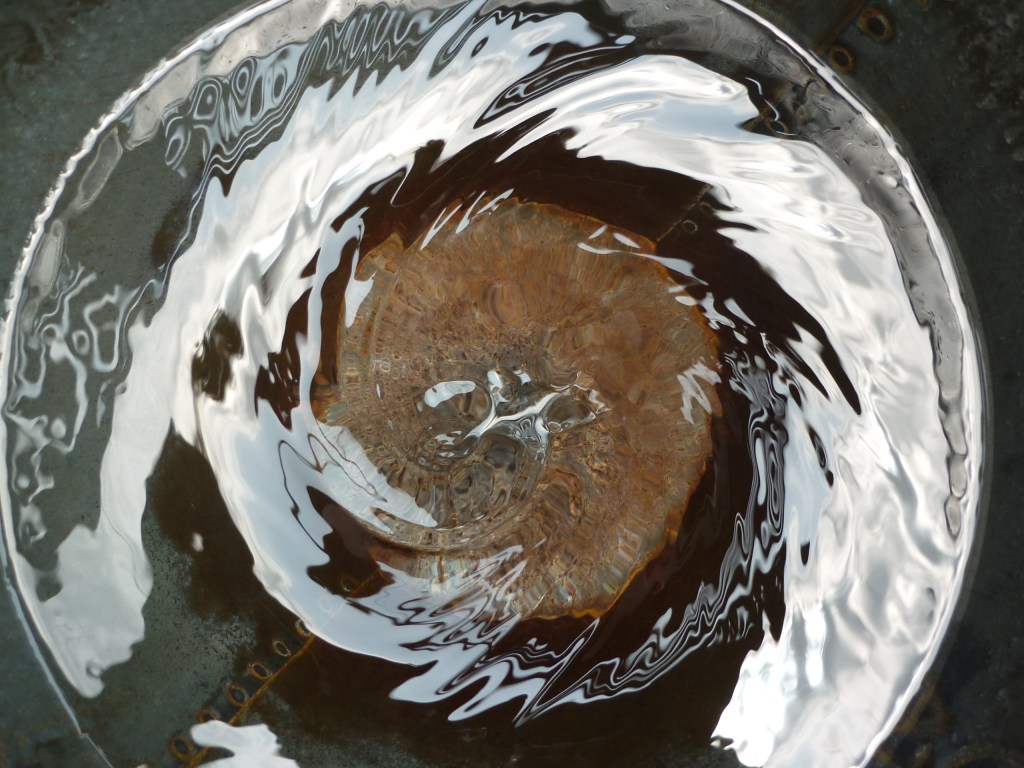
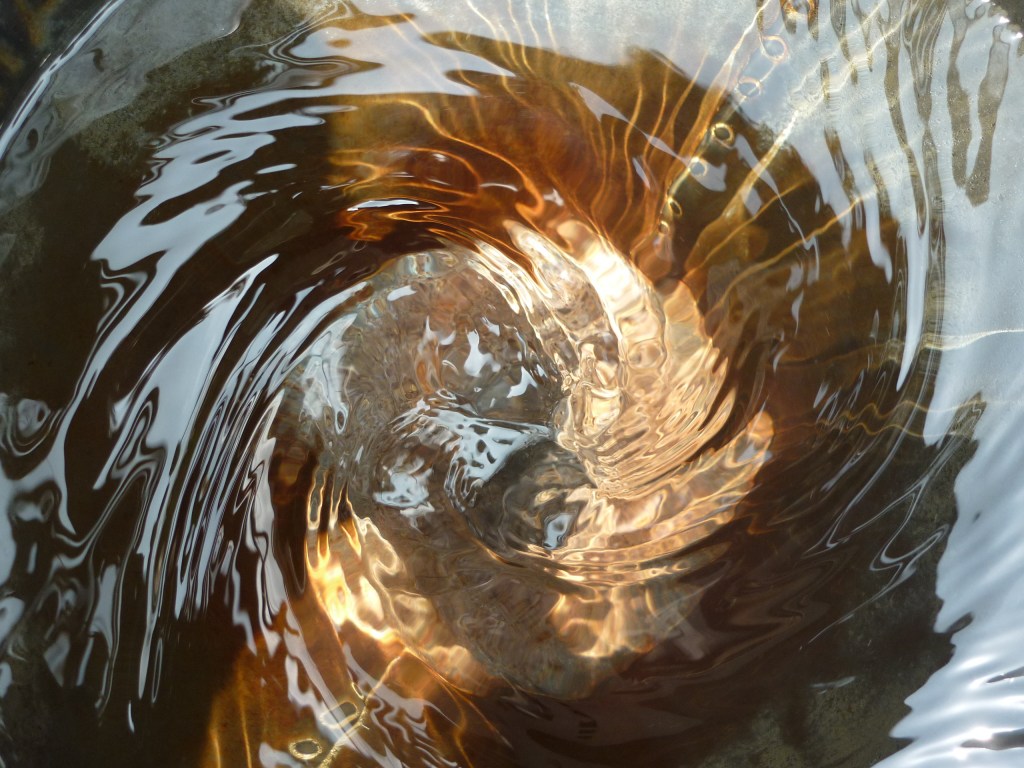
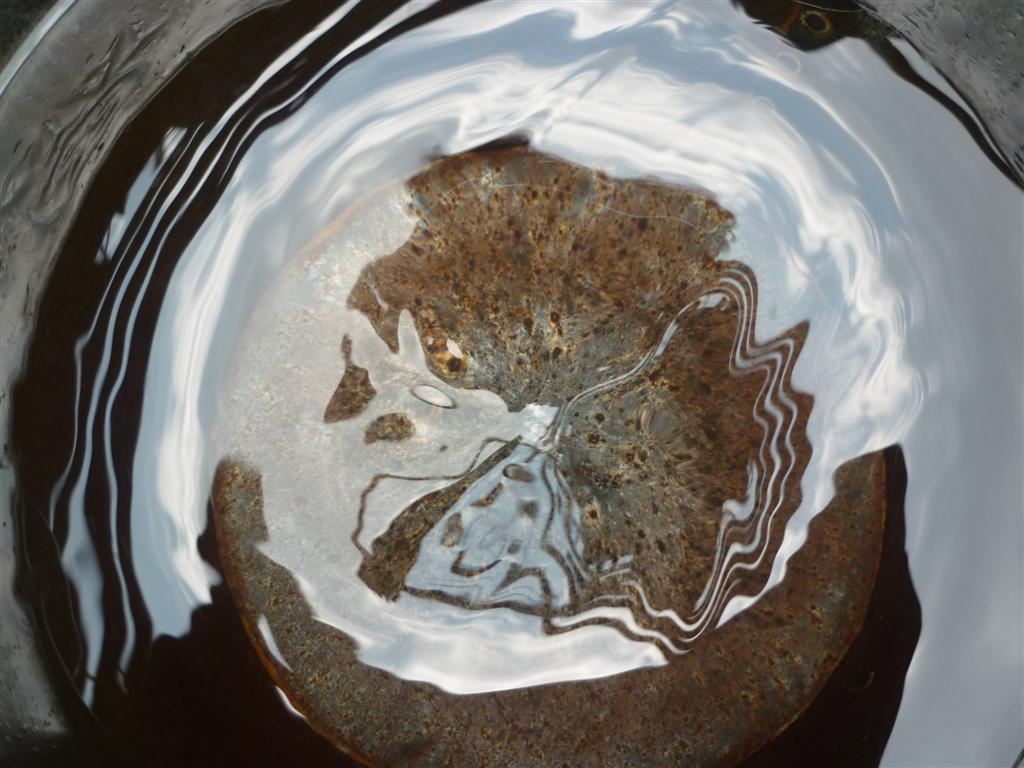
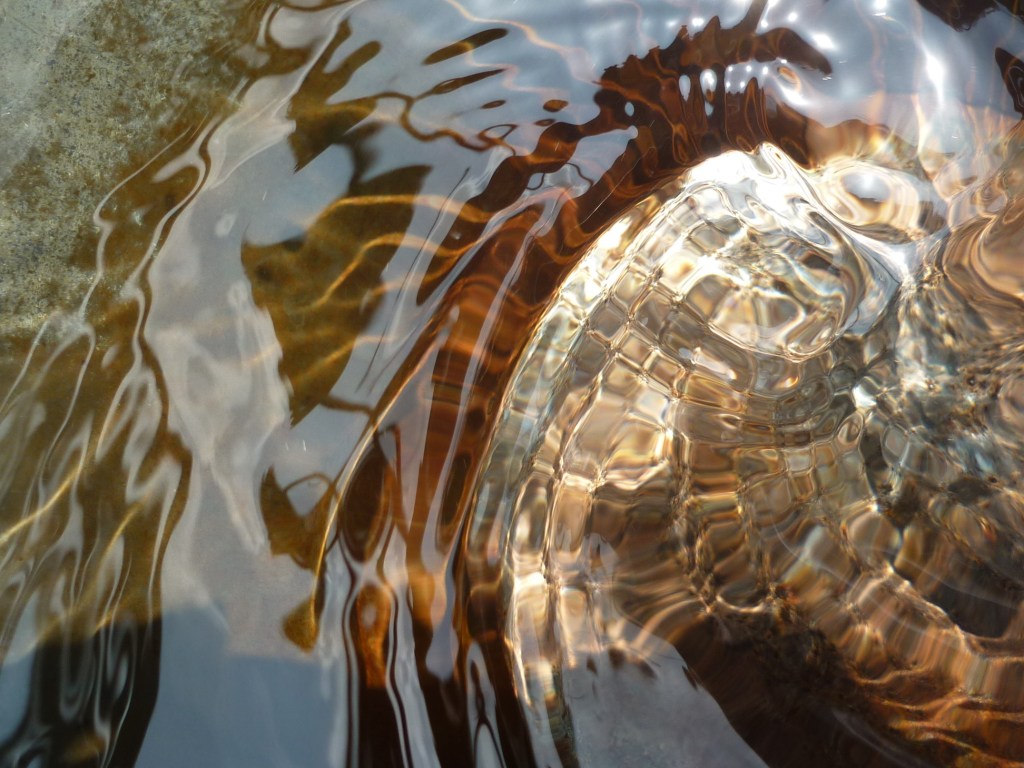
At the heart of the series lies one image — the Om. It appeared unbidden, forming at the center of a whirlpool of reflected light and cloud. It was not composed, only witnessed — a moment when nature itself seemed to draw the sacred. In that instant, the swirl of water became more than a visual pattern; it became a mantra. The elements — earth, water, air, and spirit — aligned briefly to reveal what felt like the universe inscribing its own symbol, a reminder that even accidents can be divine. Reflections of Om is therefore not a study in abstraction alone, but a meditation on perception and surrender. It reflects the quiet truth that meaning often arrives unsummoned — that the sacred, the mysterious, and the beautiful can all emerge when we stop trying to control what we see and instead allow the world to reveal itself.
The Keyboard (2023)
‘Keyboard‘, represents the infinite depth of the tech world insinuating cyber crimes and the dark net. The original image was clicked during an art festival in Mumbai. However, I wanted to create something completely imaginative, unexpected and eerie out of it.
Timeline of Creation: January 2023
Location: Mumbai
Elements of Visual Art Used: Shape, Forms, Patterns, Perspective, Symmetry
Gear: Lumix S1 + 24-105mm F4.0 lens


Oblivion (2022)
‘Oblivion’ is not just a word but an entrenched feeling of endless emptiness, where you feel lost and insignificant. It is a termite that eats up your identity everyday making you question the worth of your existence itself. The worst thing that we can do to somebody we once loved so much is, subjecting them to oblivion, knowingly or unknowingly. The photograph is inspired by a deep entrenched identity crisis of elderly parents who slowly start getting less and less time and attention from their son/daughters.
Date of Creation: 3 April 2022
Place: Palolem, Goa
Gear: Lumix S1 with 24-105mm F4.0 lens
EXIF: Shutter Speed 1/2 sec.; Aperture f/11; ISO 100.

Cacophony (2021)
The image depicts my aversion to the chaotic city life with horns blaring all around, particularly when you pass through a market. Everything just feels hazy and discordant. The image was taken with a slow shutter speed and intentional camera movement to connote instability.

Symmetrical Worlds (2021-23)
These photographs were also created as juxtaposition and alignment of the same image multiple times to create symmetry of the lines and angles and give a sense of an unrealistic world that can only exist in the artist’s imagination.
Timeline of Creation: 2021-23
Location: Kolkata, Patna, Mumbai, Hyderabad
Gear: Lumix S1 + 24-105mm F4.0 lens, Samsung Galaxy S20FE
Elements of Visual Art: Lines, Patterns, Symmetry


 Vivek Verma