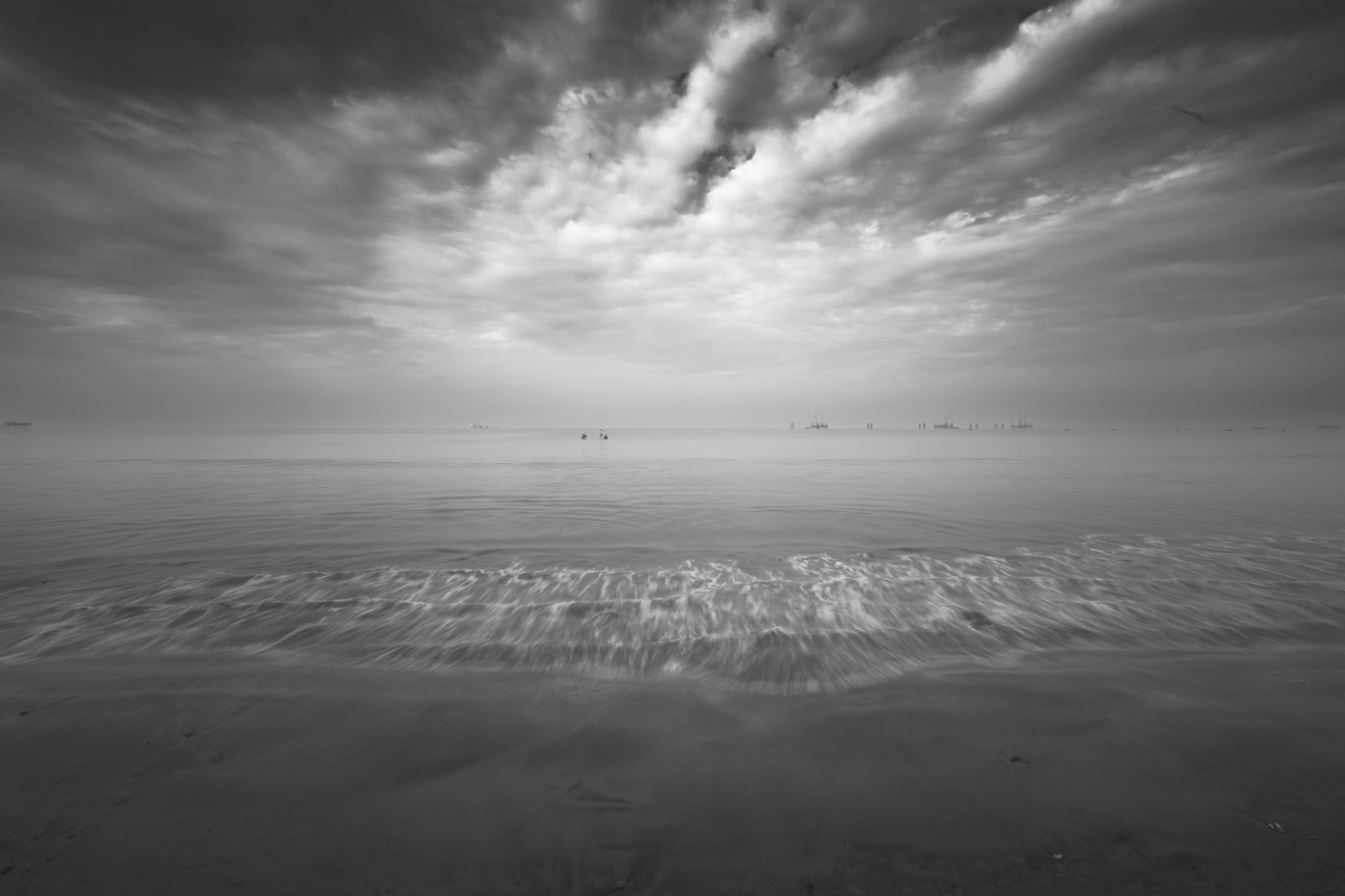
Discover the real difference between 14mm vs. 16mm lenses. Learn how 2mm changes field of view, perspective, and composition in ultra-wide photography.
“14mm vs 16mm — it’s just 2mm.”
That assumption has cost photographers more compositions than they realise. Because at ultra-wide focal lengths, millimeters don’t behave proportionally. They behave exponentially.
And the difference between 14mm and 16mm is not a technical footnote — it is a compositional decision that affects spatial rendering, depth psychology, and practical shooting freedom. Let’s examine this properly.
14mm vs. 16mm – The Geometry Most Photographers Underestimate
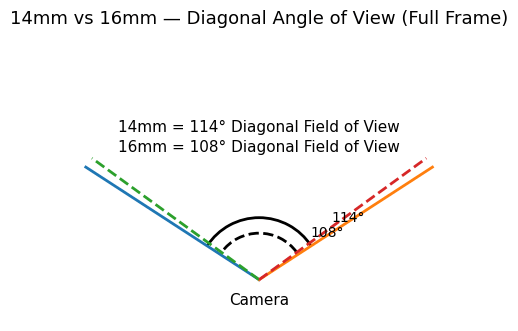
Is 14mm noticeably wider than 16mm?
Yes, a 14mm lens is noticeably wider than a 16mm lens. Ultra-wide focal lengths change dramatically with small numerical differences. A 14mm lens captures significantly more scene, exaggerates foreground perspective, and works better in tight spaces compared to 16mm.
On a full-frame sensor:
- 14mm delivers an angle of view of approximately 114° diagonally, 104° horizontally, and about 81° vertically.
- 16mm delivers approximately 108° diagonally, 98° horizontally, and about 74° vertically.
That ~6° difference may sound minor. It isn’t. Angle of view expands non-linearly as focal length decreases. The wider you go, the more each millimeter matters. To illustrate:
- 50mm → 48mm: negligible change
- 24mm → 22mm: noticeable
- 16mm → 14mm: substantial
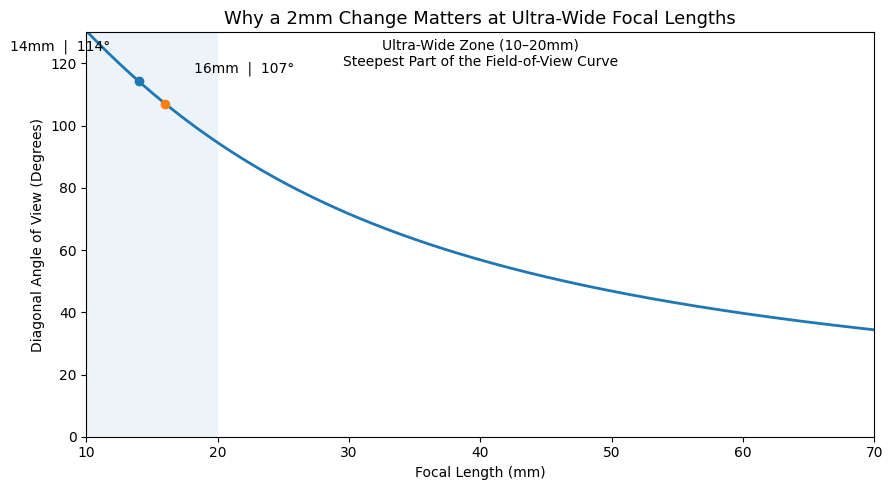
Notice how the curve is very steep between 10mm–20mm, and then gradually flattens as focal length increases. That steep region is exactly where 14mm and 16mm sit. On this part of the curve a small horizontal shift (2mm change in focal length) produces a relatively large vertical drop (angle of view change).
Further right on the curve (e.g., 50mm to 52mm), the slope is much flatter — meaning the same 2mm change produces a far smaller shift in field of view.
Remember, at this ultra-wide focal length, you are not operating in a linear zone. You are operating on the steepest part of the field-of-view curve. Small focal changes produce disproportionately large scene coverage shifts. This is geometry, not preference.
The Moment It Becomes Real
The debate becomes real the first time you physically cannot step back.
- You are against a wall.
- You are inside a tight interior.
- You are at the edge of a cliff.
- You are at a tourist spot or church where repositioning breaks symmetry.
At 16mm, the frame is almost there. At 14mm, it fits. This is not theoretical. It is practical margin. That additional coverage is often the difference between compromise and completion.
My understanding of this evolved not through theory or scientific measurements, but through practical usages and lived experience. Shooting extensively with a 13mm full-frame equivalent lens (on my iPhone camera), I noticed how spatial rendering changes when you enter extreme wide territory.
Foreground dominance became much more pronounced. Depth layering became dramatic. Compositions became more spatially ambitious. When returning to slightly tighter focal lengths, the frame felt constrained.
Immersion vs. Observation
There is also a perceptual difference. Ultra-wide lenses do more than widen a frame — they alter spatial relationships.
At 14mm:
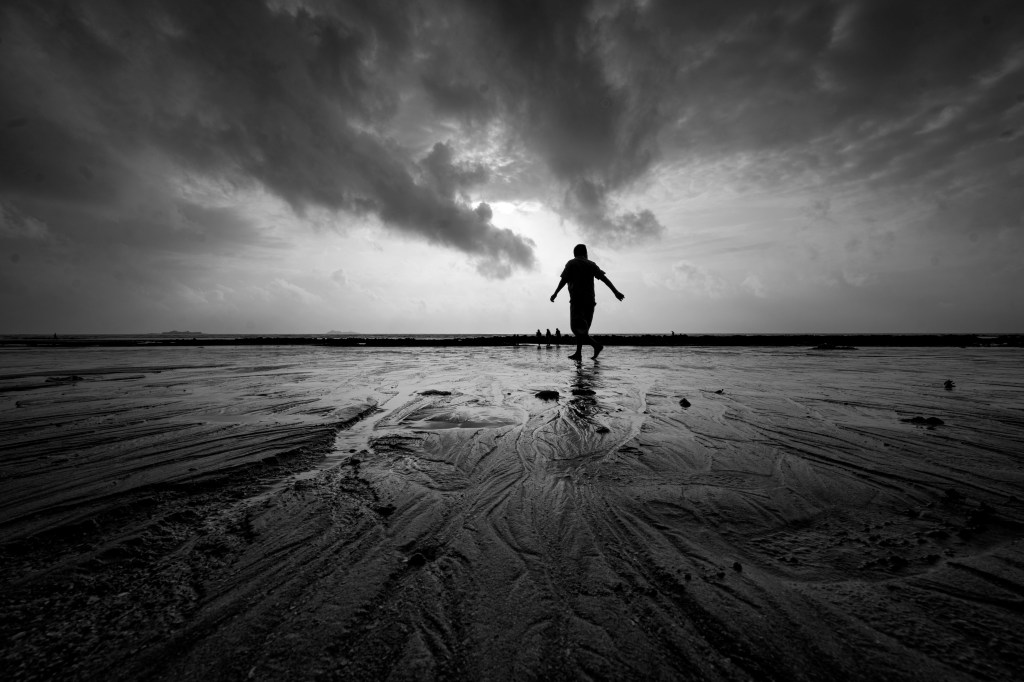
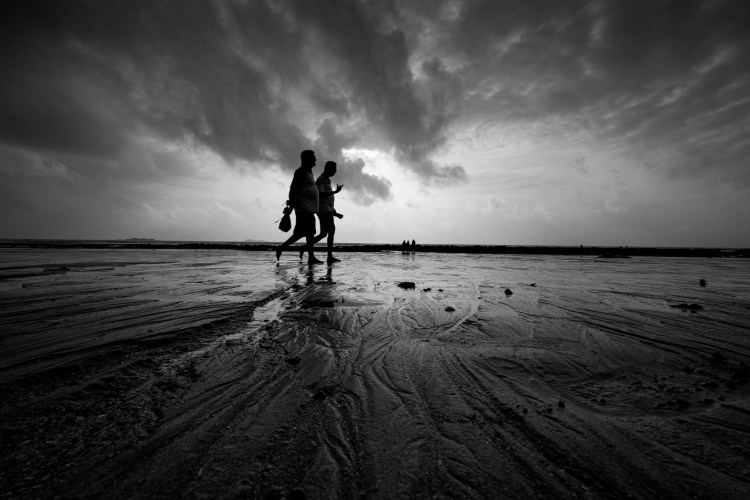
- Foreground elements expand dramatically.
- Background recedes more aggressively.
- Leading lines stretch further toward frame edges.
- The sense of depth intensifies.
At 16mm, these effects remain — but they are moderated. The result?
16mm feels wide but 14mm feels immersive. One records space. The other exaggerates it.
For photographers whose style depends on strong foreground anchors, dramatic skies, environmental storytelling, or architectural scale, that exaggeration is not cosmetic — it is structural.
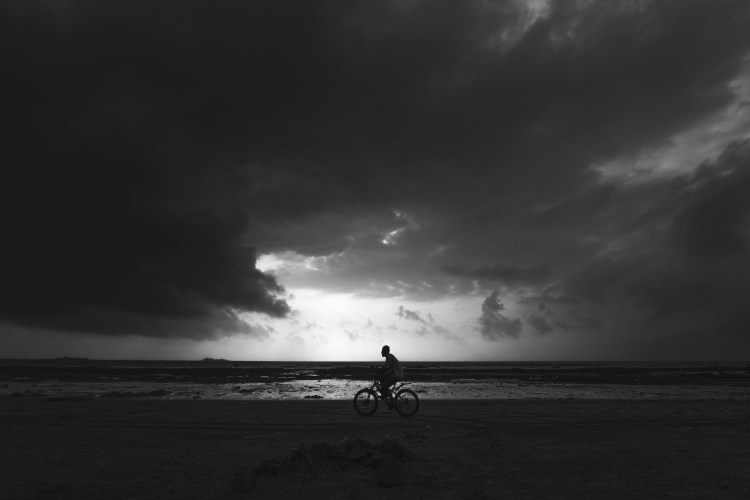
Creative Distortion: The Strategic Tool
Many photographers fear 14mm because of distortion concerns. We must separate two concepts here:
- Optical distortion — dependent on lens design.
- Perspective exaggeration — dependent on camera-to-subject distance.
At 14mm, you naturally move closer to foreground elements. That proximity amplifies spatial contrast:
- Objects near the lens appear dramatically larger.
- Vertical lines near frame edges elongate.
- Scale differences become more pronounced.
Used carelessly, this can look chaotic. Used intentionally, it produces dynamic compositions that are difficult to replicate at 16mm without stitching or repositioning.
The exaggeration is not a flaw. It is expressive leverage.
The Psychological Shift Most Don’t Discuss
Once you become comfortable at extreme wide focal lengths, your compositional expectations change. You begin to:
- Move closer to subjects.
- Expect more spatial layering.
- Build frames around foreground dominance.
- Depend on environmental inclusion.
When that width reduces, the frame can feel restrictive. This is not measurable in degrees. It is perceptual adaptation.
And it explains why many photographers who start using 14mm rarely choose to step back voluntarily.
The Decision Framework
So, how do you decide which lens to use when?
When 14mm Gives You an Edge
Two genres make the difference especially visible – Astrophotography and Interior/Architecture Photography.
Astrophotography: At 14mm, you get, greater sky coverage and more flexibility in framing the Milky Way arc and star trails.
Interiors & Architecture: When space is physically restricted, 14mm provides compositional margin. That margin reduces the need for stitching. It reduces compromise. It increases operational freedom. Under constraints, wider is leverage.
When 16mm Is the Better Choice
Well, 14mm does not make 16mm a poor choice, of course. 16mm is preferable when:
- You prioritize controlled geometry over aggressive exaggeration.
- You frequently photograph environmental portraits.
- You dislike strong edge stretching.
- You want a slightly more natural perspective.
16mm offers balance. 14mm offers intensity. The choice depends on intent. 16-35mm lens from any brand lens is still popular choice for many landscape photographers.
The Core Misconception
The mistake is not choosing 16mm. The mistake is assuming the difference is trivial.
At telephoto focal lengths, 2mm is insignificant. At ultra-wide focal lengths, 2mm operates at the steepest part of the perspective curve.
The practical consequences include:
- Framing completion vs. cropping compromise
- Immersion vs. observation
- Depth exaggeration vs. moderation
- Margin under constraint vs. compositional limitation
How to Decide?
Therefore, instead of debating 2mm abstractly, ask:
- Do I frequently hit physical framing limits?
- Do I compose heavily around exaggerated foreground elements?
- Is immersive depth central to my style?
- Do I prefer dramatic spatial rendering over controlled realism?
If most answers are yes, 14mm aligns with your visual intent. If your answers lean toward balance, geometry control, and subtlety — 16mm remains excellent.
The decision is not emotional. It is stylistic and operational.
Conclusion
14mm is not universally superior.
But if your objective in choosing ultra-wide is maximum spatial immersion, environmental storytelling, and compositional freedom under physical constraints — 14mm is not indulgent. It is aligned with intent.
And once you have experienced that difference in real-world shooting, the phrase “it’s just 2mm” stops making sense to you, as at the ultra-wide end, millimeters are not incremental. They are decisive.
The insights in this article are based on my personal extensive real-world shooting experience using ultra-wide lenses (14mm and 16mm) for landscape, travel, and interior photography.
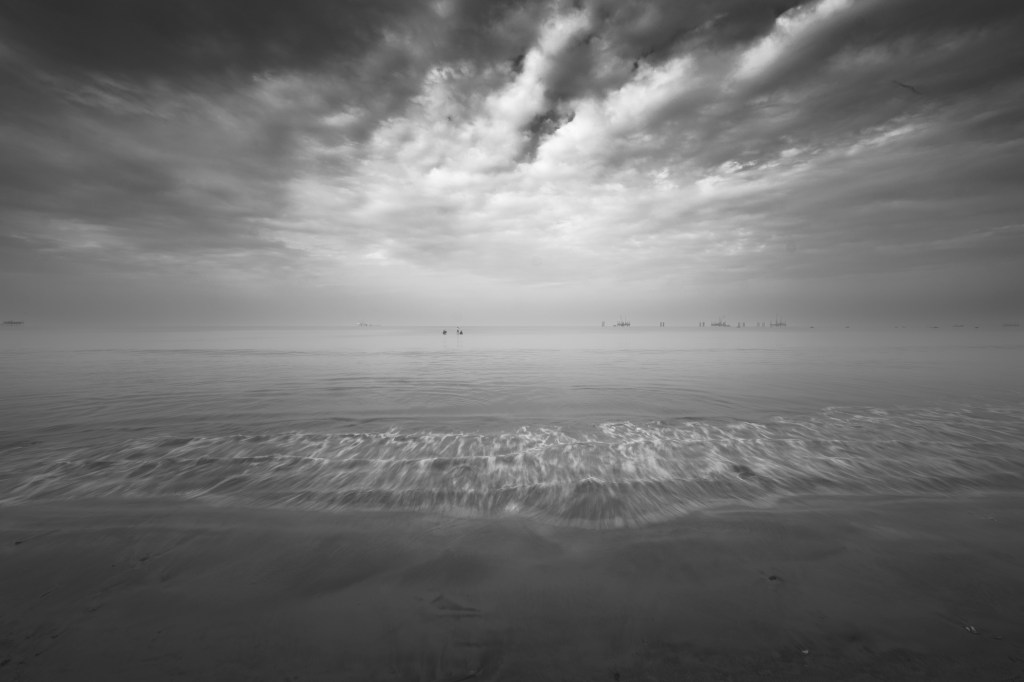
All images in this post shot on Lumix S1 with 14-28mm F4.5-5.6 lens
Discover more from Creative Genes
Subscribe to get the latest posts sent to your email.
 Creative Genes