
Exposing the Dark Side of Photography: Scams Every Artist Must Know. From frivolous contests to overpriced exhibitions —discover the hidden traps and how to avoid them.
What if I told you that in today’s photography world, awards can be bought, exhibitions are sold like real estate, and even WhatsApp groups come with an entry fee? In the past two months alone, I’ve spent more than most would believe — not on gear or travel, but on recognition itself.
This is the dark economy of photography no one talks about — where exposure comes with a price tag, and dreams are quietly monetized. In this article, I uncover my own experiences and the shocking realities behind the glossy facade of contests, exhibitions, and awards. But this piece is not just my story — it’s a wake-up call for every artist to tread carefully in a world where even art has been commercialized.
In just the last two months, I’ve spent around INR 50,000 just to exhibit some of my work (counting printing, logistics, and exhibition fees). On top of that, another ₹25,000 went into contest submissions alone. That’s ₹75,000 gone in eight weeks — with little to show for it except a handful of certificates and Instagram mentions that disappear in seconds. Welcome to the marketplace where creators are treated like customers, and “exposure” has a price tag.
1. Contests or Cash Grabs? The Ugly Truth
The average cost of entering photography contests today can touch INR 3,000 for just three images. And because it’s a competition, your odds of winning also depend on how many images you submit. The pricing is cleverly designed to lure you into submitting more images — which only means paying more to the organizer. Worse, some of the contests has judges with names and résumés so invisible, only the organizers have seen them.
Picturing Paw (name changed) pushes this even further, requiring you to pay INR 3,500 (with taxes) for just one entry, showing it as early bird discounted price from INR 5,000. In reality, to me, it feels less like recognition and more like funding a glitzy event at a premium venue.
2. Buying Awards: The ₹22,000 Trophy Scam
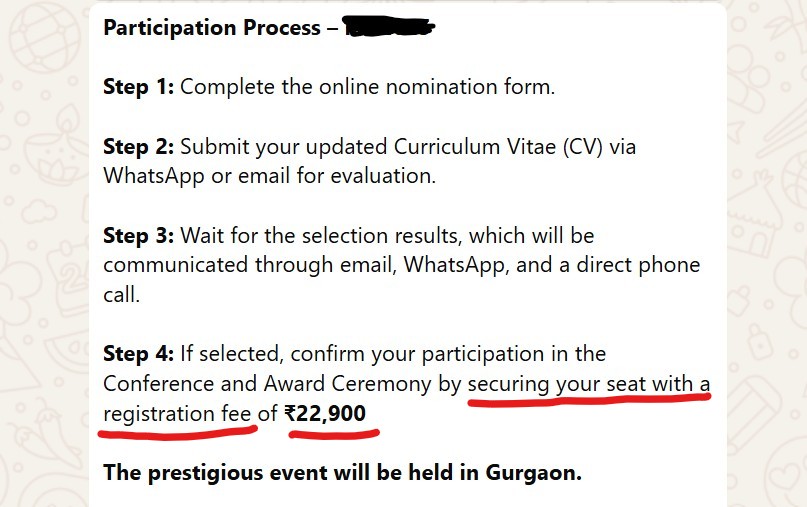
One of the most shocking experiences for me has been getting contacted by people from International Beacon Awards (name changed) who run “award shows” at five-star hotels. The deal is simple: pay INR 20,000–₹22,900 as a “nomination fee,” and you’re informally assured you’ll walk away with at least some award or recognition. Imagine fifty people falling for it – that’s easy ten lakhs in the hands of organizers to hand out a few trophies.
Let’s be honest — isn’t that just buying the award? For ₹22K, anyone can be a “winner.” These events look glamorous, with premimum venue, stage lights and trophies, but the recognition is hollow. It’s not about your work, it’s about your wallet.
3. Exhibiting Talent or Selling Wall Space?
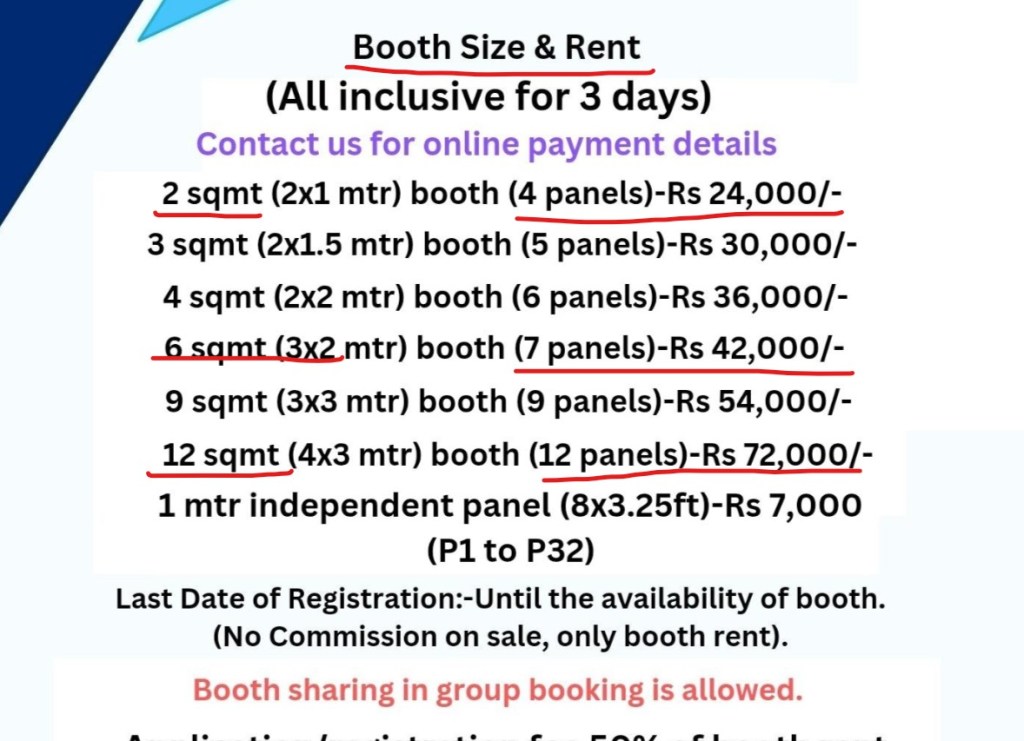
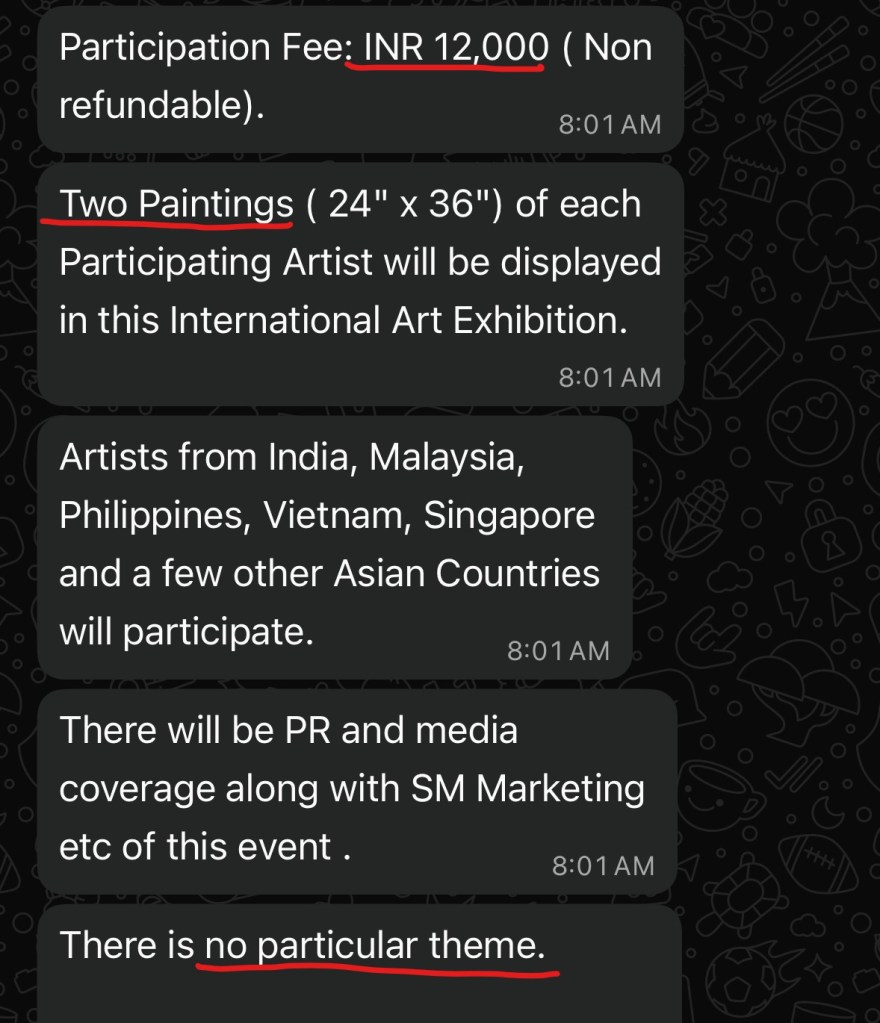
Every photographer dreams of seeing their work on gallery walls. But today, that dream comes with a brutal price tag. I’ve seen “exhibition fees” soar to INR 35,000 for barely 4-5 frames—and that was just the base category for Syncart (name changed). Want more space? Pay more. The whole setup reeks less of art and more of a real estate auction, where gallery walls are sold off to the highest bidder.
Of course, galleries have real costs—rent, logistics, staff, printing. But when exhibitions stop curating real talent and start renting wall space, the focus shifts from art to money. It’s no longer about celebrating creativity, but about who can afford the fee. That’s when art loses its soul.
4. Even Opportunities Have a Price Tag Now?
There was a time when photographers freely shared opportunities, jobs, and exhibitions as a noble act to help each other grow. That culture has died.
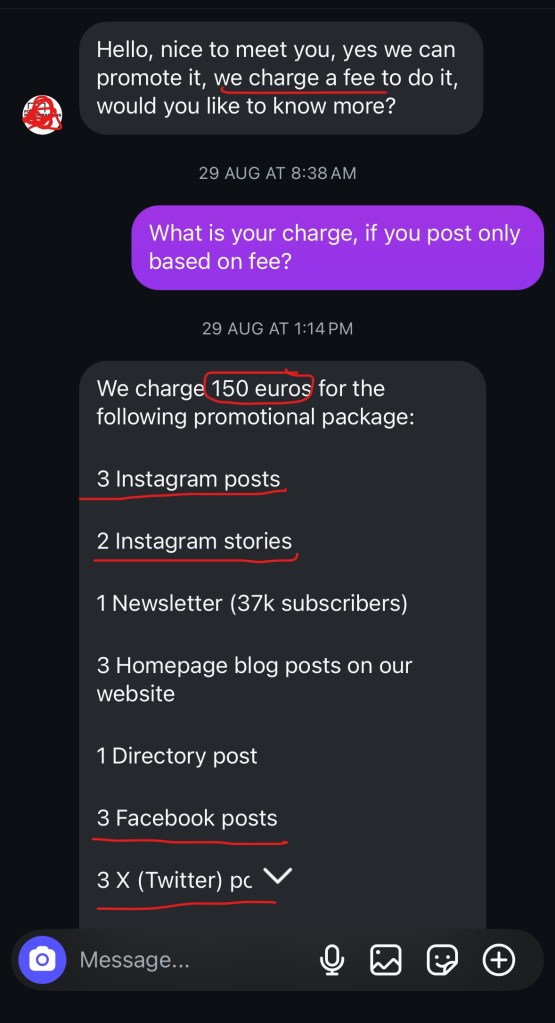
Now, if you want an opportunity to be known to a larger audience, you may be asked by ‘For_Cartoons_Only‘ (name changed) to pay € 150 (~INR 15,000) — only to get a 2-3 social media posts and stories, whose algorithm to reach the right audience, even they cannot predict.
It does not stop there, many have paid subscription models for end photographers to simply know about such opportunities. It’s the digital equivalent of paying a middleman for nothing more than posting your flyer or even worse, showing the content of that flyer.
5. Pay the Fee, Get the Ads : The New WhatsApp Economy
Want to join a photography “community”? Be ready to pay INR 500–₹1000 just to enter a WhatsApp group.
What do you get inside? Not knowledge. Not collaboration. Just an endless stream of ads for paid expeditions, workshops, photowalks and webinars, disguised as opportunities. You’re literally paying to be marketed to.
In 2020, I was asked to pay INR 500 just to join an ‘exclusive’ WhatsApp group of wedding photographers run by a well-known photographer Jasmeet Thakkar (name changed). I refused. But in 2023, I gave in and paid INR 800 for another such group run by ECB Experimentations (name changed)—only to find it flooded with ads for expeditions and workshops, with hardly any learning or discussions on the group.
6. Photo Expeditions of Personal Exploration?
Photo expeditions are a fantastic way to learn, and it’s fair that participants cover the mentor’s travel and stay—after all, their time and expertise deserve to be compensated.
But the problem begins when mentors veer the trip into a personal image hunt, sidelining the specific learning needs of the students. Once the focus shifts from guiding students to capturing personal shots, it becomes nothing more than funding someone else’s vacation at your expense.
As regards the pricing, be ready for sticker shock—expedition fees can soar to INR 4 lakhs for 10 days abroad, INR 60,000 for just 4 days in India, and even local trips cost INR 10–15K at ECB Expermentations. Add to that exclusions like travel, food, and all the fine-print extras.
7. Paying to Work: The Business of Wedding Photography Leads
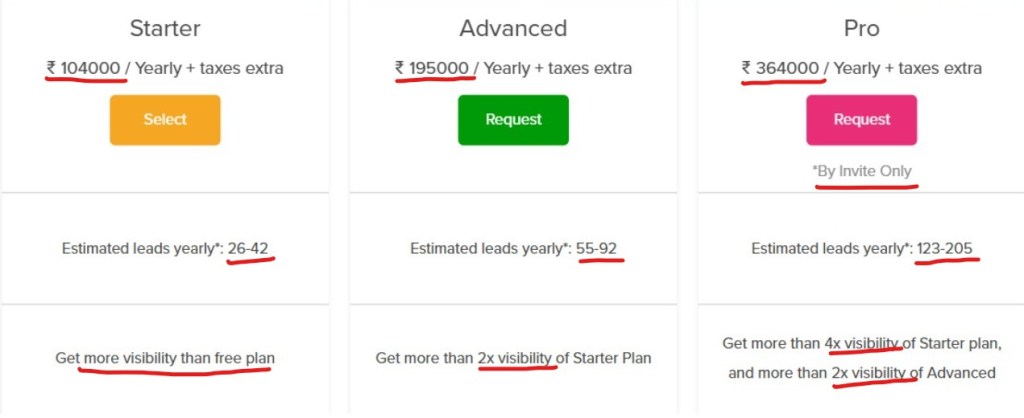
As if exorbitant exhibition and expedition costs weren’t enough, wedding photographers now face another ugly reality—the “leads industry.” Platforms like FeedMeFood (name changed) gives you top positions in their listing and sometimes even promised leads, but only if you pay insane listing fee. The so-called “premium” category can cost up to INR 3.64 lakhs a year, while even the “basic” plan starts at INR 1.04 lakhs annually. Add 18% tax extra.
And here’s the catch: you’re not paying for actual bookings, you’re only paying for enhanced visibility in their search results only. Another model they have is – pay a fixed sum, get the leads, many of which may not even respond or, worse, turn out to be bogus.
I learned this the hard way in 2020, when I shelled out INR 28,000 to FeedMeFood. What did I get? Zero confirmed assignments and a handful of dead-end leads. It’s simply a polished scam, feeding off the hopes and desperation of those who are here only to earn their basic livelihood.
8. Pages on Sale: The Paid Publishers
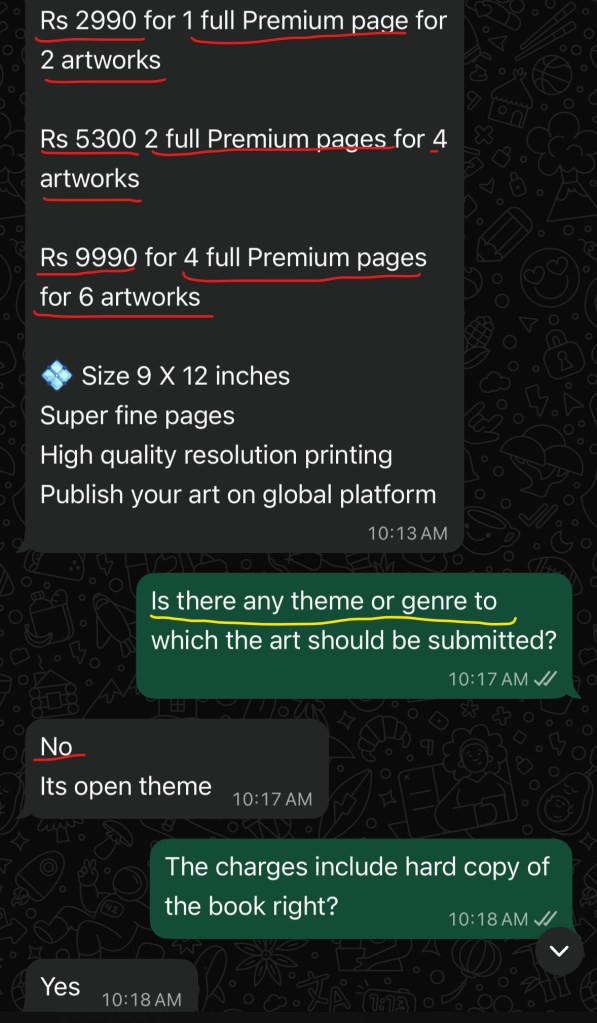
Even publications, which were once about celebrating creativity and sharing voices, have now been turned into a business of selling space. Many so-called photography magazines (and even book publisher) operate less like curators and more like real estate brokers of visibility. Each page is up for grabs—up to INR 2,990 for just one page—and the more you can pay, the more “exposure” you get. Want to add your own interview in the magazine, pay INR 7000 (~$80) to Casual Geometry Journal (name changed) .
Worse still, to even submit your work for consideration, you must first pay an exorbitant subscription fee, starting from INR 3600 (~€35) for DartOak (name changed) to INR 9400 (~£79) for DJP (name changed), which may or may not even be published.
This turns the noble act of publishing into a double-paywall trap—either for the subscription, or for the pages themselves. And unlike genuine magazines or books that carefully curate, these pay-to-publish models are nothing less than vanity presses with glossy covers.
9. The Institution of Empty Promises and No ROI
Photography schools and institutions are not exceptions. Many institutes charge anywhere from INR 1–5 lakhs for diplomas or certificates that carry little industry value or ROI. Former students often report programs lacking proper infrastructure and tutors.
And the biggest red flag? Promises of job placements, paid assignments, and industry connections. In reality, most students walk away with neither industry connections nor work, but only empty bank account and shattered expectations.
I know this firsthand. I paid over INR 90,000 in 2019 for a fashion photography course from VHOAF (name changed) that lasted hardly 24 days over 3 months. What did I actually get? A handful of studio lighting lessons, chance to shoot a few models and publication in their in-house e-magazine. Ironically, I learned more from someone apprenticing at the institute (and taking our classes) than from the very face of that institution. It was a costly reminder of how inflated the promises of such schools can be.
10. The Rise of Art PRs and Pseudo Exhibitions
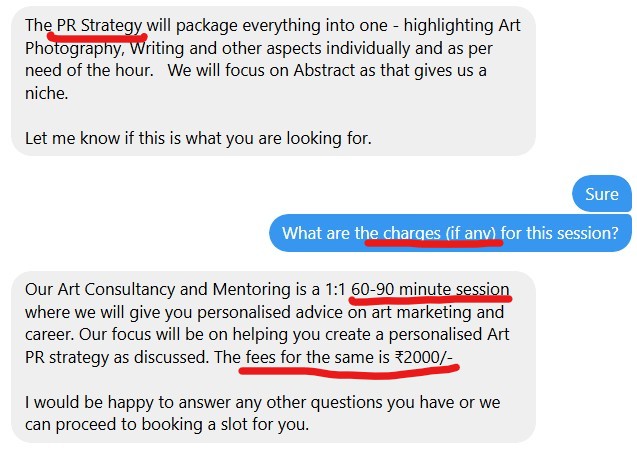
Art agencies like Mad Heart (name changed) now sells ‘PR consultations’—an hour or so of marketing gyan for a staggering INR 2,000, as if they hold the secret formula to make you the next Salgado. Even a highly qualified, professionally experienced doctor who literally saves lives, doesn’t charge that kind of fee for advice.
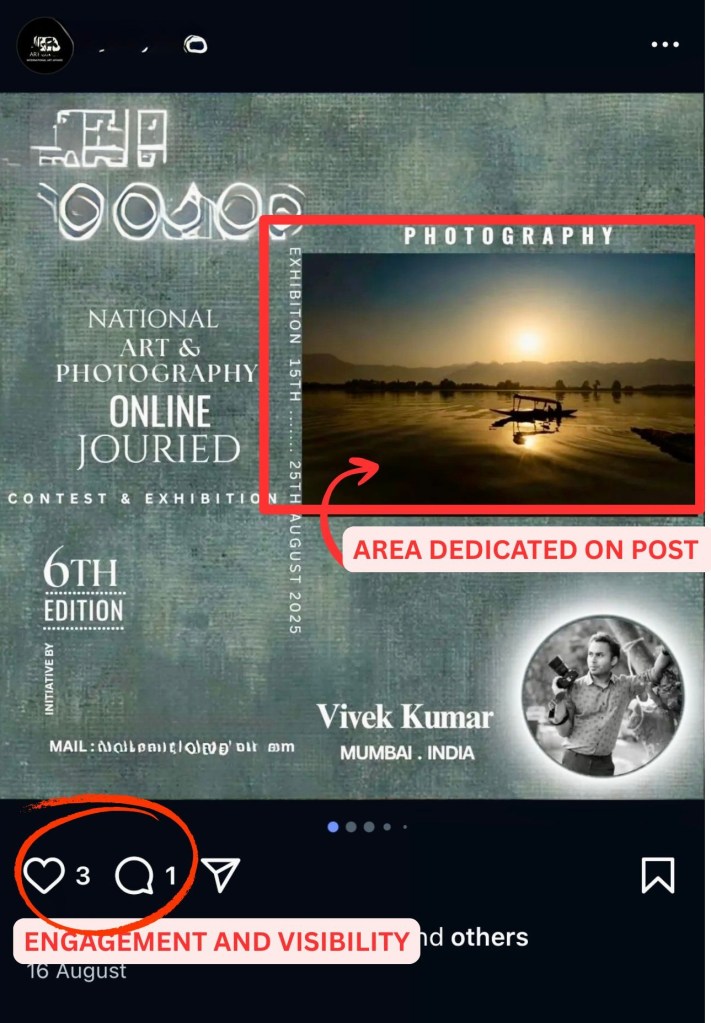
And then come the exhibitions that are nothing more than glorified social media posts with a price tag. You’re lured with words like ‘selected’ and ‘featured,’ only to find their so-calleod exhibition is just a carousel on Instagram (or slide show on YouTube), selected by unnamed judges.
I’ve personally experienced this—after paying INR 1,000, my images ended up on an account called Tart Roast (name changed), bundled in a generic carousel, with nothing more than a templated Canva-style certificate to show for it. If that counts as an exhibition, then every Instagram feed on Earth should start charging exhibition fees.
Hold On! There Are Still Genuine People Out There
Needless to say, we cannot paint everyone with the same brush. It’s very important to emphasize and reassure that many photographers, curators, publishers and contest organizers genuinely dedicate themselves to supporting the community.
To be fair, not every contest, exhibition, or expedition is a money trap. For those who run these platforms full-time, this is their livelihood. And why shouldn’t they charge? Real costs exist—venues, printing, logistics, staff, travel, stay. After all that, if no money comes in, how does one survive, how does one pay the bills? It’s tough, I get that. Many of these initiatives are not just about earning but about building a community, giving artists a platform, and sustaining their own careers with integrity. Not everything in this industry is exploitation—there are people who genuinely put their heart and soul into creating meaningful opportunities for others.
Some exhibitions still require you to submit your work first for careful curation. And only if your work is selected, you pay a fee — and even then, the costs are kept reasonable (around INR 1500 for one artwork) to remain inclusive.
Take Ashish Kamble, for example—on his photo expeditions, you’ll never catch him chasing shots for his own portfolio. His entire energy goes into teaching, guiding, and ensuring his students walk away with real experiential learning.
There are WhatsApp groups that cost nothing to join, yet give you everything the paid ones don’t—real discussions, shared knowledge, books, inspirations, and stories of legendary artists. No ads disguised as opportunities, no price tag for belonging—just the old-fashioned spirit of learning and community.
Thankfully, not every contest is out to drain your wallet. Many are still free, or charge only a nominal fee, and—here’s the best part—they’re judged by respected photographers whose names and credentials are actually public. No mystery judges hiding in the shadows, just real experts whose work speaks for itself.
Many magazines, thankfully, still keep it old-school and fair—you can email your submissions for free. If your work matches their vibe or the theme of the next issue, you get published. No paywalls, no forced subscriptions, no ‘buy a page to see yourself in print’ nonsense—just merit and relevance deciding what makes it to print.
Final Word: Awareness Is Survival
The photography world today is a double-edged sword. On one side lies a marketplace of scams, exploitations, and money traps, crushing spirits. On the other, a smaller but powerful space of genuine communities, honest mentors, and real opportunities.
This article isn’t about fear-mongering or painting the entire photography industry in black. It’s about shaking you awake—showing you the money traps and micro-scams lurking around the corner, so you can step carefully. The goal is not to kill your hope in genuine opportunities, but to help you spot the pitfalls before they drain your wallet and your spirit.
The key is awareness. Always question what you’re paying for—where and how your work will be exhibited, whether the judges are credible and publicly identified, and if the institution truly has qualified tutors and proper infrastructure. Look closely at who’s actually running the platform versus who’s just the face of it. Demand transparency, and whenever possible, speak to past participants or students before committing.
And remember — the biggest cost isn’t always money. It’s the disappointment of realizing your passion has been turned into someone else’s business model.
Because while scams will always exist, so will those fighting for authenticity. Good platforms, honest mentors, and real communities still exist. And as artists, it’s up to us to tread cautiously — and choose the ones worth investing in. Because in the end, recognition should never be bought — it should be earned.
This was my story—but I know I’m not alone. Have you ever paid for a frivolous contests, fallen for a shady exhibition, joined paid WhatsApp group or wasted money on an overhyped course or photo expedition? Share your own experiences in the comments below. The more we expose these traps together, the harder it becomes for such scams to survive. Let’s turn our voices into a collective warning—and protect the art community from exploitation.
Discover more from Vivek Verma
Subscribe to get the latest posts sent to your email.
 Vivek Verma
2 thoughts on “The Price of Recognition: 10 Easy Ways to Get Scammed in Photography”