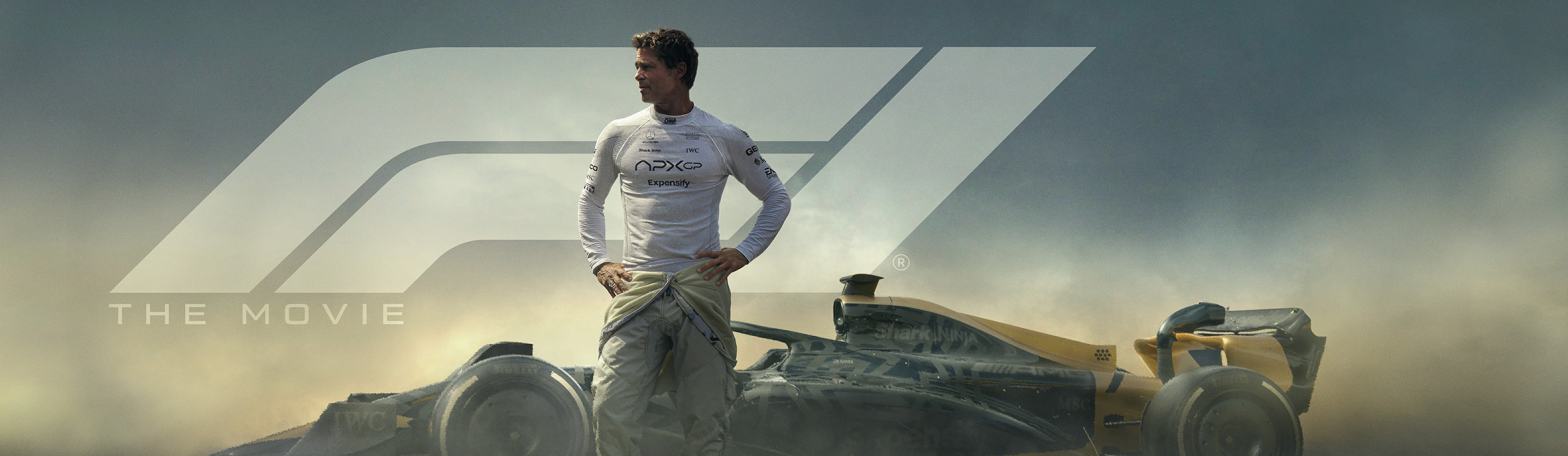
Learn five deep, cinematic life lessons from Brad Pitt’s F1 that every artist and photographer must hear. A must-read for creatives and dreamers.
Dear fellow dreamer,
Last evening, as the credits rolled and the theatre lights slowly blinked back to life, I sat frozen in my seat — heart full, mind humbled. Brad Pitt’s F1 wasn’t just a film about racing. It was a quiet, visceral meditation on life, purpose, connection, and what really drives us — when no one’s watching, when no one’s cheering, and when nothing is at stake but our own inner truth.
I walked into that theatre expecting adrenaline, asphalt, and maybe a few animated crashes befitting of IMAX screen. I walked out carrying something much more precious — five deeply personal truths that felt like someone had gently laid a mirror before me. As someone who lives, breathes, and sometimes bleeds for creativity, these moments didn’t just strike me — they stayed. And today, I want to write to you about them. Not as a critic, not as a blogger. But as someone walking this beautifully brutal path with you.
1. The Noise and the Why
“Money, fame, the interviews… all noise. I drive because I love driving.” – Sonny Hayes (Brad Pitt)
There is a moment early in the film, quiet but thunderous in its honesty, where Brad Pitt’s character, Sonny Hayes, strips his soul bare. No theatrics. Just truth. That single line echoed in me long after it was spoken. In a poignant full-circle moment, rookie driver Joshua Pearce (Damson Idris) later mirrors Sonny’s words — not as imitation, but as transformation —marking his evolution from chasing fame and fortune to surrendering to the raw, electrifying purity of driving for the love of it.
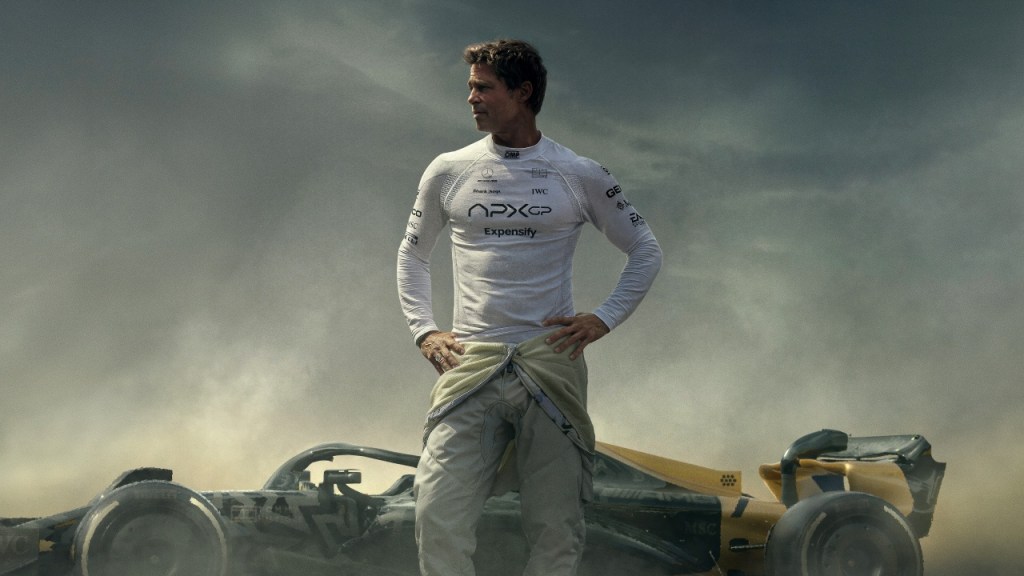
We live in a time where applause is currency. Where likes are validation. Where every post, every click, every published photograph feels like a performance. But what if none of it mattered? What if, like Sonny, we peeled away the noise — the galleries, the awards, the SEO tricks — and came face to face with the reason we picked up the camera in the first place?
That raw pull. That invisible string tugging at your gut when light hits the landscape just right, or when a stranger’s eyes speak louder than a thousand captions ever could. That is why we create.
The noise will always be there. But your why — your truth — is your quiet engine. Feed it.
2. The Zen of Losing Yourself
“I don’t drive. I fly. Just for a minute. It’s all gone. The sound. The fear. Everything. That’s the moment I’m chasing.”
On a hotel balcony in Vegas, Sonny confesses to Kate (APXGP Technical Director played by Kerry Condon) who sees past his deflection — about what he truly chases. He isn’t addicted to speed. He’s addicted to transcendence. That fleeting moment where everything disappears. A second of weightlessness. Of stillness. Of becoming.
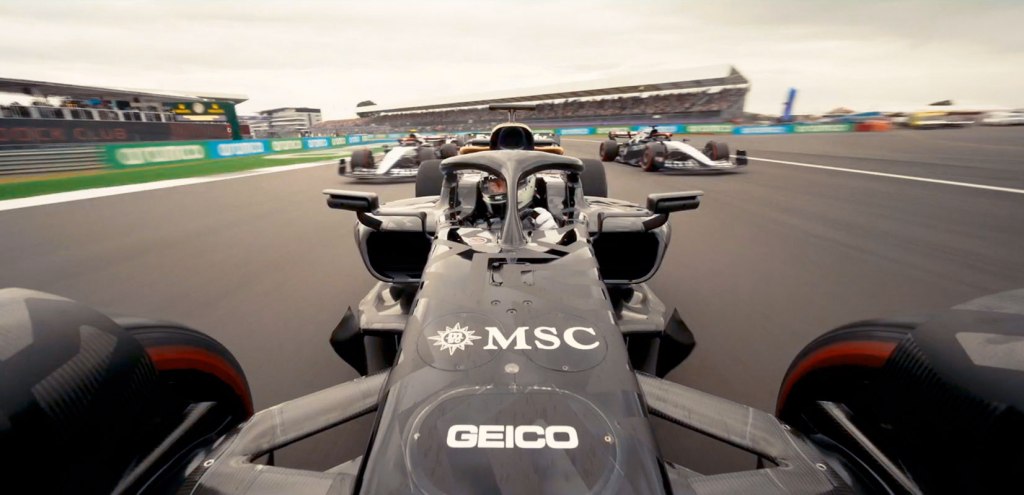
If you’ve ever stood behind your camera in silence, waiting for a scene to unfold — really waiting — you know this moment. The world dims. Your thoughts pause. The shutter clicks not because you want a photo, but because something inside you became the photo.
This is what I call the creative dissolve. And chasing it isn’t indulgence. It’s salvation.
Photographers aren’t collectors of moments. We are seekers of silence. When that stillness comes, hold it like a secret.
3. When the Team Wins, We Win More
“It’s not about which one of us wins. It’s how we win… together.”
In the film’s breathtaking climax, Sonny and his younger teammate, Joshua don’t fight for glory. They fight, with each other. For each other. What could’ve been a rivalry turns into an alliance so musically seamless, it almost sings. And they don’t just win — they rewrite the race.
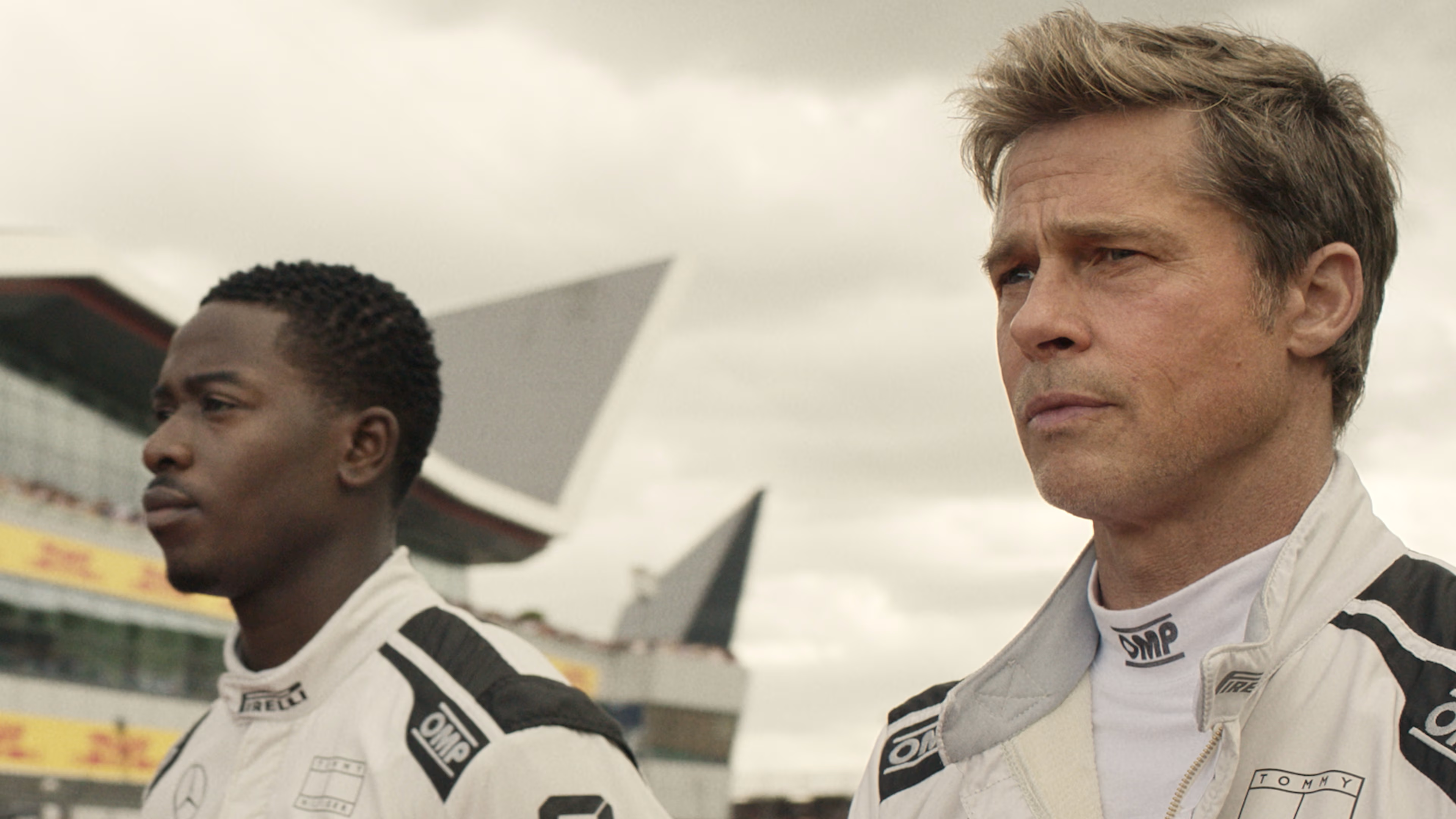
In a culture obsessed with individual brilliance, we forget: synergy isn’t 1+1=2. It’s 1+1= infinite.
As artists, collaboration often feels threatening. Another lens, another vision, another style. But if we let go of our egos, what we create together will often be deeper, more meaningful, and more eternal than anything we’d ever make alone.
Even in photography, let’s romanticize the idea of the collective eye. Let’s believe in complementing, not competing. Let’s build teams, even if it’s just two people who believe in each other. That’s more than enough.
4. The Companion Who Sees You
“When I talk to you, it doesn’t feel like I have to explain who I am.”
There’s a quiet heartbreak and a quiet hope in Sonny’s interaction with Kate — the one person who listens, not as a colleague, but as a witness. They talk about pain, about longing, about identity. And in those conversations, you see him drop his armour, if only for a while. For most of the film, Sonny walks through his wounds in silence — not out of pride, but out of habit — bearing the weight alone, as if suffering were a familiar companion he’d long stopped introducing to others.
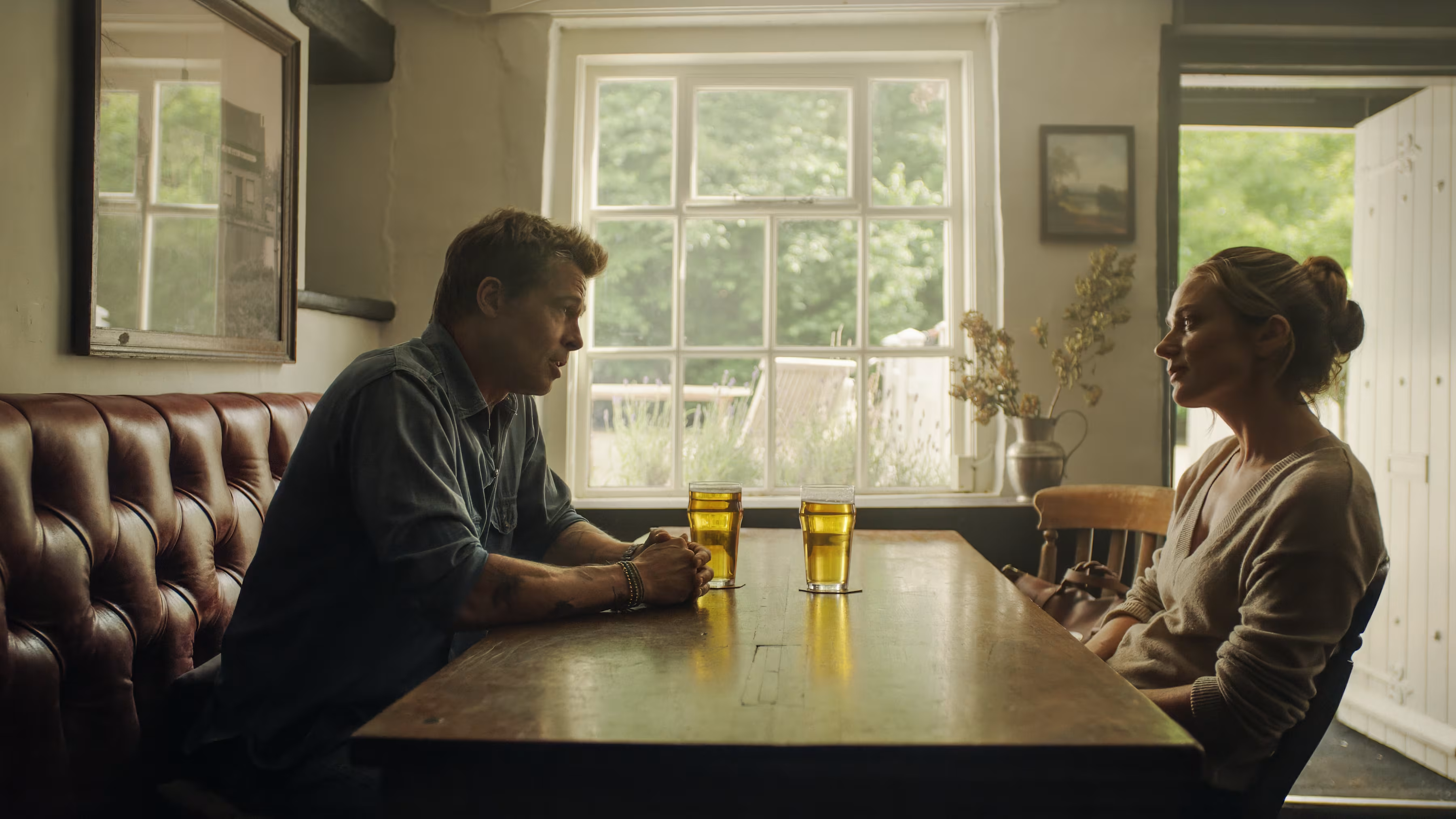
We all need that person. Not a fixer. Not a cheerleader. Just someone who sees us.
As artists, we carry invisible weights — the pressure to stay inspired, to remain original, to justify the value of what we do in a world that often cannot measure it. And beneath all that weight is loneliness. The kind that can’t be cured by followers or praise.
That’s why we need companions who speak with us, not just about our work, but about our wounds. About our doubts. About our dreams we’re too afraid to say aloud.
In the mental health space, this is oxygen. This is therapy. This is survival.
If you don’t have that person yet, please — find them. And if you do, hold on to them with all the grace and gratitude your heart can muster.
5. Friendship That Goes Quietly Deep
He gives up his chance to win. He turns down the big-money offer. He lets his friend shine.
Sonny, in this film, redefines friendship in the subtlest ways, in his interactions with Ruben Cervantes (played by Javier Bardem). Not in grand speeches. But in quiet choices. In gestures unseen. In sacrifices made without scoreboard points. In a tense confrontation with Joshua, Sonny snaps — not out of anger, but out of unshakable loyalty. ‘I don’t care if you throw your career away, or burn it all down. But if I’m here, I’m not letting this team — our team — get sold off or sink.’ It’s not just defiance; it’s devotion — the kind that puts friendship above legacy.
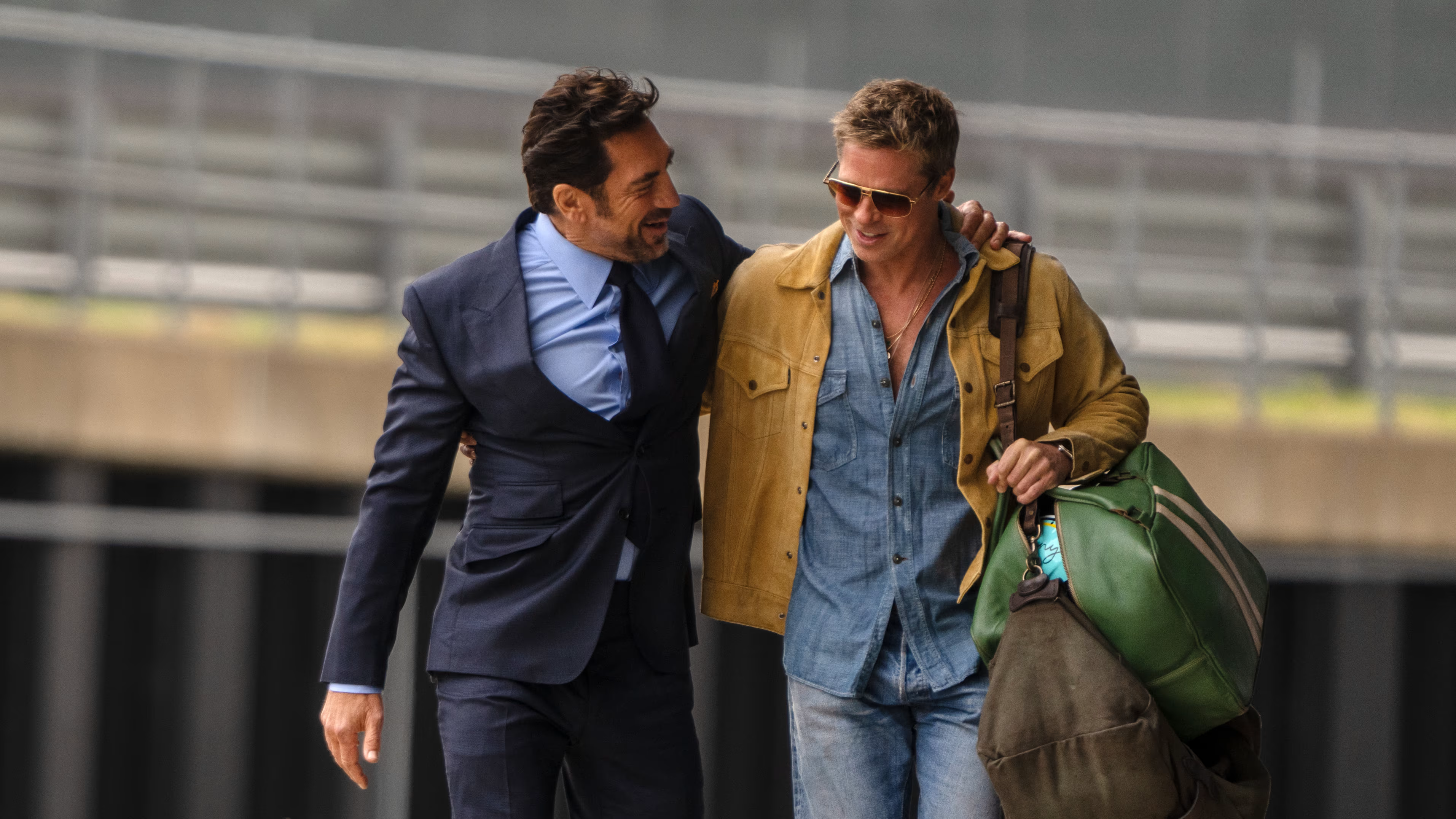
Likewise, after Sonny’s crash, Ruben quietly keeps him off the track — not out of doubt, but out of love. It’s his way of saying, ‘You’ve done enough. I won’t let you break yourself for this.’ No speeches, just care, disguised as tough calls.
How rare is that kind of friendship today? Where someone wants you to win. Even at the cost of their own shine. Not as charity. But because love, respect, and loyalty mean more than trophies.
As creators, our journey is full of these inflection points. Where we choose between rising alone or rising together. Between climbing fast or climbing with our integrity intact.
The next time you help a fellow artist get published, introduce them to a curator, or simply tell them how much their work moves you — you’re becoming that kind of friend. And you’re proving to yourself that kindness and success are not mutually exclusive.
So, where do we go from here, you and I?
Maybe we start by remembering why we began.
Maybe we chase silence instead of noise.
Maybe we let our egos dissolve long enough to make room for others.
Maybe we open our hearts to those who are ready to hold them.
Maybe we choose friendship — the kind that does not broadcast, only builds.
F1 wasn’t a story about racing. It was about coming home to yourself. As an artist. As a human. And I hope, if you’re reading this far, you feel a little closer to that home too.
With dust on my lens and gratitude in my heart,
Vivek
(your fellow traveler in this beautiful mess of creating)
Discover more from Vivek Verma
Subscribe to get the latest posts sent to your email.
 Vivek Verma