
Discover minimalist photography as a mindful practice. Learn from iconic artists, explore techniques, and transform how you see the world—one simple frame at a time.
What if your next masterpiece lies not in what you add, but in what you subtract? Let’s take it as simple math.
In math, addition builds complexity—layer upon layer, number upon number. It’s the sum total of everything you bring in. Subtraction, on the other hand, distills. It simplifies. It removes the noise until only the essential remains.
Minimalist photography works the same way. It’s not about what you can cram into the frame—it’s about what you can leave out. Each element you subtract brings clarity, balance, and power to what stays. Like a clean equation, minimalism in photography asks: What is the irreducible truth of this scene?
Minimalism reveals the soul of your subject—uncluttered, undistracted, undeniable. Sometimes, the most powerful expression is not in what you include, but in what you choose to let go. So let’s begin.
Have you ever stood in front of a photograph so simple that it left a lingering presence in your mind, like a visual therapy calming your mind? Have you ever wondered why some empty spaces feel more complete than the most complex composition? What if I told you that by stripping things down, you could actually see more clearly—not just as a photographer, but as a person? Welcome to the gentle but powerful world of minimalist photography.
Today, we’re jumping into a style of photography I honestly used to overlook—until I stumbled upon the magical work of Michael Kenna. That’s when everything changed. Minimalist photography gave a whole new meaning to how I see landscapes and how I compose my shots. It’s like my camera finally learned how to breathe.
In this post, I’ll share a few easy tips to help you get started with this beautiful style. No heavy theory—just some ideas, some inspiration, and a few artists recommendations to get your creative wheels turning.
Let’s enter the quiet side of photography—where the simplest frames often speak the loudest.
What Is Minimalism Anyway?
(And Why You Don’t Need to Be a Photographer to Get It)
Minimalism is not just an aesthetic. It’s a philosophy—a way of seeing the world and responding to it. Whether you’re a painter, sculptor, illustrator, designer, or photographer, you’ve likely brushed against its principles: simplicity, clarity, negative space, and an almost sacred reverence for stillness. In visual art, minimalism emerged in the late 1950s and ’60s as a counterpoint to the emotional intensity of Abstract Expressionism. Think Donald Judd’s boxes, Agnes Martin’s grids, or Kazimir Malevich’s stark suprematist compositions.
Minimalism invites you to ask: What’s essential? What’s noise, and what’s signal? As artists, we are constantly consuming, curating, framing—but rarely subtracting. Minimalism demands that subtraction become part of our creative muscle.
Why Every Photographer Should Try Minimalism
(Even If You Don’t Think It’s ‘Your Style’)
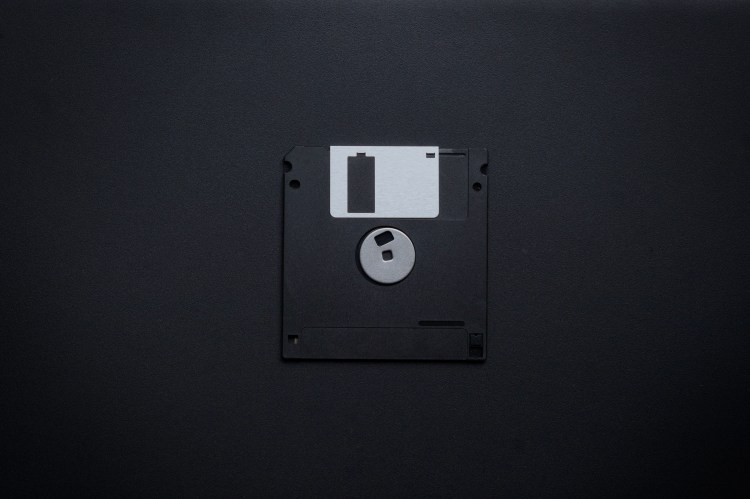

Trying minimalism once is like meditating for the first time: awkward, silent, but oddly liberating. As photographers, we’re taught to fill the frame, to chase detail, to ‘say something’ with every shot. But minimalist photography teaches us to breathe. It teaches us to see—truly see.
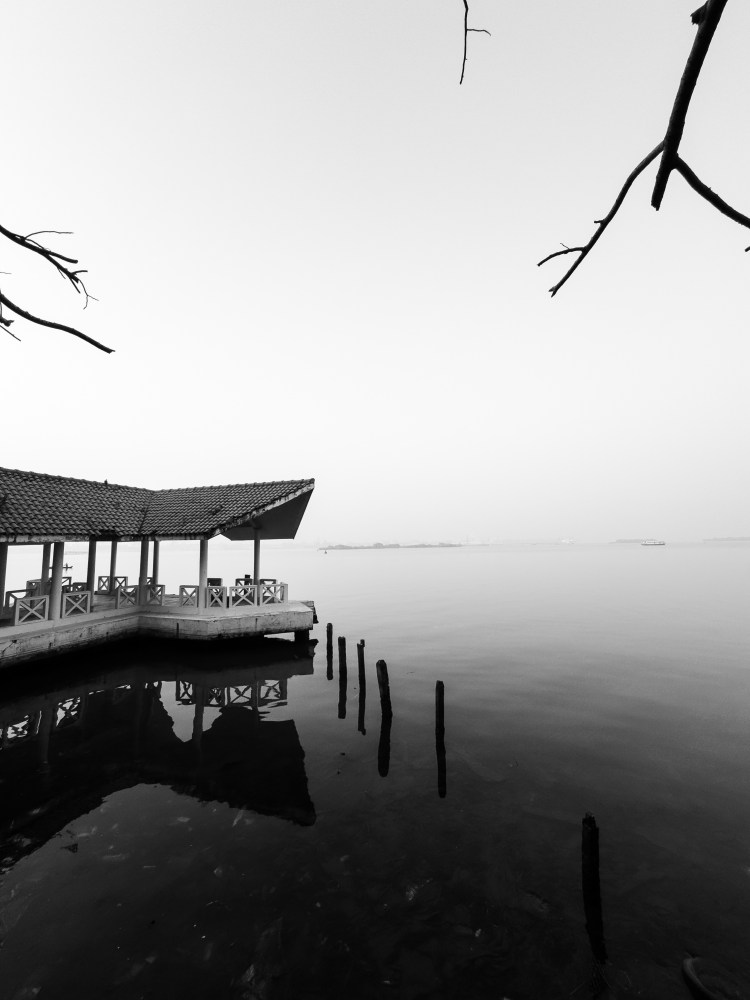
Once you experiment with minimalism, something shifts. You begin to notice the way a single chair casts a shadow across a floor. You marvel at the way fog consumes a landscape, leaving only the hint of a tree. Suddenly, emptiness becomes your most powerful compositional tool.
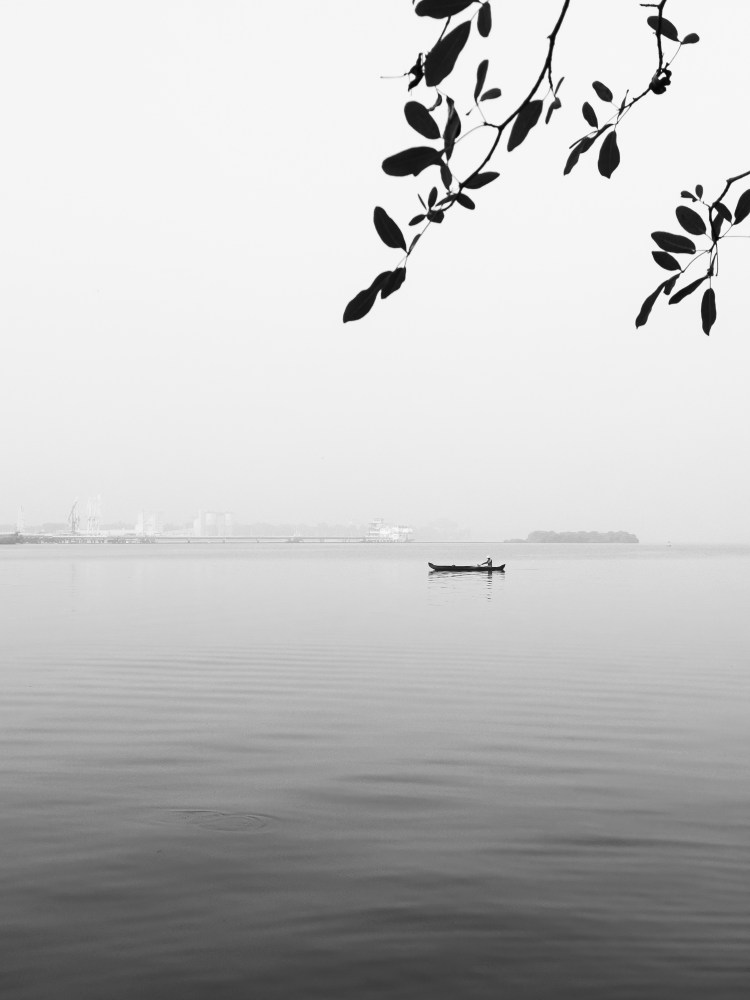
And here’s the secret benefit: minimalist photography isn’t just good for your portfolio—it’s good for your soul. It slows you down. It de-clutters not just the frame, but your mind. It invites presence, clarity, and quiet reflection in a world that moves at breakneck speed.
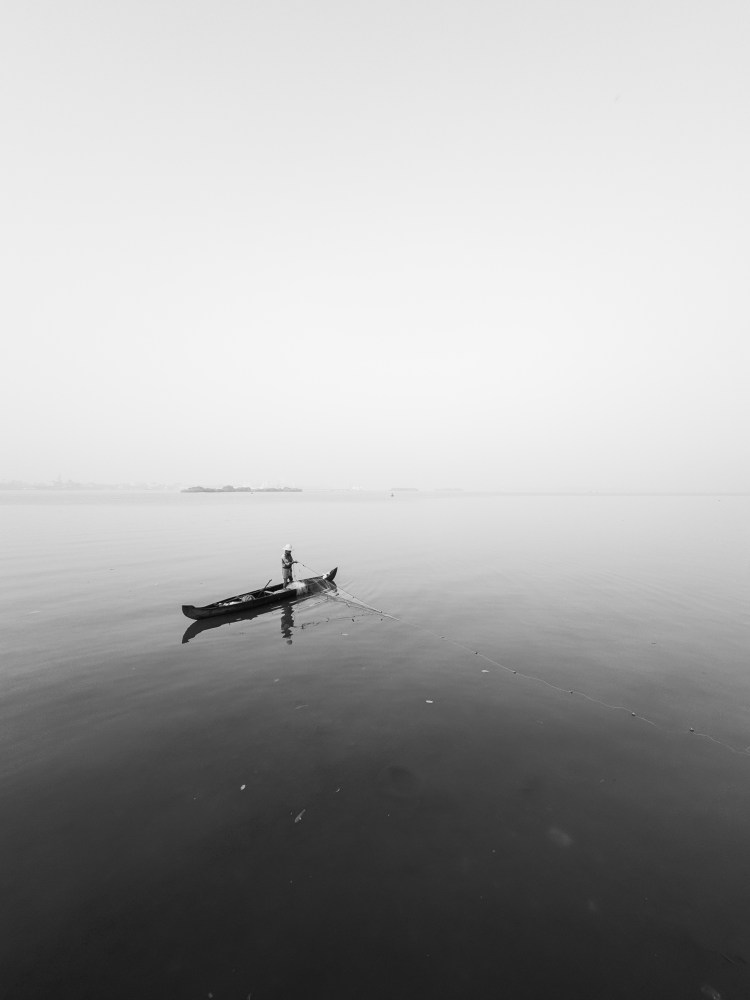
How to Create Minimalist Photographs:
If you’re just getting started, here are some field-tested ways and my personal approach to minimalist style of photography.
QUICK TIPS
- Compose to eliminate
- Embrace negative space
- There is no right lens
- Find patterns and geometry
- Work with limited colors
- Shoot during quiet hours
- Try long exposure
TOOLS TO RULE
- 10-stop ND filter for long exposure
- Sturdy tripod
- Telephoto lens to eliminate distractions
- Wide-angle lens to include negative space and enhance scale
1. Compose to Eliminate
Naturally, composition plays a crucial role in minimalist photography. But the most essential step is elimination—the deliberate act of removing everything that doesn’t serve the frame, until you’re left with only the bare essentials: the protagonist of your visual story, and maybe a sidekick, if it adds meaning.
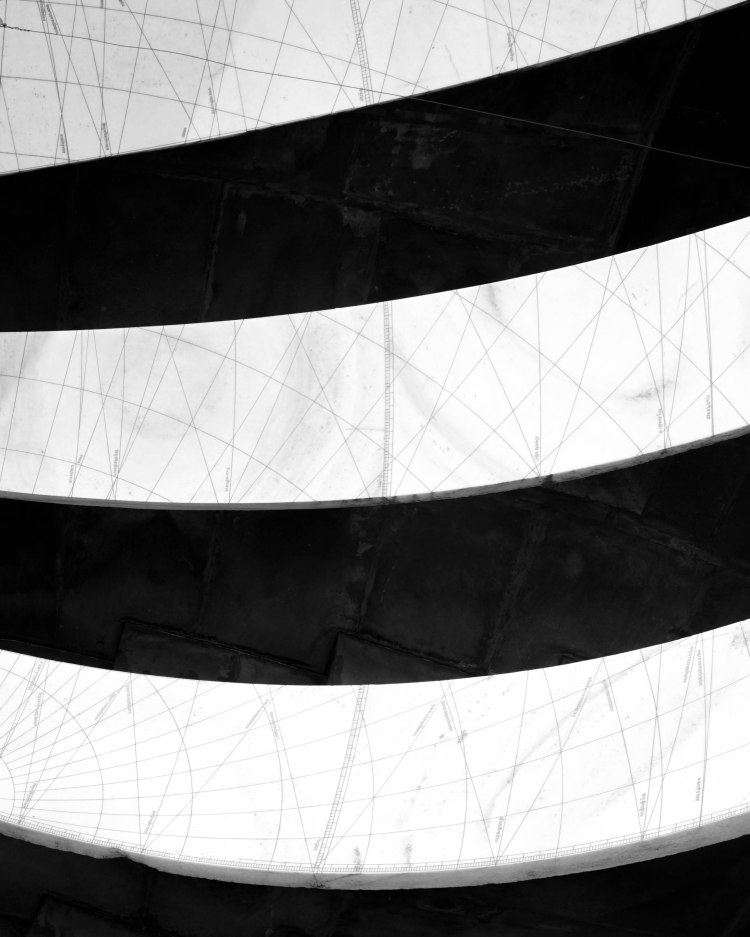
At a bustling, tourist-heavy spot like Jantar Mantar in Jaipur, I chose to eliminate every distraction—people, noise, visual clutter—focusing solely on the geometry.
2. Embrace Negative Space
Yet even as you simplify, don’t overlook the role of the “villain”—the negative space. That emptiness isn’t just background; it holds tension, breathes emotion, and gives your subject the space to truly be seen. So, don’t be afraid of blank skies, empty walls, or vast stretches of nothingness. That space is power.

This image would fall flat without the negative space of the empty wall—it’s what amplifies the singularity of the subject and gives the frame its minimalist strength.
3. There’s No Right Lens
Prime lenses make you move, think, and compose with intent. But what if you’re at the edge of a cliff? That’s when you ditch the rulebook and reach for a telephoto to ‘eliminate’. Likewise, a wide-angle has its own place—filling-in more emptiness, enhancing scale, creating a sense of space. Practicality beats purism.
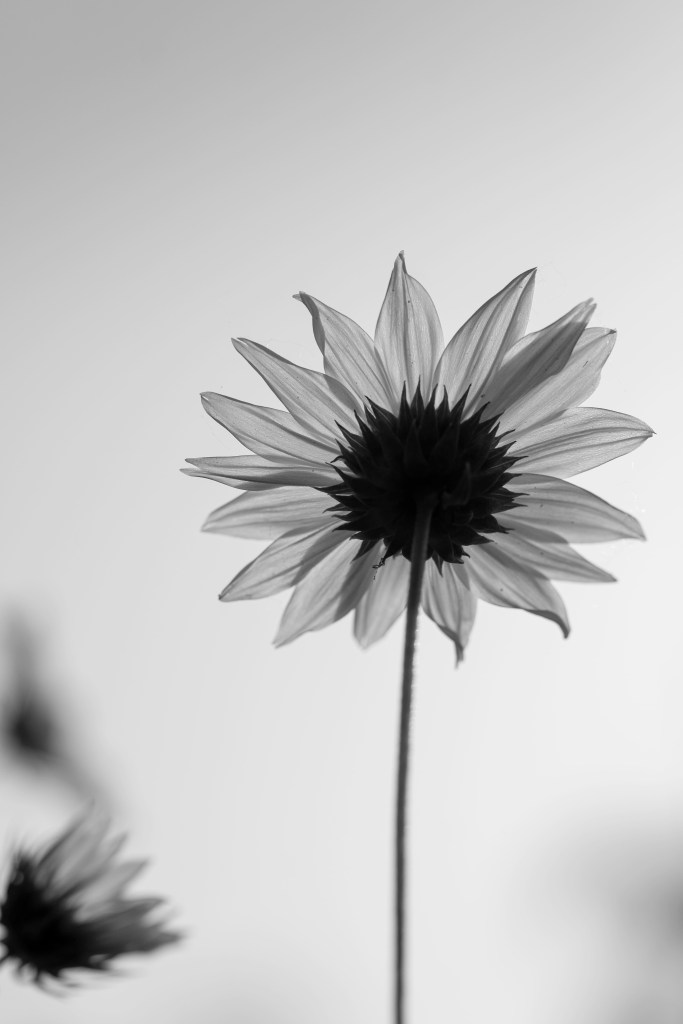
The simplicity of this photograph was possible only because of the telephoto lens (24–105mm f/4). A wider lens would have pulled in unnecessary elements.
4. Patterns and Geometry
Minimalism often shows up in repetition, symmetry, and simple patterns—a row of windows, a lone leaf on tiles, or perfectly aligned shadows. These quiet rhythms bring calm to everyday chaos, creating order from clutter and drawing attention to what we usually overlook. By focusing on structure and subtlety, minimalist photography invites us to find stillness and beauty in the ordinary.
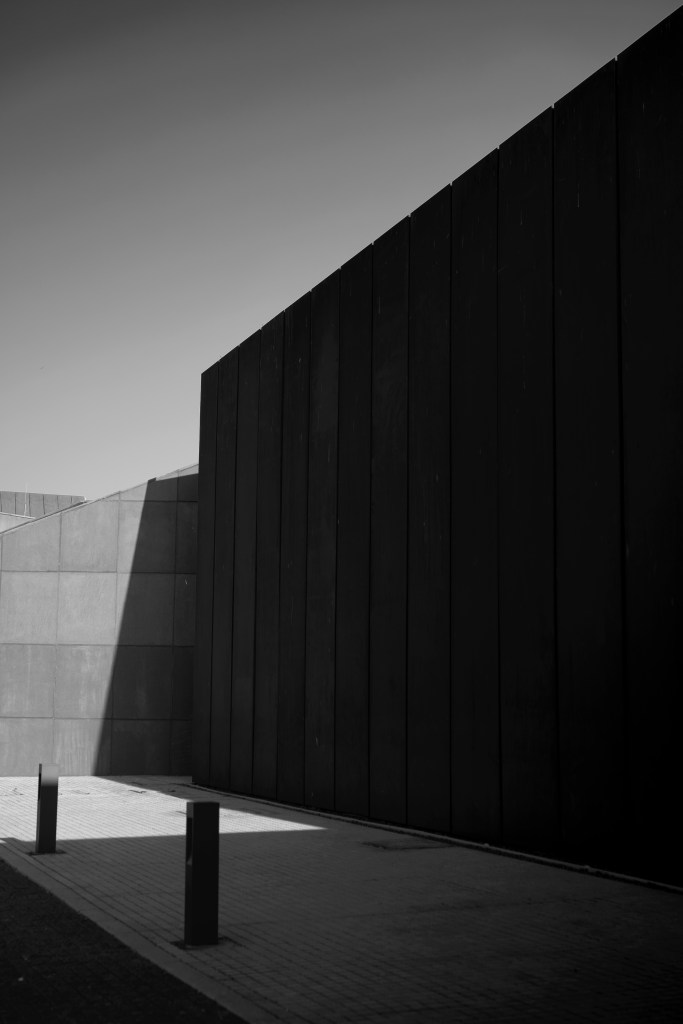
The geometry in this composition—shaped by lines and blocks of shadow—is what makes the image shine. Without these elements, the visual rhythm and quiet magic would simply fall apart.
5. Work With Limited Colors
Muted tones, monochrome, or black-and-white remove distractions, letting form, light, and emotion shine through. Limited palettes create calm, guide the eye, and give your images a timeless, thoughtful feel. Black-and-white, in particular, can lend a timeless, contemplative feel to your image, helping mood and composition take center stage. Try stripping away color and see what your image says in silence.
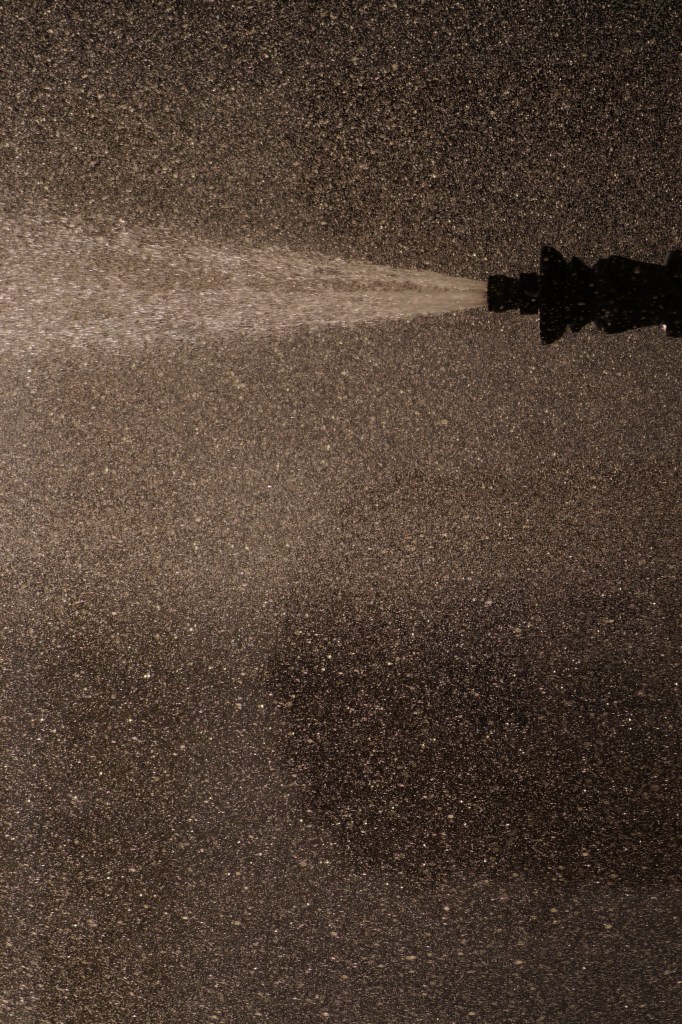
The limited color palette in this frame is exactly what makes it powerful—you see only the fountain head and the flowing water behind it, with nothing else competing for attention.
6. Shoot During Quiet Hours
Early mornings and foggy days clear visual and mental clutter. With softer light and fewer distractions, minimalism comes naturally and details emerge—a single tree in the mist, the play of soft light on an empty street. Quiet hours not only offer cleaner frames but also invite a quieter state of mind, helping you connect more deeply with your surroundings and your subject.
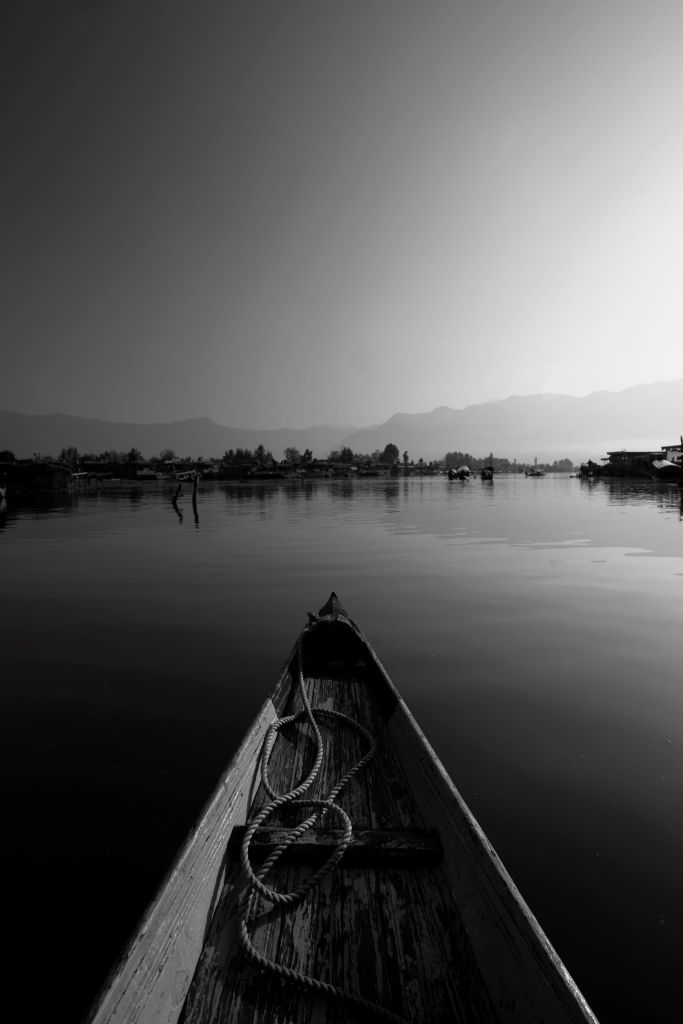
I shot this image of Dal Lake during the early morning stillness—and you can feel that quiet in the frame. Shooting in quiet hours turns even the busiest places into minimalist moments.
7. Long Exposure for the Win
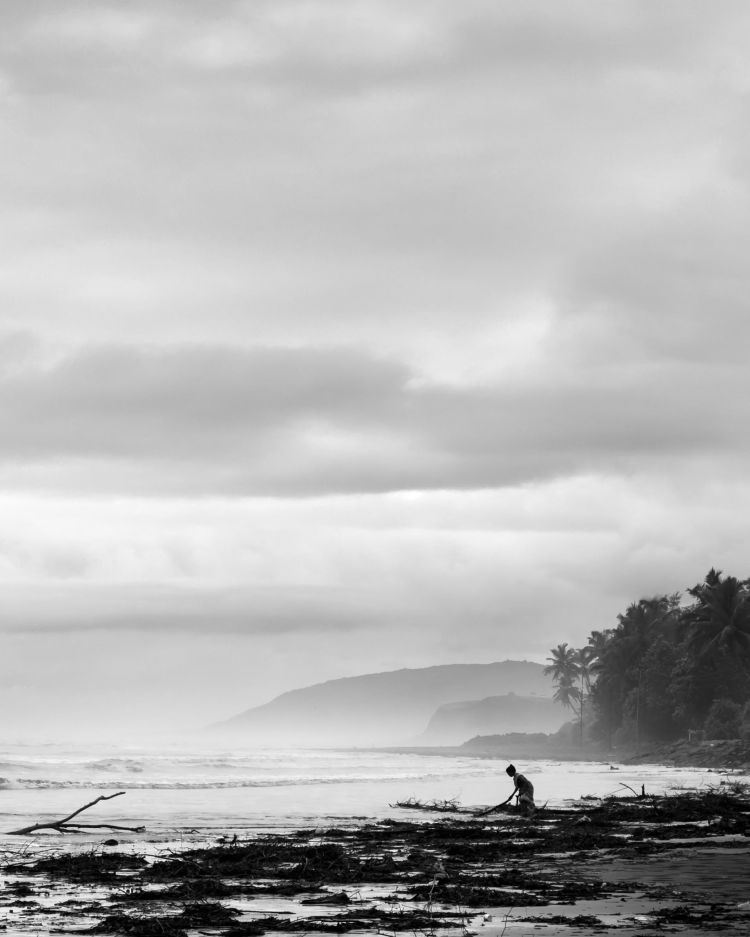
Blur movement. Still the chaos. Make water look like glass or turn people into ghosts. Long exposures simplify the scene by smoothing out distractions—moving clouds become soft streaks, waves turn to mist, and busy places suddenly feel empty. It’s a powerful way to bring calm and surreal beauty into your frame. Experiment with slower shutter speeds and let time reshape your image.

Long exposure worked its magic here—softening the man’s movement into a ghostlike trace, as if he belongs more to the memory of the shore than the moment itself.
Bonus Tip #8: Scale and Atmosphere
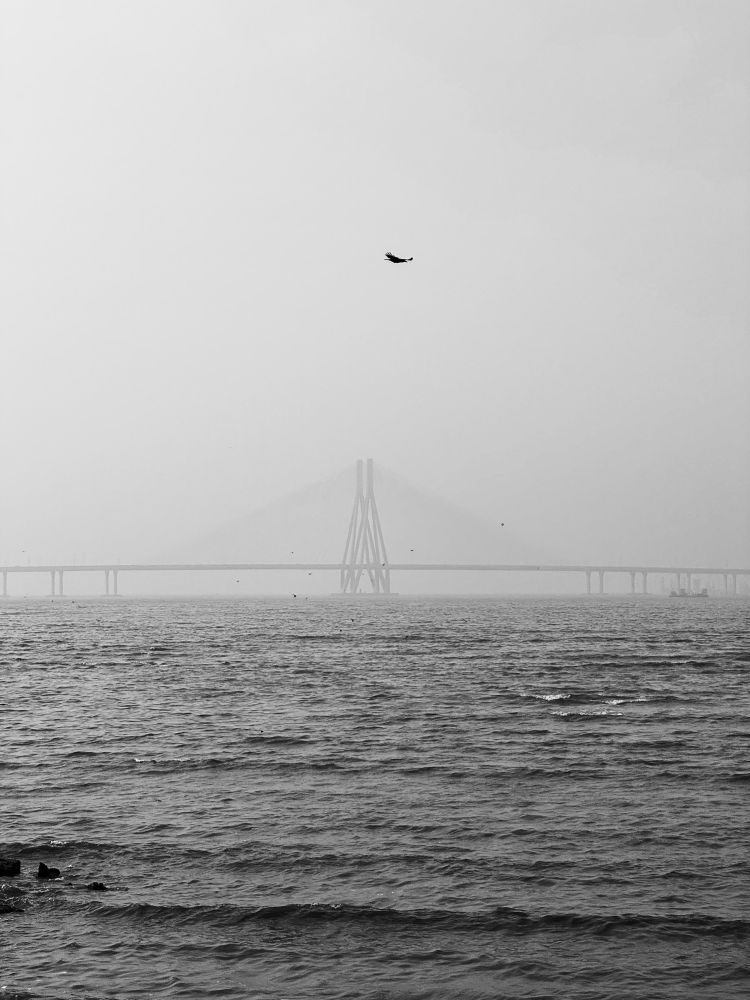
I used my phone’s zoom lens to capture the mist and mystery rising from the raging sea on the distant horizon. But it was the lone woman entering the frame that brought scale—and with it, a sense of awe and depth. In minimalist long exposure photography, atmosphere and scale aren’t just details; they’re what transform a scene from simple to sublime.
My Take on Minimalist Photography
(As a form of visual mindfulness and meditative practice)
There were moments in my life when everything felt like too much—when I was stretched thin between responsibilities, emotions, and expectations. In those times, my camera became my therapist, a space for me when I didn’t have the words. An unplanned walk, camera in hand, quietly observing the ordinary—felt less like chasing a perfect shot, and more like a silent meditation, a form of visual mindfulness.
Embracing minimalist photography has softened something in me. I find myself feeling lighter, calmer. It helps me quietly untangle the knots of daily stress—especially the kind that sneaks in when you’re living many lives at once. A father of twin toddlers. A partner. A lawyer navigating financial world complexities. A human trying to make sense of it all.
“Less is more” now feels like a survival mantra. When life is already overwhelming, you begin to see the value in the smallest things, the simplest joy. You start holding on only to what truly matters—and making peace with letting go the rest.
Minimalist photography mirrors this beautifully. Our eyes can take in everything at once, but should they?
Let your main subject be the protagonist of the frame—but don’t underestimate the role of negative space either. Think of it as the quiet antagonist—not to distract, but to elevate. In every great story, the villain makes the presence of protagonist more meaningful. It’s the tension, the contrast, the silence around the subject that gives it power.
After all, what’s a memorable movie without a compelling villain? Imagine Avengers: Infinity War without Thanos, The Dark Knight without the Joker, or Agneepath without Kancha Cheena—pretty bland, right?
Every hero needs a powerful villain to rise against. Minimalist photography works the same way. Your subject shines brighter when the negative space—the quiet, brooding villain—is given its due.
It teaches you what life often forgets to: that clarity isn’t found in more, but in what you’re brave enough to leave out.”
Artists Whose Minimalist Style Inspire Me
Let’s take a look at the photographers who helped define what minimalist photography could be and has inspired me to push my limits:
Other Contemporary Artists to Explore:
Nina Papiorek
Nina weaves minimalism into street photography, uncovering moments of calm within the chaos of the city.
Ali Zolghadri
Ali brings minimalist magic to street and urban photography, using clean lines, bold geometry, and quiet human moments.
MINAMALIST ARTISTS ON INSTAGRAM TO FOLLOW
Maarten Rots | Matthieu Venot | George Byrne | Anna Devís + Daniel Rueda
Michael Kenna (b.1980)

Michael Kenna’s minimalist landscape photography is a study in stillness, simplicity, and grace. Working almost exclusively in black and white, he transforms ordinary scenes—trees, rivers, bridges—into quiet, meditative spaces. His long exposures soften time, and his careful compositions create a sense of balance and silence that feels almost spiritual. Kenna doesn’t just photograph landscapes; he distills their essence, inviting the viewer to pause, breathe, and feel.
Hiroshi Sugimoto (b.1970)
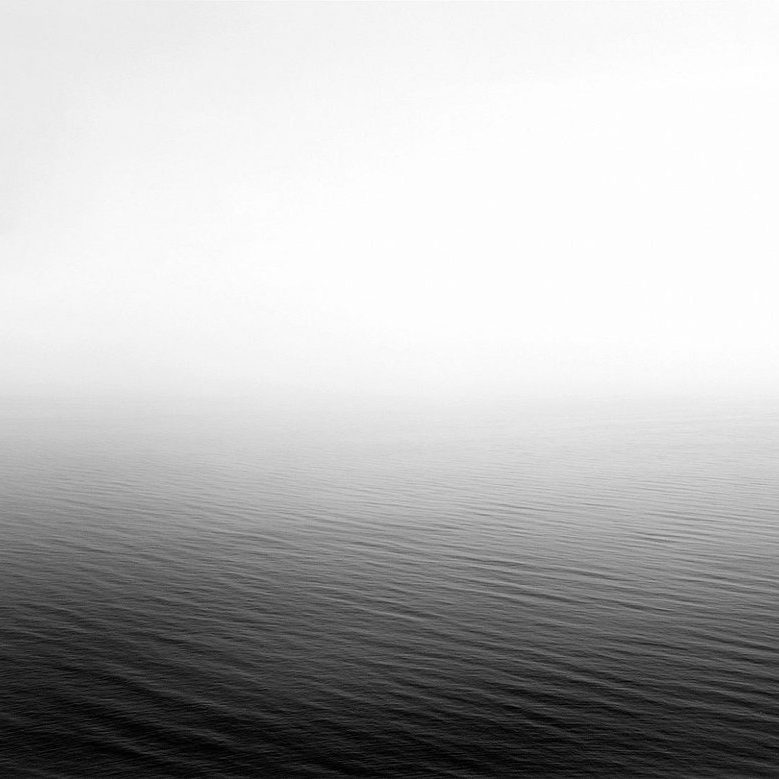
Sugimoto’s minimalist photography explores time, memory, and perception through striking simplicity. His seascapes and blurred architectural forms often appear timeless—stripped of context, yet rich in atmosphere. Using long exposures and precise compositions, Sugimoto turns vast oceans and classical buildings into meditative studies of light and shadow. His work invites quiet reflection, blurring the line between reality and abstraction, presence and eternity.
Josef Hoflehner (b.1955)
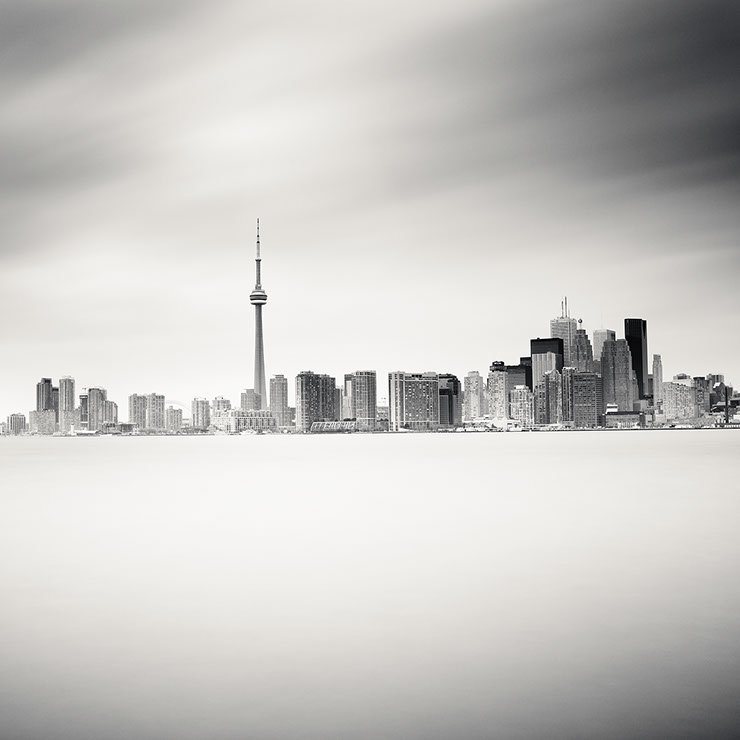
Josef’s minimalist cityscapes and landscapes are filled with silence, solitude, and striking contrast. Working primarily in black and white, he captures vast, often desolate scenes where human presence is subtle but powerful. His impeccable compositions and love for harsh weather—fog, snow, and overcast skies—create a moody, atmospheric quality. Hoflehner’s images feel like quiet pauses in time, inviting viewers to reflect on space, stillness, and the beauty of emptiness.
Can You Let Go to See More Clearly?
What might you discover if you stopped trying to fill the frame? If you gave yourself permission to simplify—to subtract? Minimalism in photography is not about doing less for the sake of laziness. It’s about doing less to feel more.
So here’s my invitation: Go out with your camera, your phone, even your sketchbook—and try seeing through a minimalist lens. Let silence enter the frame. Let simplicity shape your story.
And when you do, will you share it with me? Tag me, write to me, connect with me as a fellow wanderer in search of quiet beauty. Let’s make space—for art, and for each other.
Hi, I’m Vivek, a travel photographer and blogger based in Mumbai, capturing landscapes, architecture, and street life through my lens. But beyond photography, I love connecting with fellow creatives. If you’ve found a piece of your story in mine, let’s keep the conversation going. I’m just a click away on social media.
Discover more from Creative Genes
Subscribe to get the latest posts sent to your email.
 Creative Genes