Break free from limiting beliefs about art and creativity. Discover 10 powerful myths Art & Fear helped me unlearn—and why your art is already enough.
The Quiet Book That Spoke Louder Than My Inner Critic
I didn’t expect a slim, unassuming paperback to feel like therapy. But David Bayles and Ted Orland’s Art & Fear didn’t just speak to me—it heard me.
This wasn’t a book I read with a cup of coffee and a casual interest. I devoured it in a storm of underlines, dog-eared pages, and long pauses where I just… sat with my truth. It didn’t tell me what I didn’t know—it reminded me of what I was too afraid to believe: that the fear, the doubt, the messiness—it was all part of the deal.
This post isn’t a review. It’s a confession. A kind of love letter to the artists we are when no one’s watching, and the fears we carry in silence. These are the myths Art & Fear helped me break open—and maybe, they’ll do the same for you.

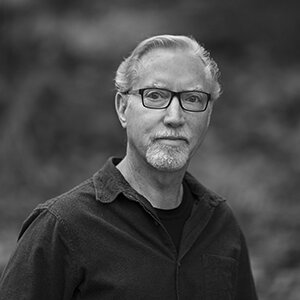
David Bayles
David Bayles is a photographer and teacher whose work explores the relationship between artistic process and personal growth. His insights into the emotional struggles of creators stem from years of guiding photographers through both technical craft and creative doubt. His background in fine art photography informs his compassionate, no-nonsense approach to making meaningful work.
Image from here
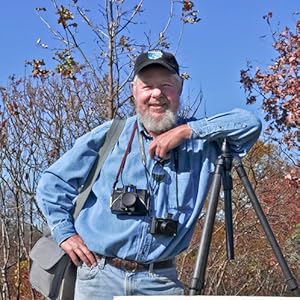
Ted Orland
Ted Orland is a photographer, writer, and longtime collaborator of Ansel Adams. Known for blending visual art with philosophical depth, he brings a deeply personal understanding of the challenges faced by working artists, especially within the photographic world. His ability to connect artistic practice with human experience has made him a beloved figure among photographers and creators alike.
Image from here
Myth #1
You have to be born with the “Talent”.
This one haunted me for long. I grew up believing that creativity belonged to those who are borne with such talent. That art was the domain of the gifted, and if I had to struggle to get it right, maybe I didn’t belong.
But Art & Fear gently, firmly, tore this apart. Talent, they say, “may get someone off the starting blocks faster, but without a sense of direction or a goal to strive for, it won’t count for much.”
The ones who make it aren’t the most naturally gifted—they’re the ones who’ve learned how to continue and start again—or more precisely, how not to quit. Those who create through failure, boredom, and fear and start again.
For the first time, I saw myself not as an outsider trying to sneak into the world of photography, but as someone who had always belonged—I just didn’t know persistence was the ticket.
Myth #2
‘Fear’ has no place in your “Art”.
The truth, this book unraveled for me is – every artist has their own fears – the fear about oneself (that they’re not good enough), and the fear about their reception by others. The first keeps them from reaching their best; the second keeps them from being their true self. Left unchecked, these fears don’t just silence your voice — they erase it.
This book helped me embrace these fears and said: “Yes, this is what it feels like to care deeply about something fragile.”
I learnt, people who make art challenge their fears. That simple truth cracked me wide open. Fear stopped being the signal to stop—and started being the sign I was exactly where I needed to be.
Fear isn’t the enemy of art—it’s the evidence that it matters.
Myth #3
Find the inspiration, before you “Start”.
I used to think, true inspiration dawns upon you, and is a necessary precursor for you to get started. As artists, we all have felt not being “inspired” enough to create.
Bayles and Orland dismantled this with one sentence: inspiration comes after the work begins, not before. Art is born in motion. Not magic.
Now, I don’t wait for inspiration to begin—I begin in the hope it might find me along the way. And more often than not, it does. Somewhere between the first hesitant move and the quiet rhythm of creating, inspiration arrives—not as a lightning bolt, but as a whisper that says, ‘Keep going.’”
The muse doesn’t show up first—it follows you into the work.
Myth #4
Your work must be “Original” to be valuable.
I’ll admit it—I’ve long been on a restless quest to make my work original, to create something no one else had thought of or done.
But time and again, that pursuit led to quiet disappointment and the sobering realization: nearly everything worth saying or making has already been said or made by someone else.
But Art & Fear reframed originality as perspective. Your life, your voice, your version of the story—that’s what makes art original.
It’s not about being the first. It’s about being you. And that, finally, felt like something I could do.
Myth #5
Good art must result in “Recognition”.
I used to measure my art by how many people liked it. How many commented or shared it. My worth was tied to these elusive numbers.
But Bayles and Orland held up a mirror: what if no one ever sees my work—would I still be making it?
Their answer was my awakening: yes. Because the value of art lies not in applause, but in the making itself. In the connection between you and your work. In the honesty of it.
The audience can’t judge what truly matters—your growth—because they don’t see your process and often don’t care about it.
Myth #6
Have clarity. Avoid “Uncertainties”.
I always thought I needed to have it all figured out before I began. The concept, the message, the final vision.
But Art & Fear taught me something radical: uncertainty is the price of making real art. The more we cling to certainty, the less room we leave for art that is risky, messy, suggestive, or spontaneous.
Uncertainty isn’t a flaw in the process—it is the process, which helps us find our truth.
Now I know, art doesn’t thrive on predictability. It demands risk. And my ability to tolerate it will decide how far my art can go.
Myth #7
Your work needs to be “Perfect”.
I always took pride in seeking perfection to the last details, creating art means doing things flawlessly.
But Art & Fear hit me hard with the truth I’d long resisted: imperfection isn’t just common in art—it’s essential to it.
To demand perfection is to deny our own ordinary—and profoundly universal—humanity. Yet it is precisely this humanity that fuels our art. Perfectionism, cuts us off from the very source of our work.
The seed of your next artwork lies embedded in the the imperfections of our current piece.
Myth #8
It is “Quality”, not “Quantity” that matters.
I always believed, we must strive for quality, not the quantity.
This book broke this myth by establishing that the only way to create good work is to make a lot of not-so-good work, to sift through the noise and find the parts that are truly yours.
Because most of what you make will exist only to teach you how to make the few pieces that truly soar—and no one else can do that work but you.
So, your task, simple yet profound, is to keep working on your work and make art you care about—and a lots of it. Through feedback, disguised as failures, you find the clearest path to discovering your vision.
Myth #9
It is “Result” that counts.
I used to believe that ‘results’—the applause, the recognition—were all that truly mattered. That the world only valued what it could see.
But Art & Fear unraveled that illusion. It revealed that the artist’s deepest reward isn’t found after the work is done, but in the act of making itself. The process—uncertain, intimate, often invisible—is where the soul of art lives. It reveals to you about yourself.
Since then, any piece of art or writing divorced from that vulnerable, human process feels hollow to me—like something even AI could have produced.
Because, without the hand that trembled, the thought that almost failed, and the soul that dared— art is just a shell.
Myth #10
Your flaws are your “Roadblocks”.
I spent years trying to erase my flaws—believing they were obstacles to overcome, not parts of me to own. I bent myself into shapes that didn’t feel like mine, just to fit in.
But Art & Fear offered a truth that felt like a lifeline: Art that matters begins with radical self-acceptance. Without it, your voice dims, your work echoes someone else’s truth—and the reflection in your art no longer feels like you.
Your voice is your power—and the moment you own it, your work stops blending in and starts standing out.
It was in that moment I understood: the flaws in my life were meant to give words to my poetry. They were the ink.
Key Takeaways
- You don’t have to be born with ‘talent’ to be an artist.
- Every artist has their ‘fear’, but they challenge them.
- Inspiration comes after the work begins, not before.
- Your work need not be ‘original’ to be valuable.
- The value of art lies not in applause, but in the making itself.
- Uncertainty isn’t a flaw in the process—it is the process.
- Imperfection is beautiful.
- Make art you care about—and a lots of it.
- The process—raw, uncertain, and deeply personal—is the point.
- Art that matters begins with self-acceptance.
Conclusion: The Book That Made Me Feel Seen
Art & Fear is the kind of book that finds you when you need it most—when you’re stuck, lost, or secretly wondering if you’re even a “real” artist. I picked it up during one of those silent battles with self-doubt, hoping for answers. What I found was something deeper: a gentle, unwavering voice that told me I wasn’t alone.
It taught me that fear isn’t a sign I’m failing, but proof I care. That perfectionism doesn’t protect art—it chokes it. That originality isn’t about inventing something entirely new, but about showing up fully as yourself. And most of all, it reminded me that the value of art isn’t in the applause that follows, but in the raw, honest process of creating it.
Reading this book felt like being seen. Understood. Encouraged. It’s not filled with techniques or how-tos, but with truths—about the quiet, messy, sacred act of making things that matter.
Every artist, creator, and writer—whether just starting or deeply seasoned—deserves to read this book. It’s a lifeline. A mirror. A gentle push forward.
What’s needed is a broad sense of direction, a rough strategy for finding it, and the courage to embrace mistakes and the unexpected along the way.
Let’s Talk: What Myth Do You Need to Break?
Have you read Art & Fear? Or have you been living under myths that keep your art hidden?
Share your story with me. Comment below, message me, send a voice note if you must. Let’s remind each other that it’s okay to struggle—and powerful to keep going.
Discover more from Vivek Verma
Subscribe to get the latest posts sent to your email.
 Vivek Verma
I have been stuck with my artistic work for several months now: illustration and comics. It is always difficult to start again.
Thank you for this summary. I already knew the book, but was looking for some support.