Explore the unspoken struggles behind photography collaborations—where exposure replaces pay, and artists are undercut in the name of opportunity.
When Dreams Come With a Price Tag
Imagine this: you wake up to a DM from a popular model, brand, or influencer saying, “Hey! Love your work. Want to collab?” Your heart races. It feels like a door opening to something big and rewarding. Maybe this will be the project that finally gets your work seen. Maybe this will lead to paid gigs later. Maybe…
But deep down, there’s a growing sense of unease.
No budget. No fee. No contract. Just the good old barter of time, talent, and the promise of “exposure.”
If you’ve ever worked in fashion or commercial photography, you probably know the feeling. I’ve been there too—hoping to build a good portfolio of work while also feeling a bit undervalued and exploited at times.
The sad part is—what used to be a genuine creative exchange has now turned into a trend. “Can we collab?” sounds stylish, but more often than not, it just means “Can you work for free?”
This post is for every photographer and cinematographer who has poured sweat, hours, creativity, and heart into a project only to be paid with a tag on Instagram or a few extra followers.
Let’s talk about the highs and lows of collaborative projects, and more importantly, the silent erosion of value in a fiercely competitive creative economy.
The Promise of Collaboration: Why We Say Yes
Before diving into the pain points, let’s acknowledge the real opportunities that collaborations can unlock:
1. Access to Bigger Platforms
Collaborating with a high-profile brand or influencer can introduce your work to a broader audience. A single reshare or shoutout can sometimes do what ads and portfolios can’t.
2. Creative Freedom
Unlike rigid commercial assignments, collab projects often offer more creative freedom. You get to experiment with lighting, editing, storytelling, and concepts that reflect your vision.
3. Building Portfolio & Network
Especially for those starting out, these projects can help build an impressive body of work and establish connections that could lead to paid jobs down the road.
4. Breaking Into New Niches
If you are trying fashion photography for the first time or drone cinematography, a collaborative project can offer a foot step to the door of unfamiliar genre.
But these benefits only hold true when collaborations are:
Genuine, Respectful, and Fair.
So the real question is:
Are you being seen as an equal creative partner—or just a free resource?
The Unspoken Pain
When Collaboration Becomes Exploitation
The past few years have witnessed a massive rise in “collaborative” requests—often indistinguishable from exploitation in disguise. Here’s how it has slowly chipped away at professionals’ dignity and livelihood.
The Culture of Free Work
Let’s face it: there’s a wave of new photographers and cinematographers entering the industry every year, armed with decent gear and willing to work for free just to build their name (or sometimes to experiment with a new genre). While that hunger is admirable, it has also fueled a dangerous undercurrent:
- Many brands now expect free work as the norm, or underpay a photographer citing examples of people willing to work for free.
- Similarly, agencies negotiate aggressively, citing 5 others who can “do it cheaper or for exposure.”
- Artists feel pressured to drop prices to make their both ends meet or just to stay in the game.
How many times have you quoted your fair price—only to be ghosted or told, “We’ll circle back”?
This growing competition, ironically, isn’t just about talent—it’s about who who has the expensive gear and is willing to work the cheapest. That’s not a creative race. It’s a survival game disguised as collaboration.
Using “Collaboration” for One-sided Gains
The word “collaboration” which once implied mutual value creation, now often means one-sided gain:
- A model gets a full portfolio shoot done—without spending a buck. And the photographer walks away with just a few images to post, that too only if the model is happy with them and agrees to let them go online.
- A startup brand gets high-quality content for their website and social media—for free, while the photographer is left hoping for a tag in the posts or a vague promise of future work.
- A fashion label uses the content in ads and marketing campaigns—without having to pay any license fee or remuneration for the hard work put in.
Where is the “collaboration” when only one party benefits financially?
As photographers getting the opportunity, we are often left at the choice of big brands and models, if our work will even be acknowledged or credited duly.
The Mental Toll of hard Negotiations
The most invisible cost of all? Mental exhaustion.
Photographers often find themselves repeatedly explaining, defending, and justifying their rates. Even after quoting a modest fee, the conversation becomes a battleground of bargaining:
“It’s just a few photos, right?”
“But you already have the camera and editing software.”
“You’ll get good visibility.”
This constant pressure leads to burnout, loss of confidence, and eventually, resignation. Many settle for lower pay—not because they want to, but because the fight isn’t worth it anymore.
For many, including a few whom I know personally, any money (no matter how meagre) that comes home, is still better than no money.
The Mirage of Opportunity:
Story of Alok
Consider Alok (name changed), a highly skilled cinematographer who’s been working professionally for more than 5 years.
A new fashion label approaches him: sleek branding, promising exposure, and a future paid campaign. They want a short film for Instagram Reels and YouTube.
Budget? None.
Still, Alok agrees, hoping this could be the start of something big.
He spends 3 days planning, 1 day shooting, and 4 days editing.
The brand posts it. A few hundred likes. No payment. No future paid gig. No signed contract.
When he follows up, he’s told, “Our next campaign is with a bigger agency, but we’ll keep you in mind.”
He’s left with exhaustion, a bruised ego, and not even a testimonial.
How many Aloks are out there, quietly nursing the wounds of over-promised collaborations?
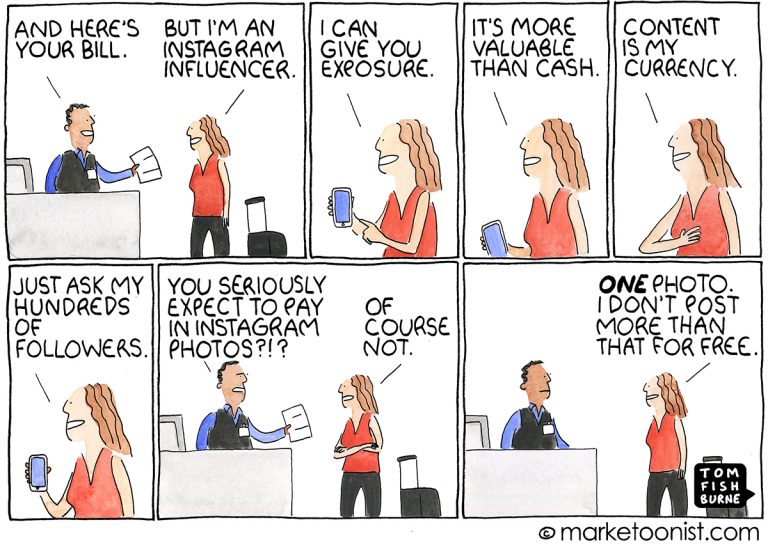
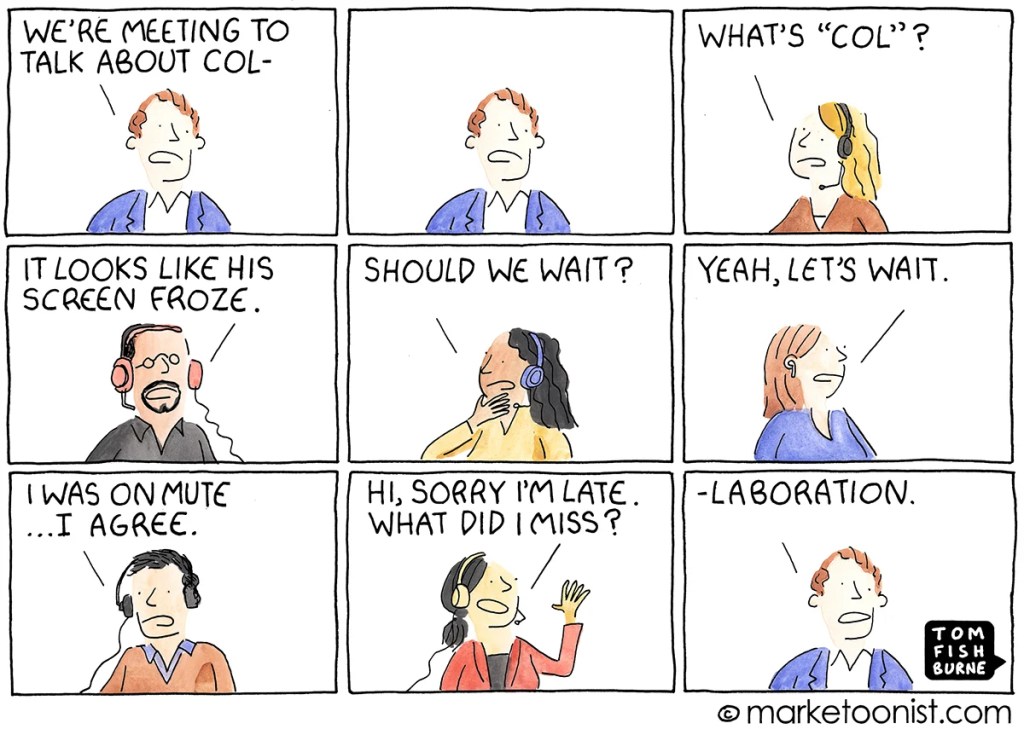
Both the above illustrations courtesy and copyright Marketoonist
From Hope to Realization:
My Journey with Collaboration
When I moved to Mumbai, the city’s fashion, glamour, and Bollywood scene excited me. I wanted to dabble into fashion photography, so I took a three-month professional course to learn the basics, including studio lighting.
But there was one big problem: who would work with a beginner like me to build a portfolio?
I didn’t have the budget for models, makeup artists, or studio space, so I turned to collaboration.
I reached out on social media to aspiring models and creatives, hoping they’d be willing to work with me for free in exchange for experience and exposure.
Surprisingly, it worked. I built a decent portfolio and learned a lot along the way.
At first, collaboration felt like the answer. It gave me the opportunity to grow, learn, and create something real without worrying about money.
But as time passed, my perspective shifted.
Now, I believe that everyone who puts time, effort, and skill into their craft deserves to be paid. If I expect to be compensated for my work, it’s only fair that I pay others for theirs.
So today, I no longer ask people to collaborate for free. I don’t want to burden others with unpaid work, and I don’t want to undervalue either their talents or mine. The learning?
Collaboration is valuable, but fair compensation is essential. If we want to be respected for our work, we must respect the work of others and honor their time, effort, and skill.
When to Say Yes:
The Green Flags in a Collaboration
Not every collaboration is a trap. Here’s how to spot one that could be worth your time:
Clarity from Day One
Is the scope of work defined clearly? Are both sides contributing something of real value?
Equal Branding & Credits
Will you be tagged, featured, or credited properly across all platforms?
Portfolio Value
Will this shoot significantly boost your reel, client list, or creative style?
Potential for Growth
Has the other party delivered on opportunities in the past? Can they connect you with future clients?
Ask yourself:
If I stripped away the name, hype, and following—would I still be excited to work on this?
If the answer is yes, go ahead. But if it feels like exploitation wrapped in aesthetics, trust your gut.
Conclusion
Collaboration Is a Tool, Not a Trap
Collaboration should be a bridge—not a bait.
Yes, it can open doors. Yes, it can lead to unexpected magic. But it must never be used as a shortcut to exploit unpaid labour.
Because behind every “collab” shoot is an artist who has invested years learning their craft, invested lakhs and lakhs in gear, and put in countless unpaid hours refining their vision, often the hard way.
When the word “collaboration” becomes a glorified cover for not paying artists their due, it doesn’t just hurt individuals—it undermines the entire creative economy.
Key Takeaway
Collaboration is a powerful weapon for opportunity—but like any tool, it can harm when misused.
Let it be rooted in respect, fairness, and mutual gain—not in manipulation, empty promises, and mental stress.
So, the next time someone asks you to “collab,” ask yourself: Is this an opportunity—or a compromise of your worth?
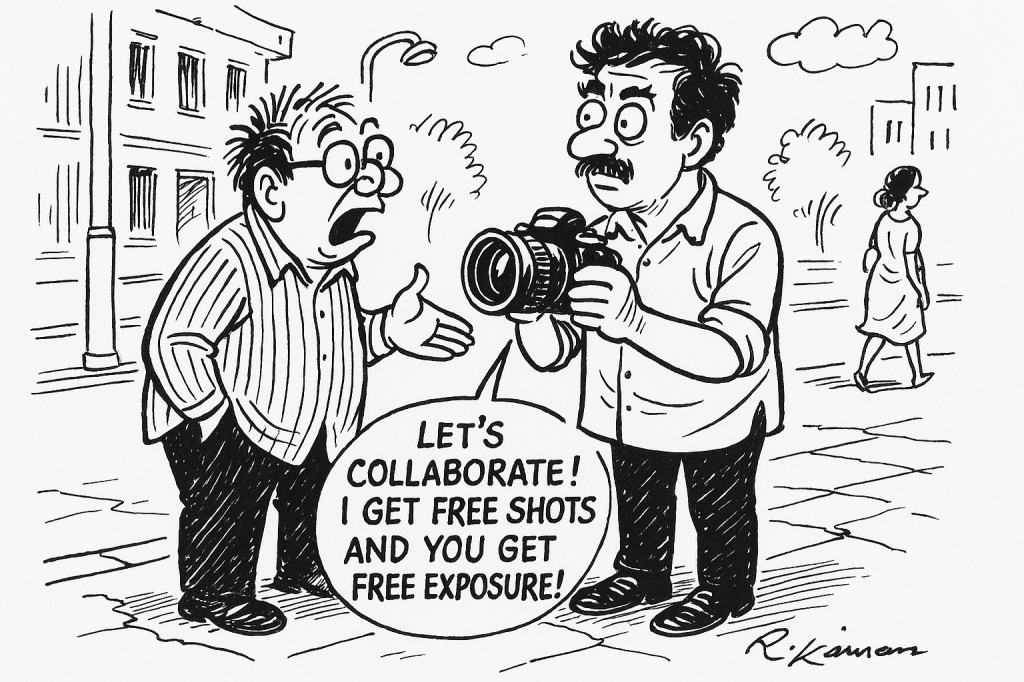
Let’s Talk—Your Story Matters
If you found this post a reflection of your pain points or challenges with so called “Collab” shoot, I would love to hear your story too.
Hi, I’m Vivek, a travel photographer and blogger based in Mumbai, capturing landscapes, architecture, and street life through my lens. But beyond photography, I love connecting with fellow creatives.
DM me on Instagram or email me at vivekvermavisuals@gmail.com and share your story—how collaboration has benefitted you, what disappoints you most about collab shoot, what struggles and challenges clouds your mind, the moment you see a DM for collab. Let’s just speak our mind without filters and create a space with no fear of judgments.

Discover more from Vivek Verma
Subscribe to get the latest posts sent to your email.
 Vivek Verma