
Ashish Kamble isn’t just a photographer—he’s a storyteller who weaves the mysteries of the cosmos and the vibrancy of cultures into frames that leave you in awe. With a career spanning over a decade, Ashish has not only won awards but also inspired over 900 budding photographers through his teaching stints at colleges under Mumbai University and his own LotusBeam School of Photography. Now, he continues to spark creativity as part of Indian Photo Expeditions, where his passion for photography meets his love for sharing knowledge.
What sets Ashish apart is his unique perspective. Growing up amidst India’s kaleidoscope of cultures, he’s always been fascinated by the interplay of age-old traditions and modern lifestyles. Add to this his love for sci-fi and the mysteries of human consciousness, and you get a photographer who’s not afraid to dive deep—whether it’s capturing the soulful gaze of a tribal portrait, the drama of a rugged landscape, or the infinite beauty of a star-studded night sky.
In this exclusive interview, I get behind the lens with Ashish to uncover his journey, his obsession with astrophotography, and what it takes to turn the night sky into art. From tales of his most unforgettable shoots to insights on must-have gear and tips for beginners, this conversation is packed with inspiration and practical advice. So, if you’ve ever wondered how to shoot the stars or simply want to peek into the mind of a cosmic dreamer, you’re in for a treat!
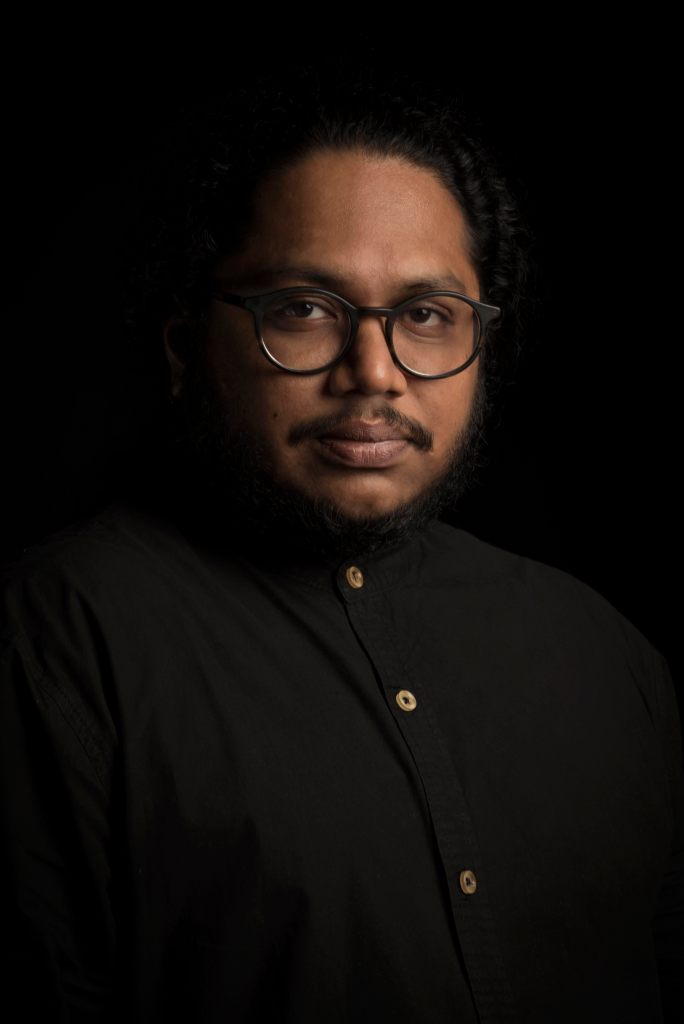
You began your career in 2009 as a freelance commercial photographer where you dabbled in multiple genres like photojournalism, product, concert and wedding photography. What inspired your transition from commercial work to specializing in astrophotography and mentoring photography students?
I take great inspiration from surrealism and dystopian Art form, thus I wanted to create art which revolves around these two genres. I always believe that the correct knowledge should be shared with others so that they do not have any confusion and they can accomplish their goals more quickly. When I started teaching, I realized there are very few institutions in India which teach Fine Art Photography, their syllabus was more focused on commercial photography. I therefore founded LotusBeam School of Photography in order to promote Fine Art Photography where I inculcated students to achieve a successful career in photography.
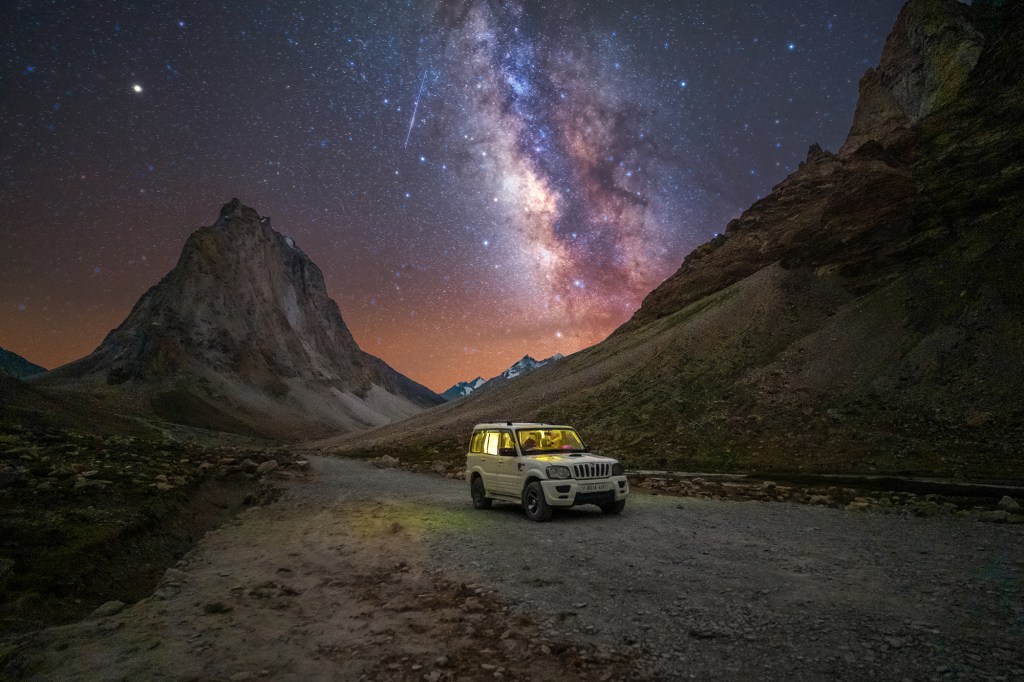
Astrophotography requires immense patience and technical expertise. What initially drew you to capturing the night sky, and how did you develop your skills in this niche genre?
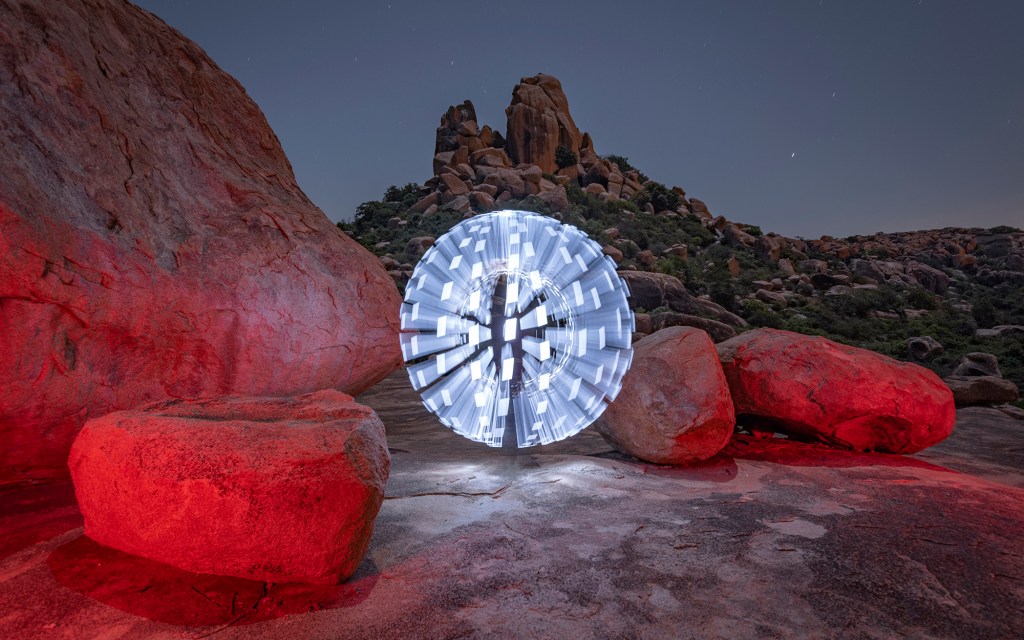
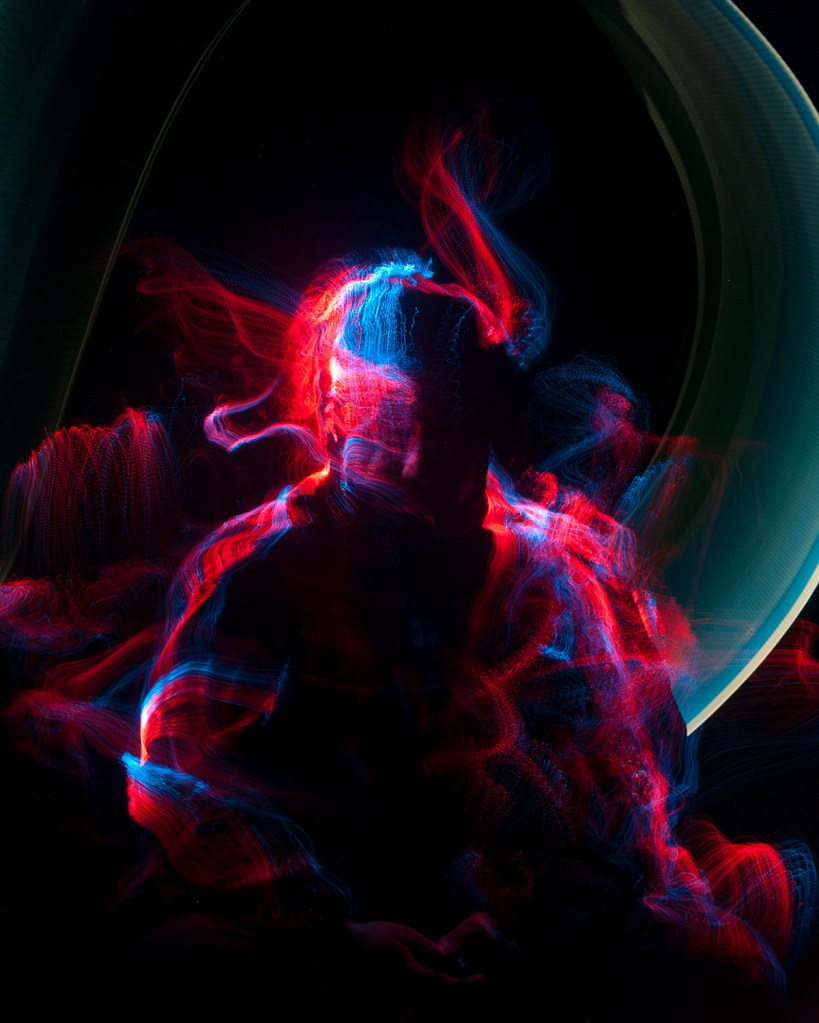
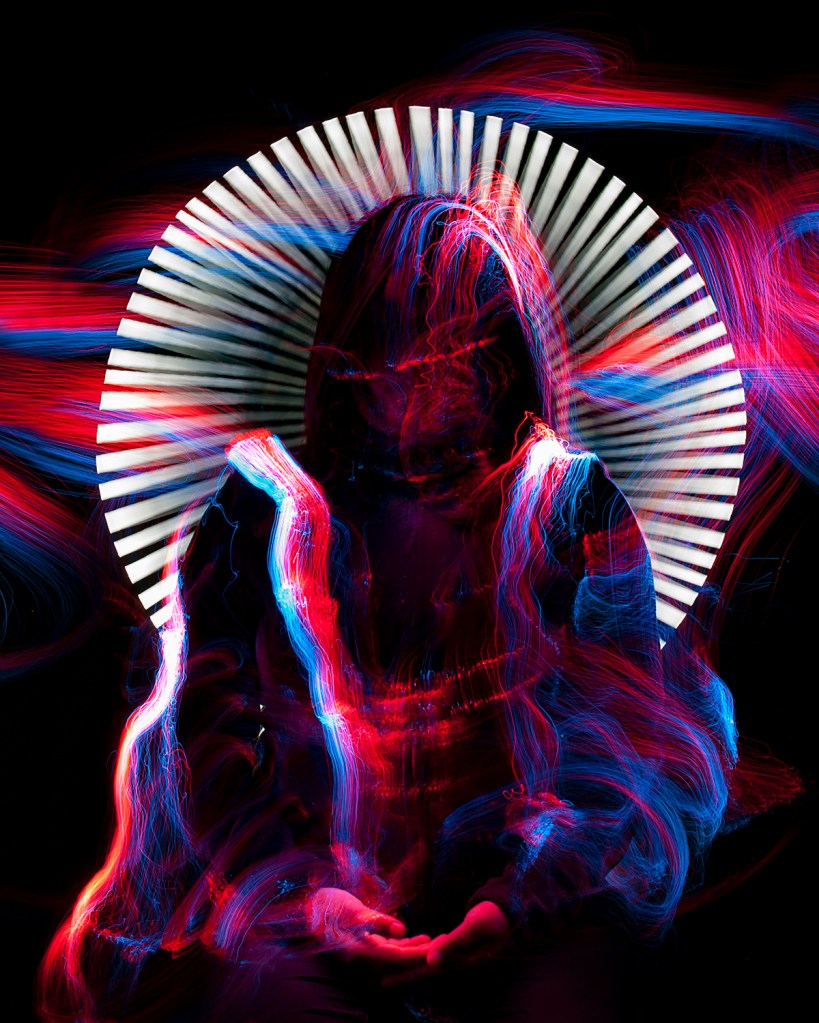
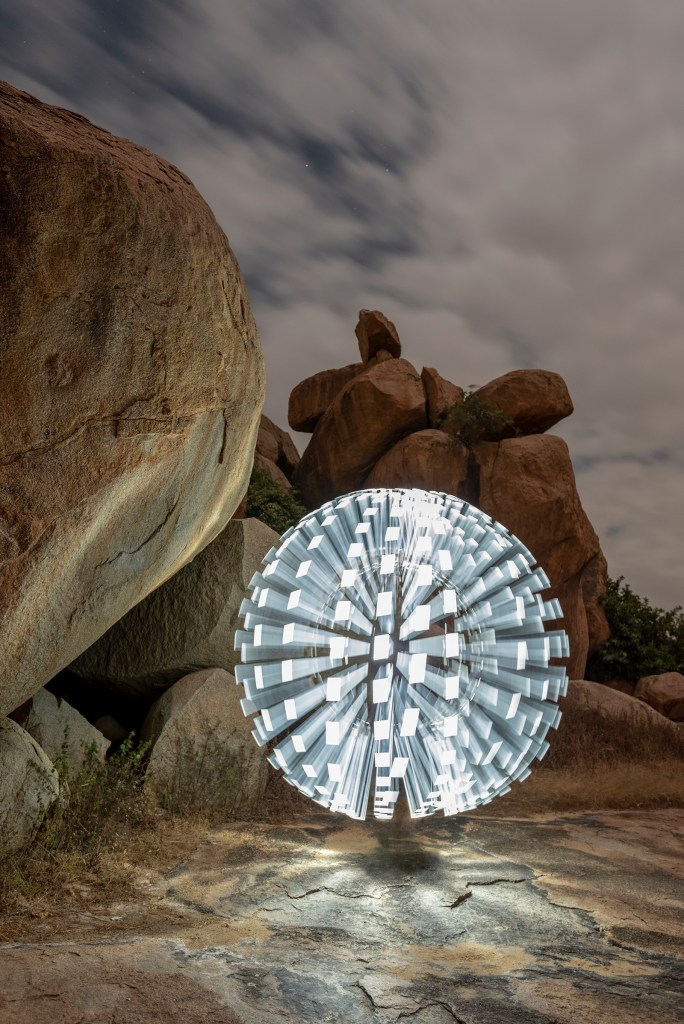
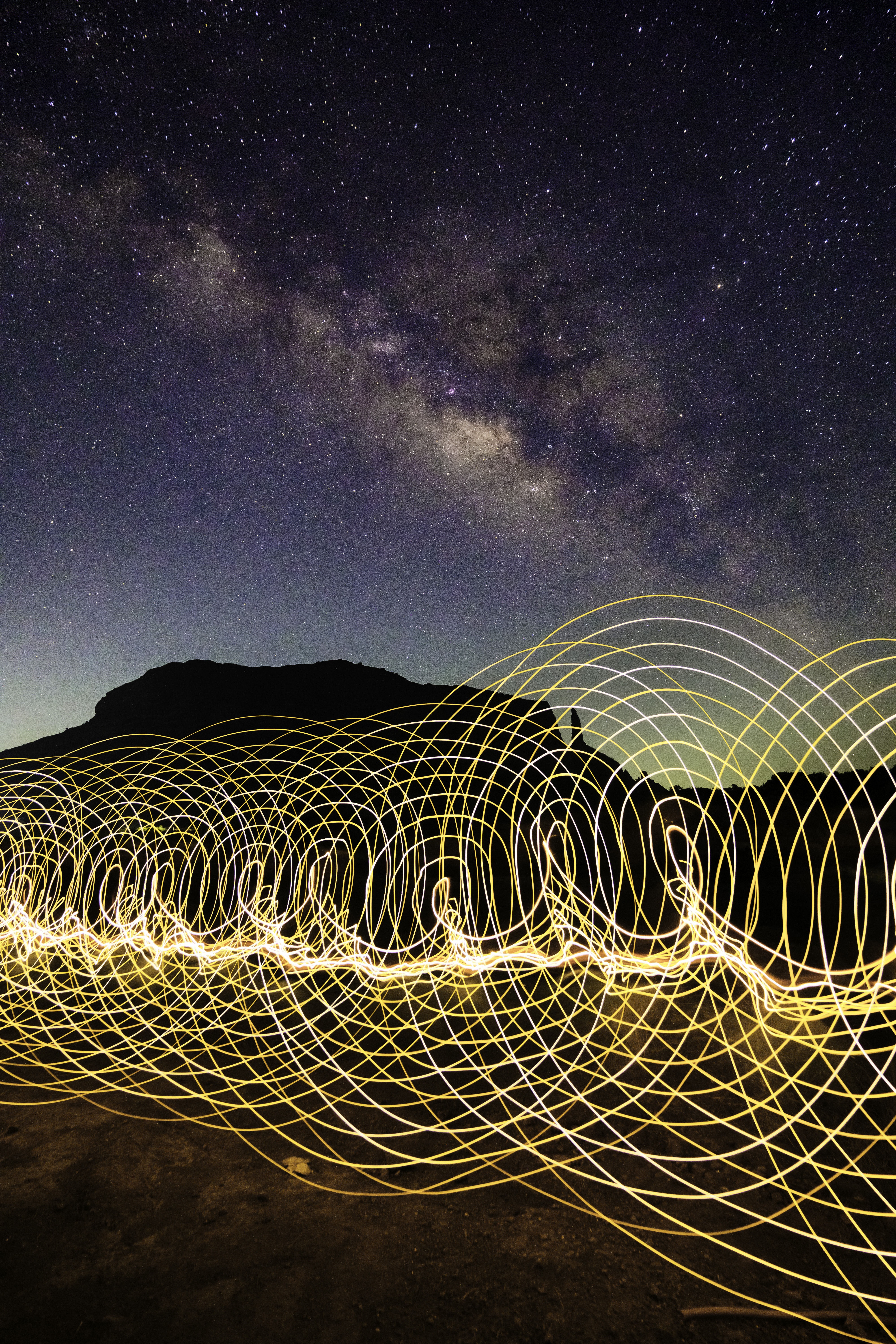
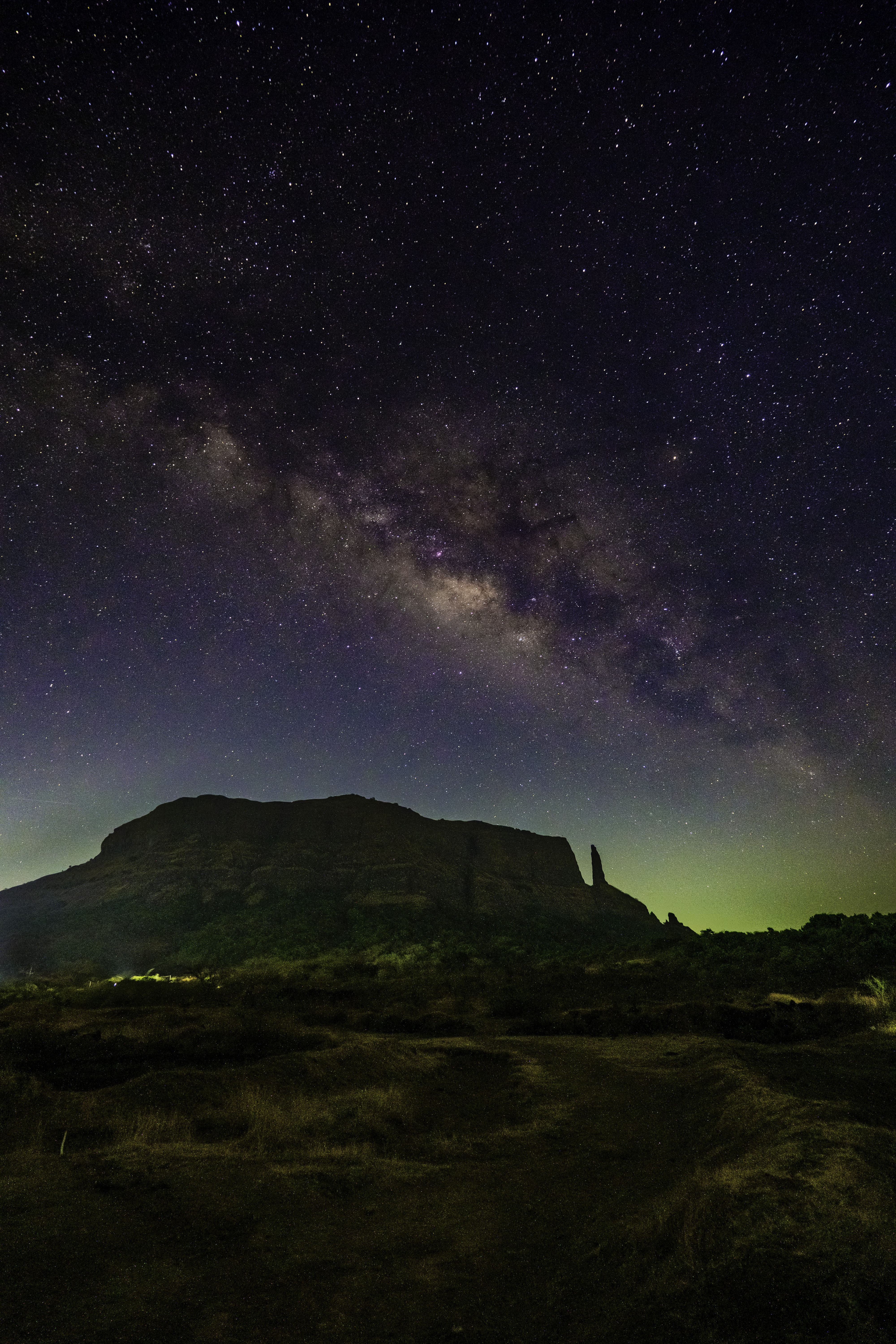
I was always inclined towards space and dystopian art, so my initial artistic work focused on creating abstract light painting art. I used to create ‘portals’ using DIY light painting tools under full moon. I mostly worked under night sky which made me explore other genres of night photography. In 2014 when I discovered that we could capture milky way using a DSLR there was no stopping!
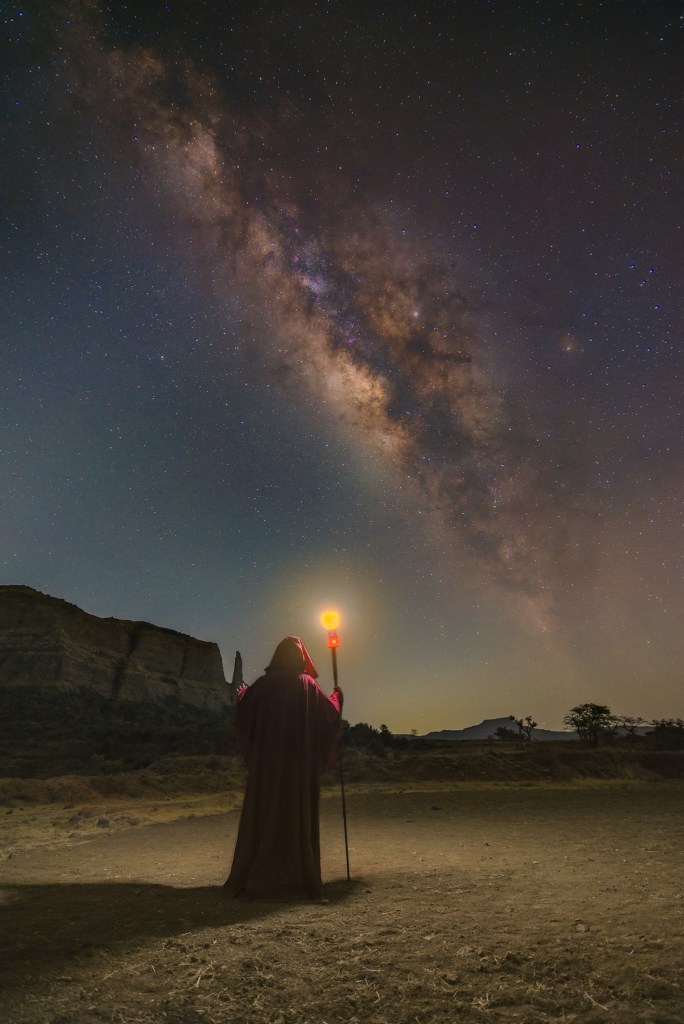

As a mentor for Leophoto tripods, can you share how essential gear like tripods impacts the quality of astrophotography and what features photographers should look for in their tripods?
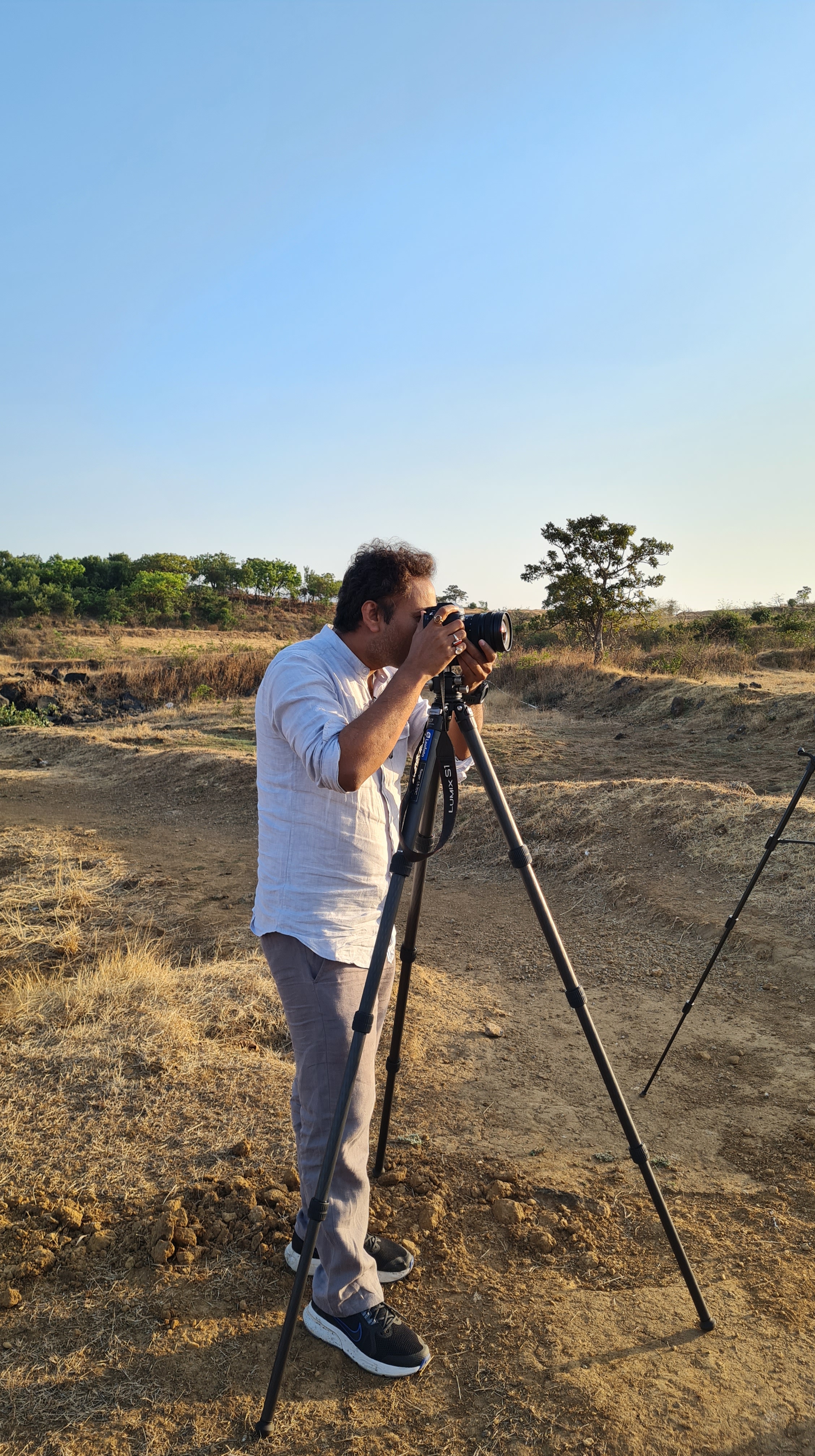
As an astrophotographer tripod is one of the most important gear because we click multiple images to create one final image, if the tripod is not stable we won’t be able to merge the images properly. Whenever you are planning to buy a tripod, you should always go with a carbon fiber tripod with a very good ball head. As you gain more experience you can buy different gear heads to work on complicated panoramas. Leofoto is the only company in India who have all the gears/accessories readily available in stock, if not they get it arranged.
As the founder of a School of Photography focused on helping students build successful careers, how do you view the importance of formal education and structured training in photography compared to the growing trend of self-learning through social media and online platforms? What key advantages do you believe a formal program offers that self-learning might lack, especially in terms of building a sustainable career in this field?
Formal education provides you a structured way of learning. It covers fundamentals and then proceed to the advance techniques step by step. You always have a mentor who can clarify your doubts in real time. Online education is good, you get to learn from incredible knowledgeable teachers, but if you don’t understand any topic it leads to confusion because there’s no one to clarify your doubts in real time. Whereas in formal education all doubts are cleared theoretically and practically within a given time frame. This helps the students to build strong technical base, which helps them gain confidence is a shorter span of time.
What challenges do photographers face in India when capturing the Milky Way and other celestial events, and how do you overcome these obstacles? Are there particular locations in India that you find ideal for night sky photography?
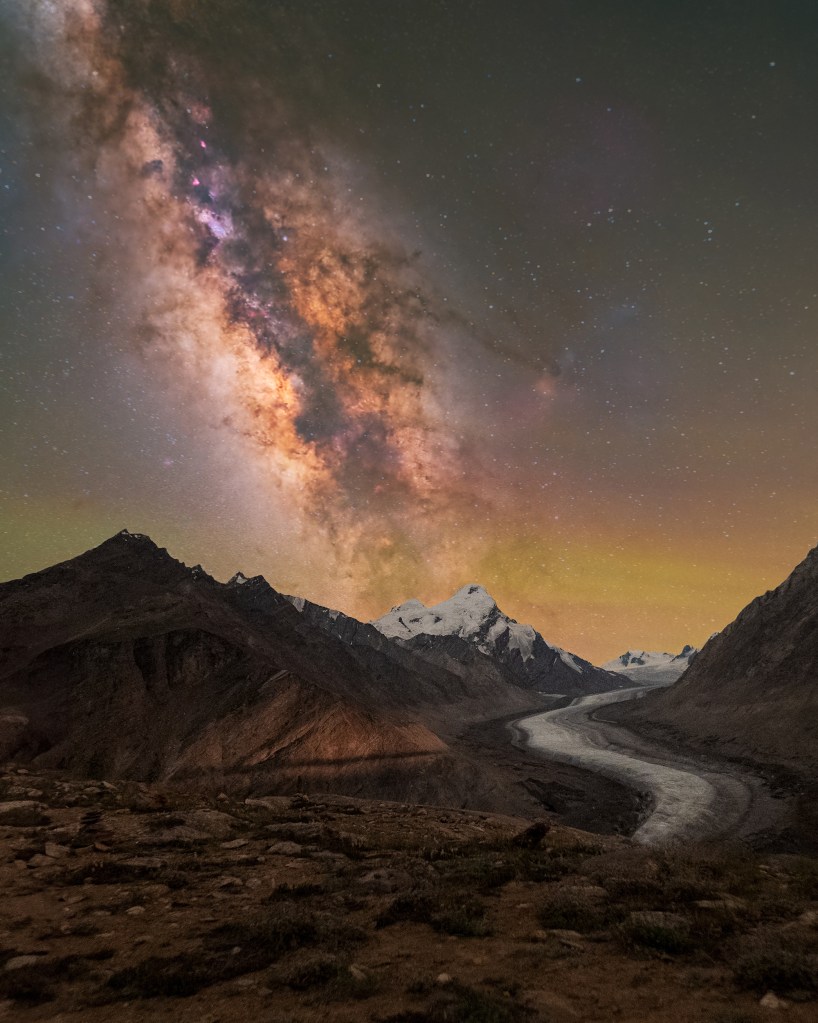
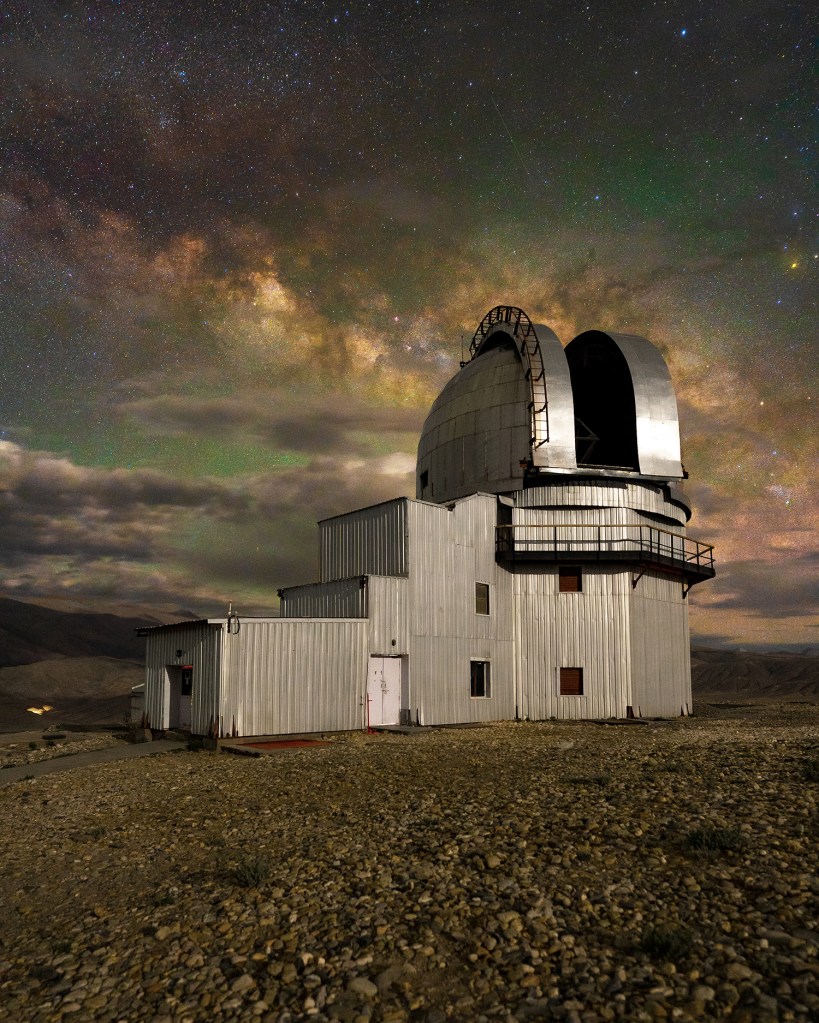
In India the biggest challenge is obtaining the permission to photograph at night, as majority of the dark sky locations are near border area. I personally like Ladakh region for milky way photography, as they offer one of the darkest clear night sky.
You’ve taught photography to college students and now conduct photo tours and workshops with Indian Photo Expeditions. How do you balance your passion for teaching with your personal creative projects?
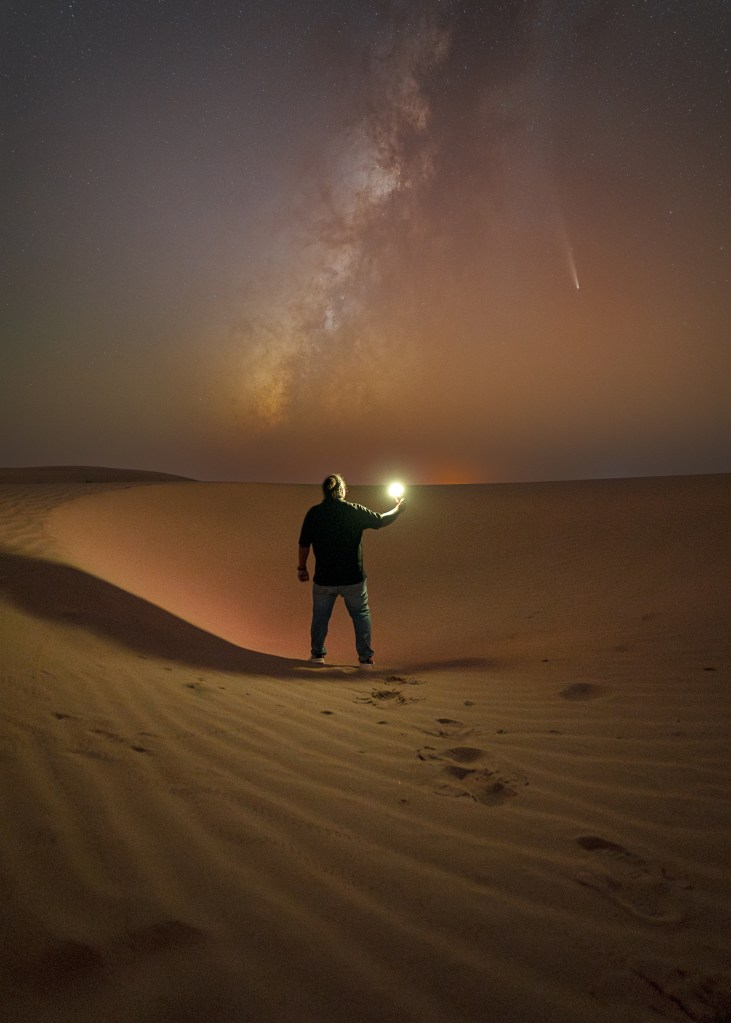
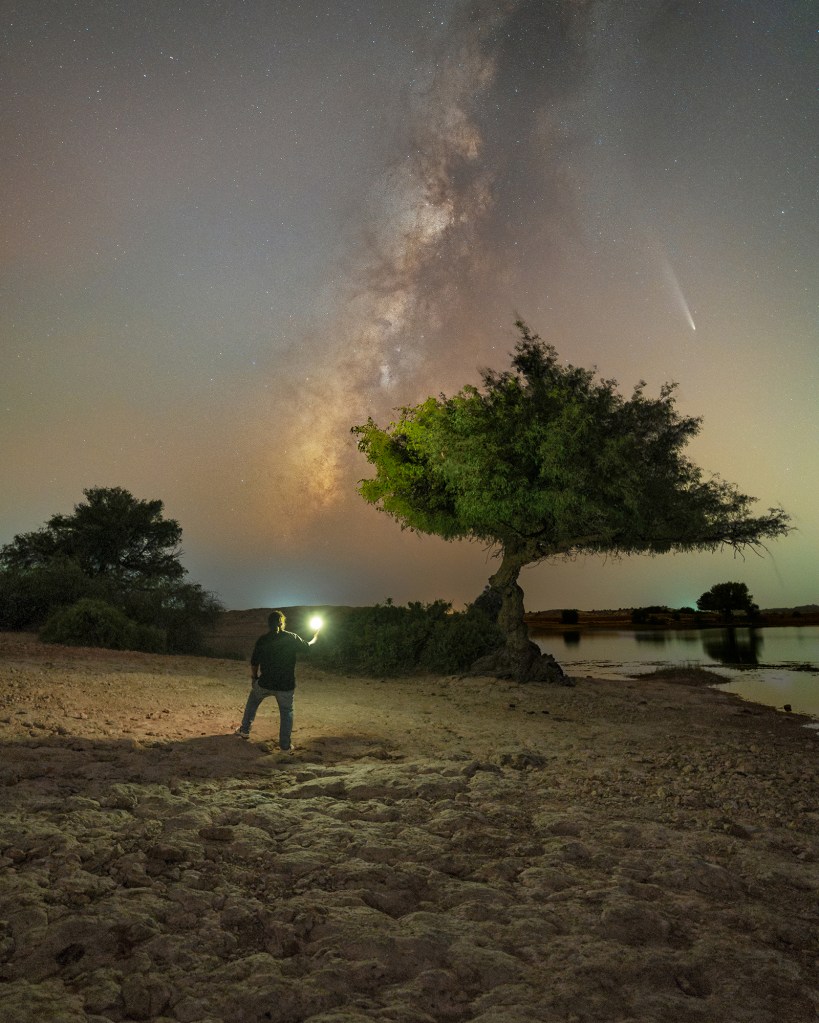
I rarely click photographs when I am on a Photo Tour because I want my complete focus on teaching. I have projects lined-up thus I am completing them with my wife Pallabi on our personal expeditions which are not merged with the Photography Tours. We recently shot comet Tsuchinshan–ATLAS with Milky way in Jaisalmer which was a long pending project.
I know you dedicate significant time and effort into researching, scouting locations, and providing a highly personalized learning experience during your photo expeditions. Your commitment to ensuring these tours are purely focused on student growth, rather than personal projects, really stands out. How do you consistently maintain such high standards of integrity and professionalism while organizing these expeditions?
Thank you for the kind words, I am delighted that you had great experience with Indian Photo Expeditions. I consider teaching as a very serious business because a client has trusted you to learn something new and if I am not able to feed his mind, I consider it as a failure.
With over a decade of experience in the field, how do you see the future of astrophotography and deep astrophotography evolving in India, and what role do you envision for yourself in that growth?
This generation is taking great interest in space, I see many people clicking basic milky way shot with their mobile phones. Many people are pursuing deep sky and astrophotography as a serious hobby. Astro tourism is also at its peak with government taking initiative to promote dark sky locations. My role as an astrophotographer is to explore new locations and promote them using the images I click. These images help others to find a guaranteed location where they can photograph milky way and it also promotes Astro tourism of that location.
What exciting photo expeditions do you have planned over the next year? Any destinations or celestial events you’re especially looking forward to capturing? Give us a sneak peek into what participants can expect!
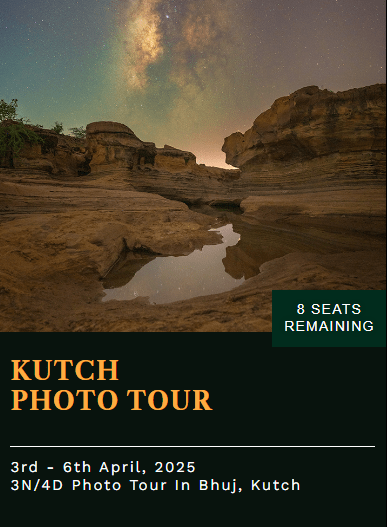
This year we are announcing two new locations, first is Jaisalmer for astrophotography and Goa for seascape photography. For Goa we are still working on permission for astrophotography, if things workout as planned this will be the most unique photo tour which will include bioluminescence in nature and petroglyphs with night sky.
Are there any Astrophotographers whose work truly inspires you? What is it about their approach or style that resonates with you, and how have they influenced your own work?
I take great inspiration from Giulio Cobianchi, John Rutter and Uros Fink. Their skills to photograph tracked panoramas really inspires me, I started clicking multi-row panoramas after I came across their work.
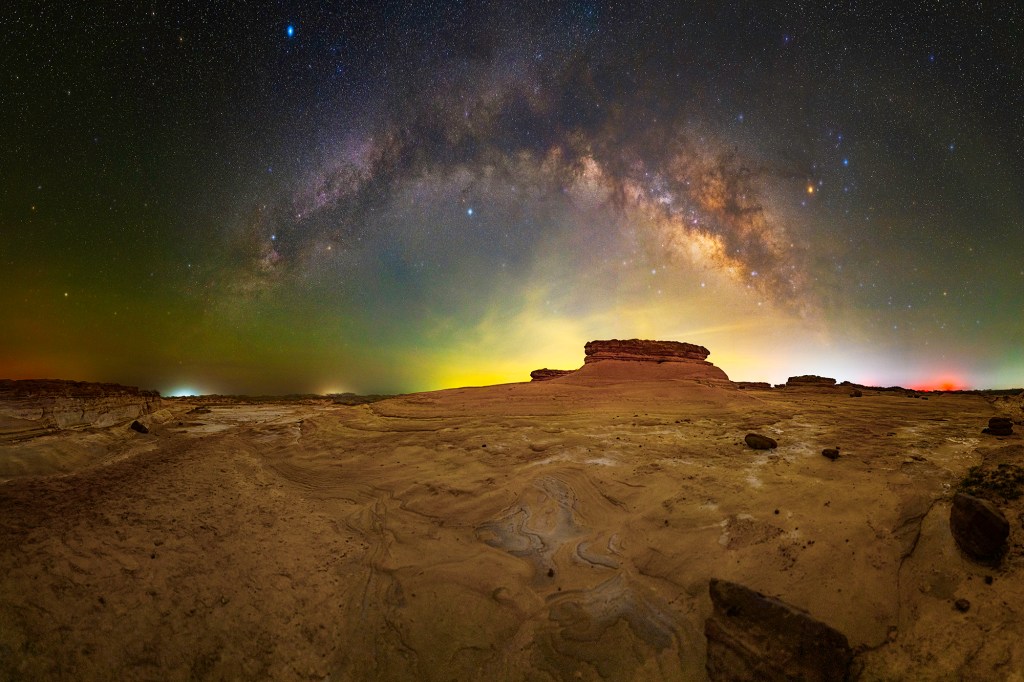
If you could capture the night sky anywhere in the world, where would it be and why? Is there a dream location you’ve always wanted to photograph—maybe for its unique celestial views, or just the ease of access?
Patagonia is one of my dream locations to photograph because of its unique landscape. I also wish to explore Australia because I am fascinated by the Southern Hemisphere Milky way.
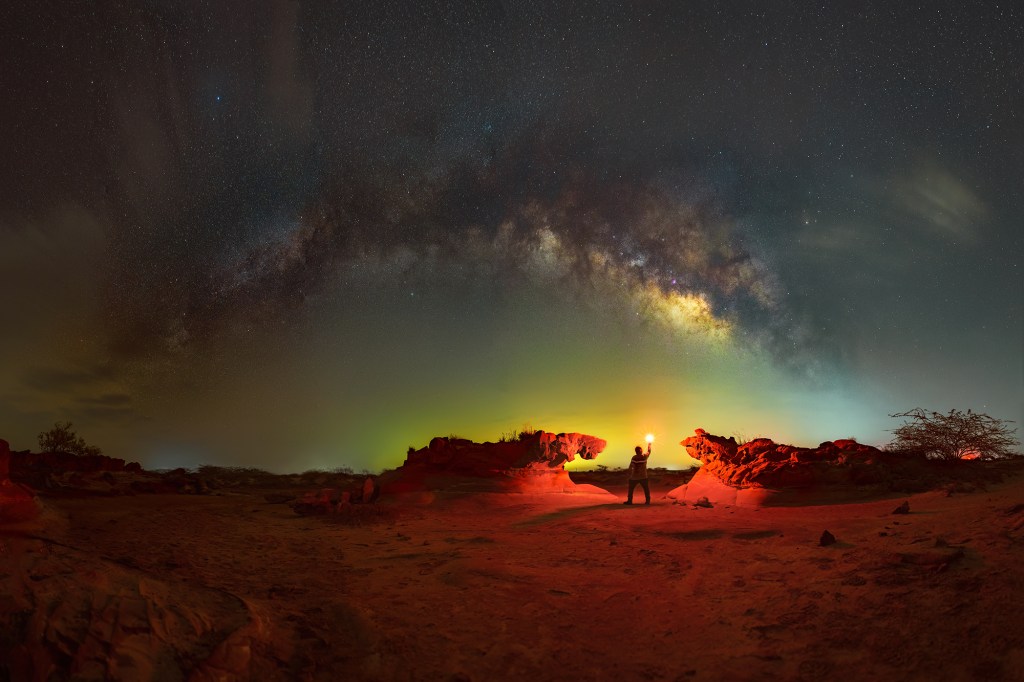
What’s your go-to gear setup when you’re out shooting the night sky? And for budding astrophotographers looking for quality without breaking the bank, which tripod and lens would you recommend as must-haves?
Camera and Lenses: Currently i am using Sony cameras and fast fixed lenses. For general photos I use Sony a7IV with Viltrox 16mm f/1.8 and for complicated work I use Astro modified Sony a7iii with Sigma 20mm f/1.4 and 50mm f/1.4. Sometimes I use Sony A7sii for star trail or clicking reference images. For budding astrophotographers, I will highly recommend a full frame camera whose megapixel is not more than 30MP and a fast wide angle lens like Viltrox 16mm f/1.8 or Samyang 14mm f/2.8 is a good combo.
Tripod: For tripod you can check Leofoto LS 324c + LH 40 or Leofoto LS 285c + LH 36 both are good tripod system which i personally use.
What advice would you give to aspiring photographers who want to venture into astrophotography? What are the key skills or techniques they should master first?
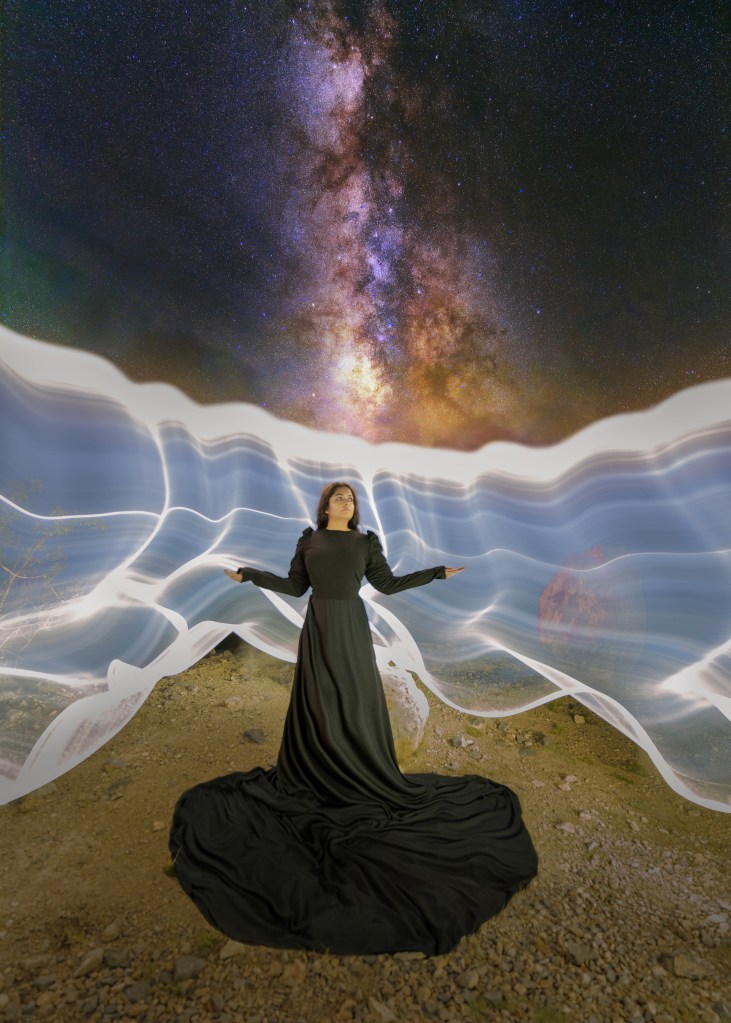
To understand astrophotography you should first understand long exposure photography. It helps you to understand how slow shutter can be used to expose an image and how movement of light creates different strokes and shapes. The second most important point is to understand basic night sky objects and constellations like the Big Dipper, Polaris, Cassiopeia, Andromeda Galaxy.
My Experience with Indian Photo Expeditions
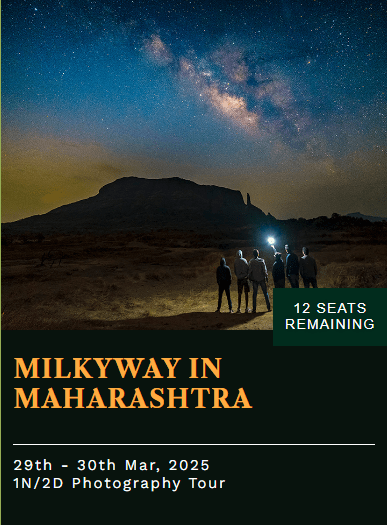
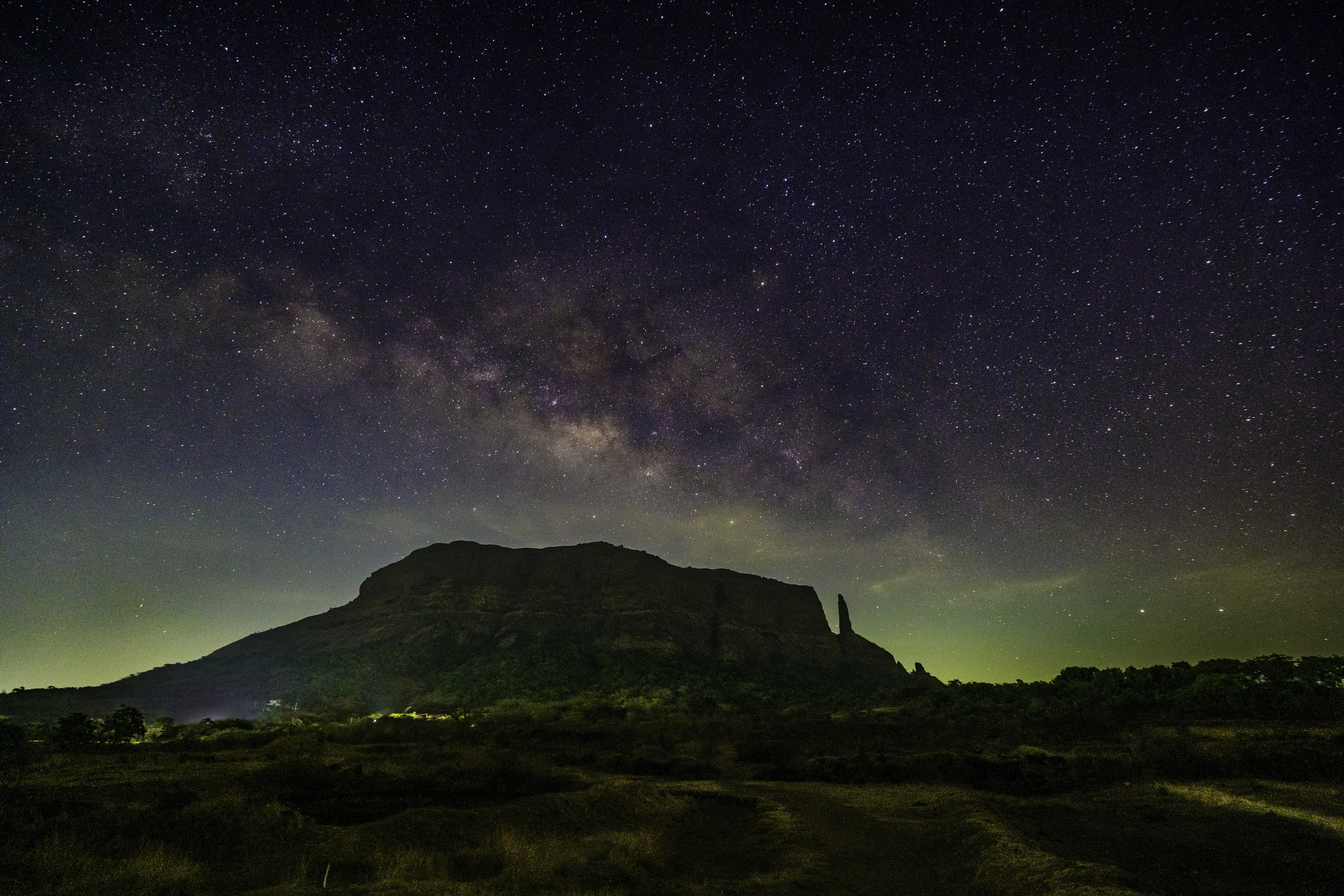
I had the privilege of joining one of Ashish Kamble’s photo expeditions in Maharashtra, where I captured the Milky Way for the first time—a truly unforgettable experience. Watching a blank night sky transform into a dazzling canvas of stars, with the Milky Way taking center stage, was nothing short of magical. As someone who had always dreamed of photographing the galaxy, Ashish turned that dream into reality, quite literally overnight.
What sets his expeditions apart is his teaching approach. Ashish is more than just a guide or mentor—his dedication to helping participants master even the smallest technical details is unmatched. He ensures you’re equipped with the skills to capture and create on your own. What stood out most was his integrity; he doesn’t use these expeditions to work on his own shots or projects, a rare quality in today’s profit-driven landscape.
Additionally, his meticulous location research, fair pricing, and personal attention to each participant make the experience even more special. The live editing session at the end, where he helps participants refine their final images, is the perfect finishing touch. For anyone looking to dive into astrophotography, Ashish’s expeditions are an experience worth every moment.
Conclusion
From his creative journey to his practical advice on gear and techniques, Ashish’s story is a testament to what’s possible when passion meets dedication. If you’ve ever dreamed of capturing the stars or want to explore the magic of celestial landscapes, his insights will spark your curiosity. Better yet, check out his upcoming photo expeditions for a hands-on experience—your gateway to discovering the universe through a lens!


Further Readings & Resources:
Photographers to follow:
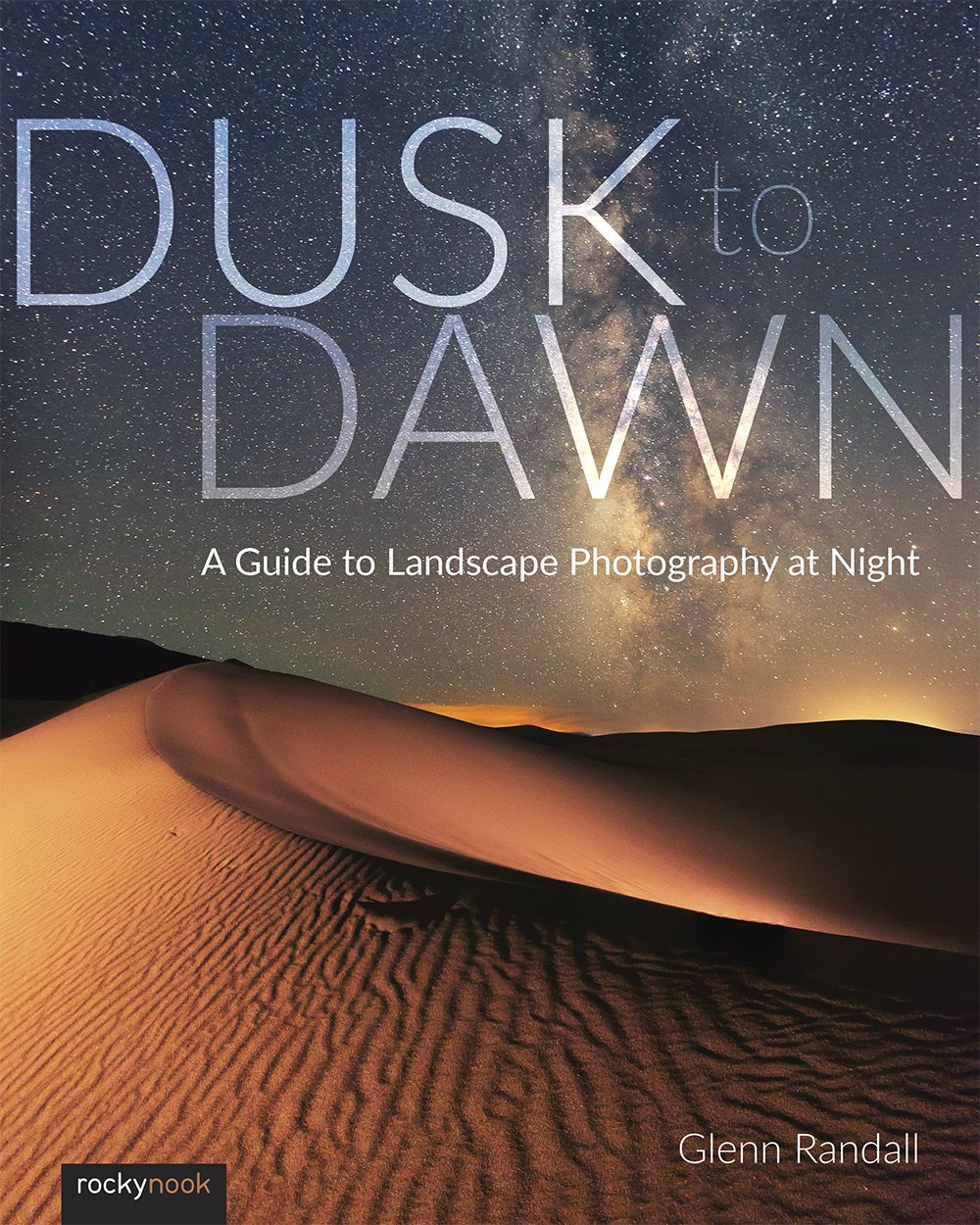
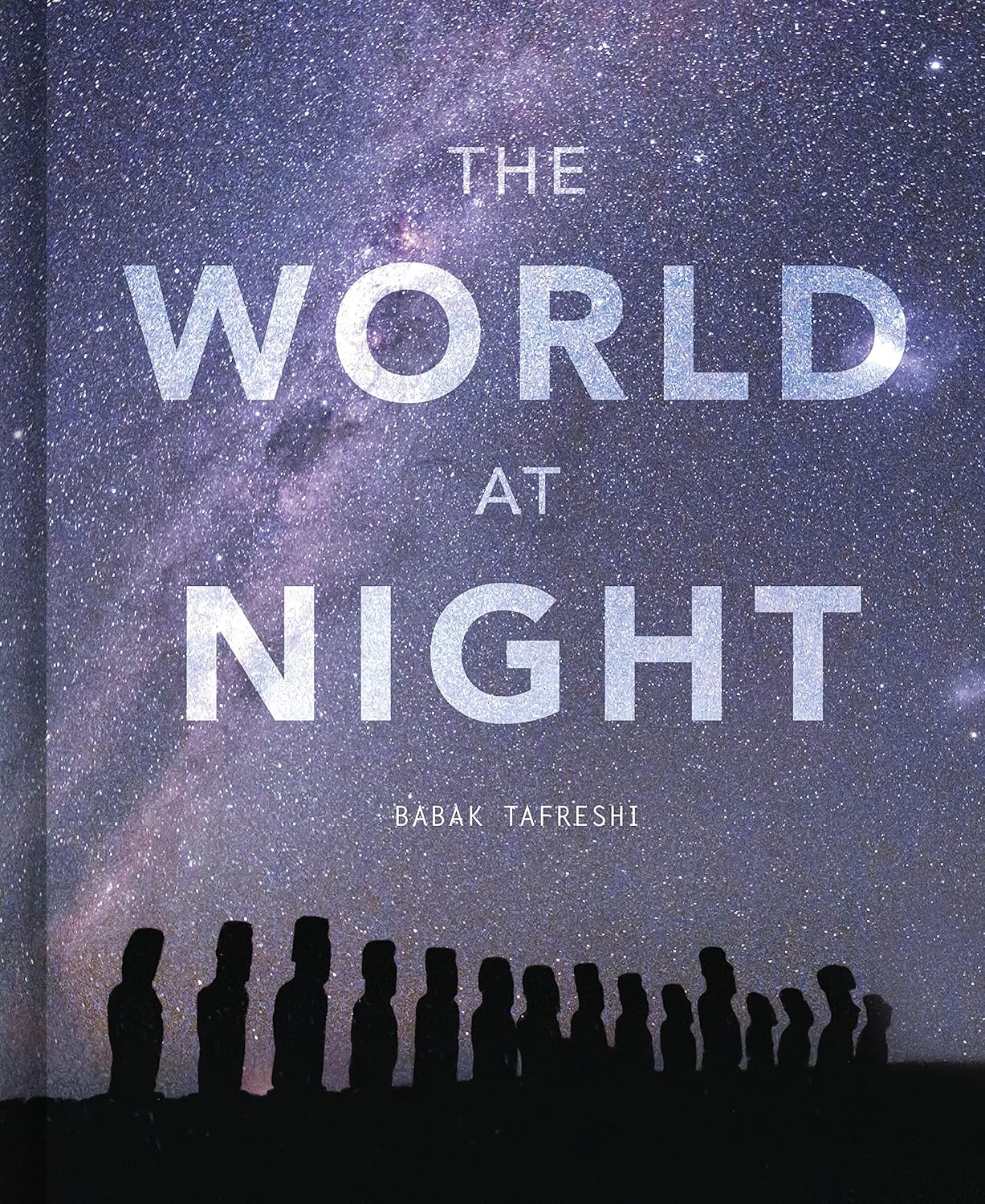
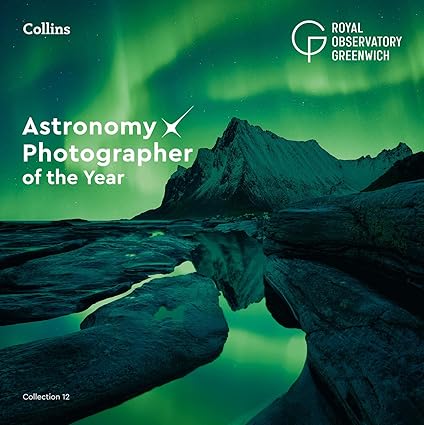
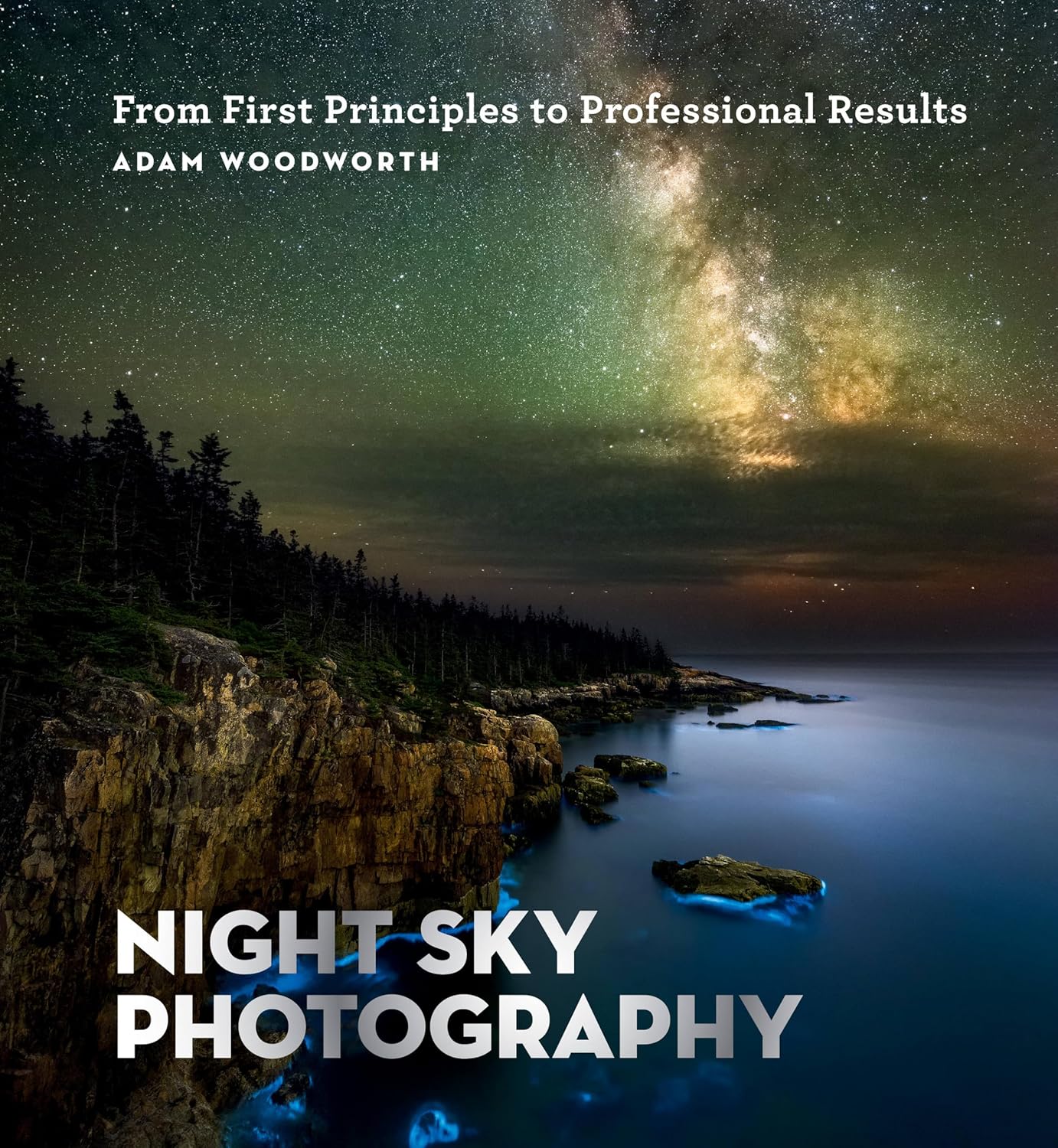
Books: Dusk to Dawn (Glenn Randall) / Night Sky Photography (Adam Woodworth), The World at Night (Babak Tafreshi), Astronomy Photographer of the Year: Collection 12
YouTube Channel: John Rutter Photography, Babak Tafreshi
Ben Canales, featured in National Geographic and other publications
Brad Goldpaint, featured in National Geographic, Time, and other publications. YouTube channel here
Paul Zizka, featured in National Geographic, Canadian Geographic, and other publications
Royce Bair, author of the book “Milky Way Nightscapes” and featured in National Geographic and other publications
Looking for more inspiration?
Read them all here.
Discover more from Vivek Verma
Subscribe to get the latest posts sent to your email.
 Vivek Verma