
A Comprehensive Guide to the Best Tele-photo Lenses for Lumix and Leica L-mount System
Are you ready to capture distant subjects with stunning clarity and detail? Investing in a telephoto lens for your L-mount camera can take your photography to new heights. With a range of options available from the L-mount alliance, including Sigma, Leica, and Lumix, choosing the right telephoto lens can be daunting. But fret not! I’ve curated a comprehensive buyer’s guide to help you make an informed decision, analyzing pros and cons of each telephoto lens from L-mount alliance.
What should be your prime considerations before buying a telephoto lens?
Before you invest in a telephoto lens, ask yourself these questions first:
Purpose AND USAGES
Are you really missing out on shots that you could have taken with a telephoto lens?
In my case, yes I do. As a landscape photographer, I often feel constrained by the terrain or the last vantage point where I can stand to make photograph. A telephoto lens would allow me to capture a frame even when it is not possible for me to get any closer to my subject. Further, if you are very selective about your subject or frame, you may find a telephoto lens very useful to capture that smaller frame out of a wider frame that your eyes (or wide angle lens) can see. I am definitely missing out on these tighter frames out of a wider scene I can currently capture with a wide angle lens.
Your reason need not be the same as mine, but you need to first figure out what shots you are missing out on, that a telephoto lens can help you capture, and thus add value to your photography portfolio.
How often are you going to use this telephoto lens?
Considering the price of these telephoto lenses and the amount of space and good care they need, you must be sure that your usages is not going to be limited to those one-off trips or shoots in an year. Further, if you usually travel light and are most likely to not carry a bulky and heavy telephoto lens on your trips, it does not make sense to buy one. For your specific needs or projects, you can easily get one on rent.
What genres of photography you mostly shoot?
You also need to think if telephoto lens is indeed a right lens for the genre of photography you mostly shoot. For example, if you have just started street photography, you may be tempted to buy a telephoto lens for its ability to shoot from very far. But if you delve deeper into this genre you would realize that the lens of choice for this genre is usually prime lenses (e.g., 24mm, 35mm, or 50mm). If you are a candid wedding photographer or mostly shoot portraits, you may prefer 70-200mm F2.8 lens for its ability to shoot in low light from a reasonable distance, and create background diffusion. If you are a wildlife photographer, you should rather aim for focal length higher than 200mm (e.g., 100-400mm lens) so that you can shoot animals or birds from a safe distance without encroaching in their natural habitat. If your love to capture vast landscapes, wide aperture (F2.8) may not even matter to you, and any telephoto lens that offers a workable focal length range without being too heavy should suffice (e.g. 70-200 F4 lens). For someone mostly doing travel photography, a lighter and more compact design (e.g., 28-200mm) should be the prime consideration apart from versatility of use. To sum up, the answer to the “best” telephoto lens always lies in your specific use.
Basically, have the need first, instead of buying the lens first and then figuring out what usages you can possibly put this lens to.
VALUE FOR MONEY
What is your budget?
Try to find a lens which fits within your budget, and is not unreasonably expensive. However, if you expect the lens to bring you significantly more business or sales, you can reconsider your initial budget and spend a bit more, as an investment.
I find, Sigma lenses offer best value for money, even though it may have a few trade offs at times in terms of optical performance. Leica lenses offer best optical performance, but may be too expensive for many photographers to afford one. I personally prefer Lumix lenses, for two reasons. Firstly it strikes a fine balance between optical quality (of Leica) and affordability (of Sigma). Secondly, it is the native lens for my Lumix S1 body.
Will your budget for this lens be better utilized by buying another lens or gear of greater value to you?
As photographers, we are always constrained on budget. Think through if you can invest the same money (or lesser) for buying a more useful gear or another lens that advances your photography game.
Can this lens be put to versatile usages, across genres?
You may also consider whether this telephoto lens is versatile enough to shoot other genres of photography as well, when you have to. For example, you can use a 70-200mm F2.8 lens not only for candid wedding photography, but also fashion, portrait and landscape photography. This will give you true value for your money.
Is it available on rent to try it out?
Needless to say, when you have already tried and tested a lens, you can make a more informed decision as to whether you really need to invest in that lens, given its pros and cons that you have experienced yourself. If a lens is not available on rent, you can also check with the local Sales team of that brand, if they can provide you a demo lens to experience it for real.
Focal Length
What focal length range does your existing lens(es) cover?
Do you think this telephoto lens will significantly expand the focal length range that you have been working with so far. If yes, then go for the one that maximizes your focal length range, without compromising on the optical performance. For example, as I already have a lens which covers focal length range from 24-105mm, it does not make sense for me to go for a 70-200mm lens, which will only give me an additional 95mm of focal length range to work with. To get the best value for money, I should rather aim for lenses which offer focal length more than 200mm (e.g., Lumix 70-300mm, Leica 90-280mm, Sigma 100-400mm) which will considerably expand my focal length range and thus allow more creative freedom.
Aperture
Does this telephoto lens allow you to work in low lighting conditions as well?
What you need to assess here is, will you be able to use faster shutter speed without bumping up your ISO, in low lighting conditions. This feature will be most useful when you are shooting indoor events or weddings in low light. Moreover, a wider aperture (like F2.8) will also help you create shallower depth of field, isolating the subject from the background.
Weight
How heavy this telephoto lens is?
If you are going to carry a telephoto lens all day, the lens should not weigh you down so much that you rather end up shooting less, or even worse, not picking it up often from the next time. Telephoto lenses are expected to be heavier by their construct, but anything above 1 kg of weight, you must reconsider, if you are going to use it handheld and for longer hours.
Together, all these considerations can help you decide the best telephoto lens for yourself. Needless to say, you should also check online reviews from trusted sources (not from the influencers whose views might be biased) and look for sample images often available on their official website.
Let’s have a look at what options you have for L-mount full frame cameras, if you are in for buying a telephoto lens.
Panasonic Lumix

- USP: Leica certified, affordable, lighter in weight (985g)
- Pros: Teleconverter-extendable, dust-splash-freeze resistant (up to -10°C), in-built optical image stabilization (OIS)
- Cons: Slower F4 aperture (though constant)
- Usage: Landscapes > Travel
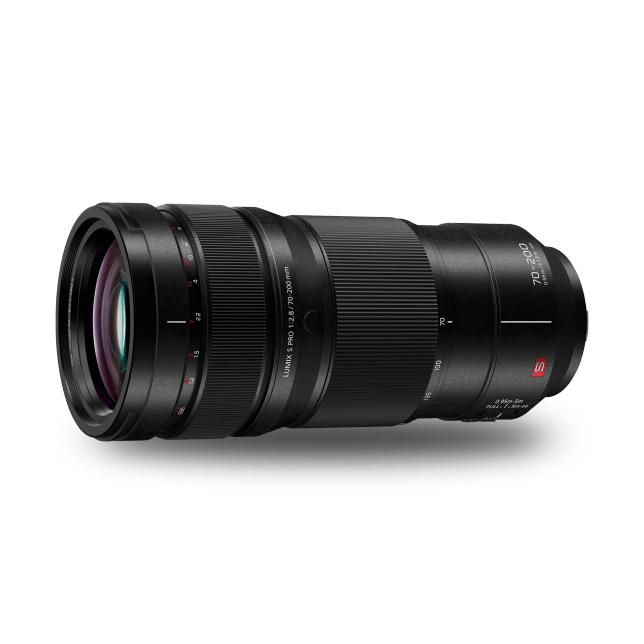
- USP: Leica certified, constant F2.8 aperture throughout the zoom range.
- Pros: Teleconverter-extendable, dust-splash-freeze resistant (up to -10°C), in-built optical image stabilization (OIS)
- Cons: Expensive (>INR 2.7 lacs), heavy (1.570 Kg)
- Usage: Weddings > Fashion (Outdoor)
S 70-300mm F4.5-5.6 MACRO O.I.S.
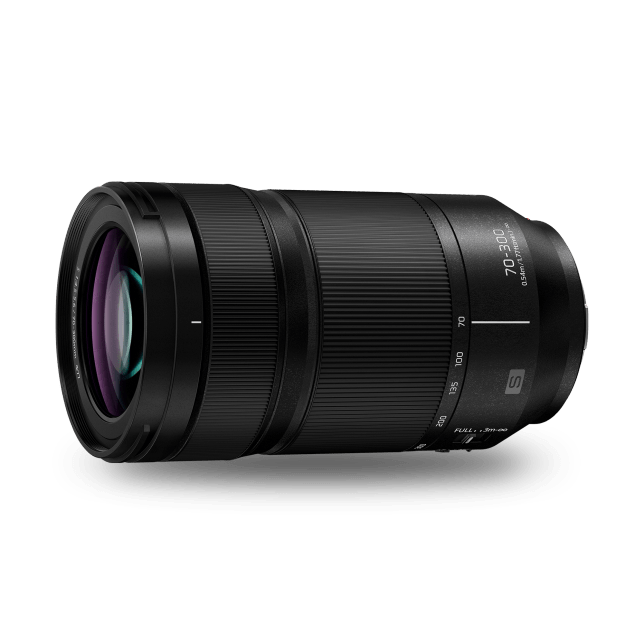
- USP: Longer focal length range (up to 300mm), macro capability, light weight (790g).
- Pros: In-built optical image stabilization (OIS), dust-splash-freeze resistant (up to -10°C)
- Cons: Not available in India, expensive, not extendable by teleconverter, variably slower aperture (F4.5-5.6)
- Usage: Travel > Landscapes
S 28-200mm F4-7.1 MACRO O.I.S.
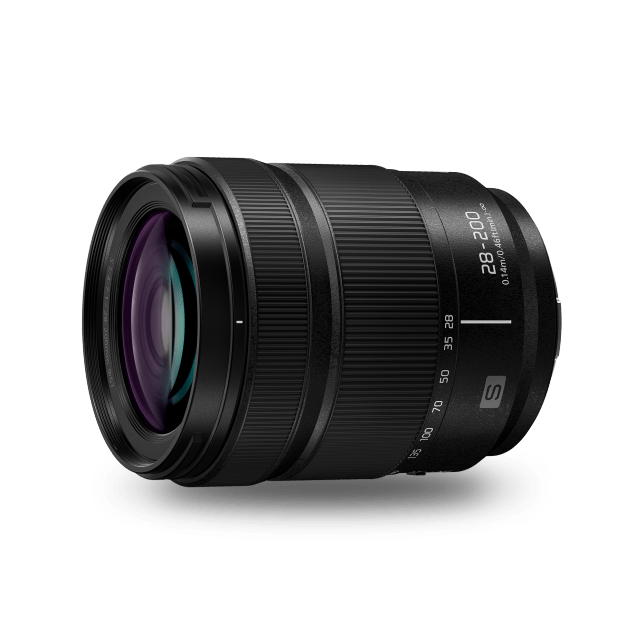
- USP: Smallest (3.68 inch) and lightest (413g) design, versatile focal length range (28-200mm), macro capability
- Pros: In-built optical image stabilization (OIS), dust-splash-freeze resistant (up to -10°C), ideal for video recording
- Cons: Not extendable by teleconverter, variably slower aperture (F4.0-7.1)
- Usage: Travel > Landscapes
| Features | LUMIX S PRO 70-200mm F4 O.I.S. | LUMIX S PRO 70-200mm F2.8 O.I.S. | LUMIX S 70-300mm F4.5-5.6 MACRO O.I.S. | LUMIX S 28-200mm F4-7.1 MACRO O.I.S. |
| Quality Certification | Leica certified | Leica certified | – | – |
| Price Point | Affordable (INR 1.25 lacs) | Very Expensive (INR 2.7 lacs) | Not available in India | Affordable (INR 1.15 lacs) |
| Weight (without lens hood, cap) | 985g | 1570g | 790g | 413g |
| Aperture | Constant F4 | Constant F2.8 | Variable F4.5 – 5.6 | Variable F4 – 7.1 |
| Focal Length Range | 70-200mm (range 131) | 70-200mm (range 131) | 70-300mm (range 231) | 28-200mm (range 173) |
| Teleconverter-extendable | Yes | Yes | No | No |
| Dust-Splash-Freeze resistant (up to -10°C) | Yes | Yes | Yes | Yes |
| In-built Optical Image Stabilization | Yes | Yes | Yes | Yes |
| Macro | No | No | Yes | Yes |
| Inner zoom mechanism | Yes | Yes | No | No |
Sigma AND Leica
SIGMA 70-200mm F2.8 DG DN OS | Sports
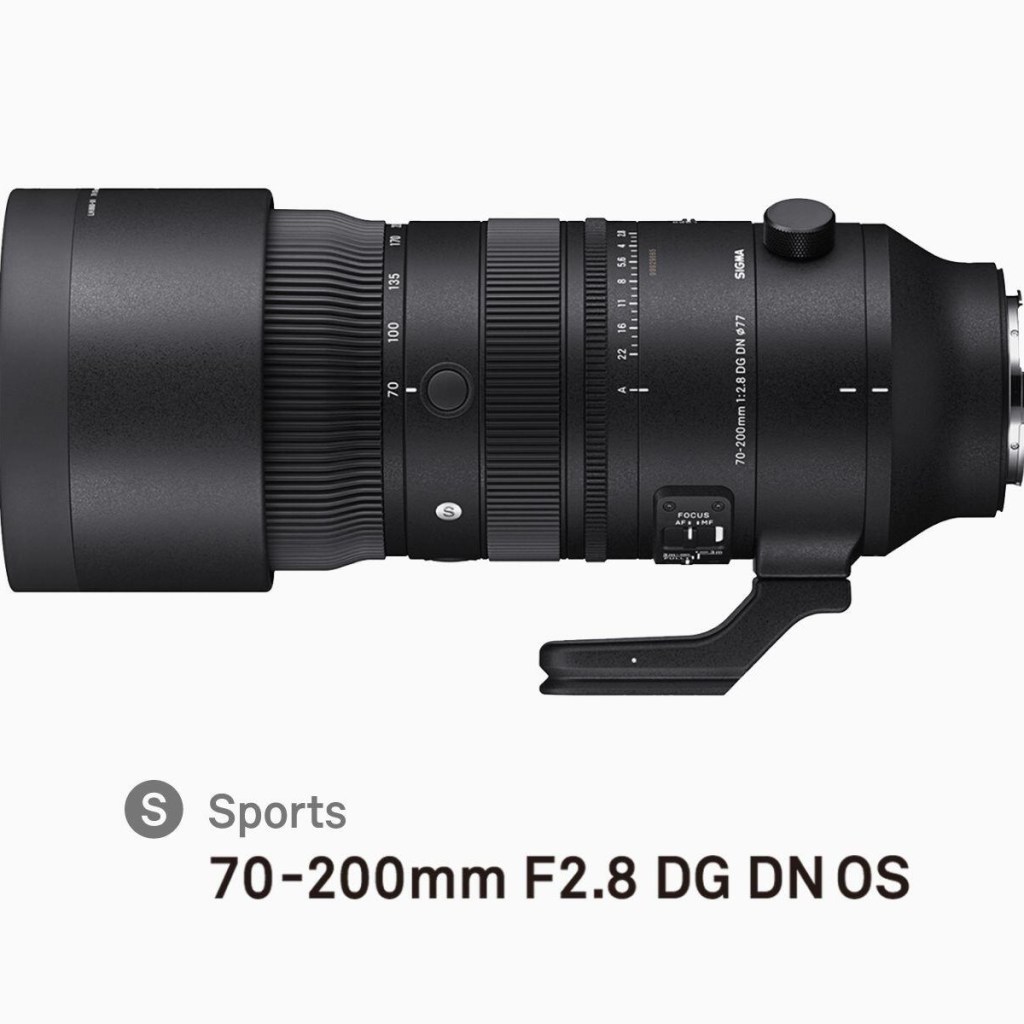
- USP: Constant F2.8 aperture throughout the zoom range, affordable
- Pros: Teleconverter-extendable (1.4x and 2x), in-built image stabilization, dust-splash resistant, inner zoom mechanism
- Cons: Heavy (1.345 kg)
- Usage: Weddings/events > Wildlife > Fashion (Outdoor) > Landscapes > Travel
Sample photos here
SIGMA 100-400mm F5-6.3 DG DN OS | Contemporary
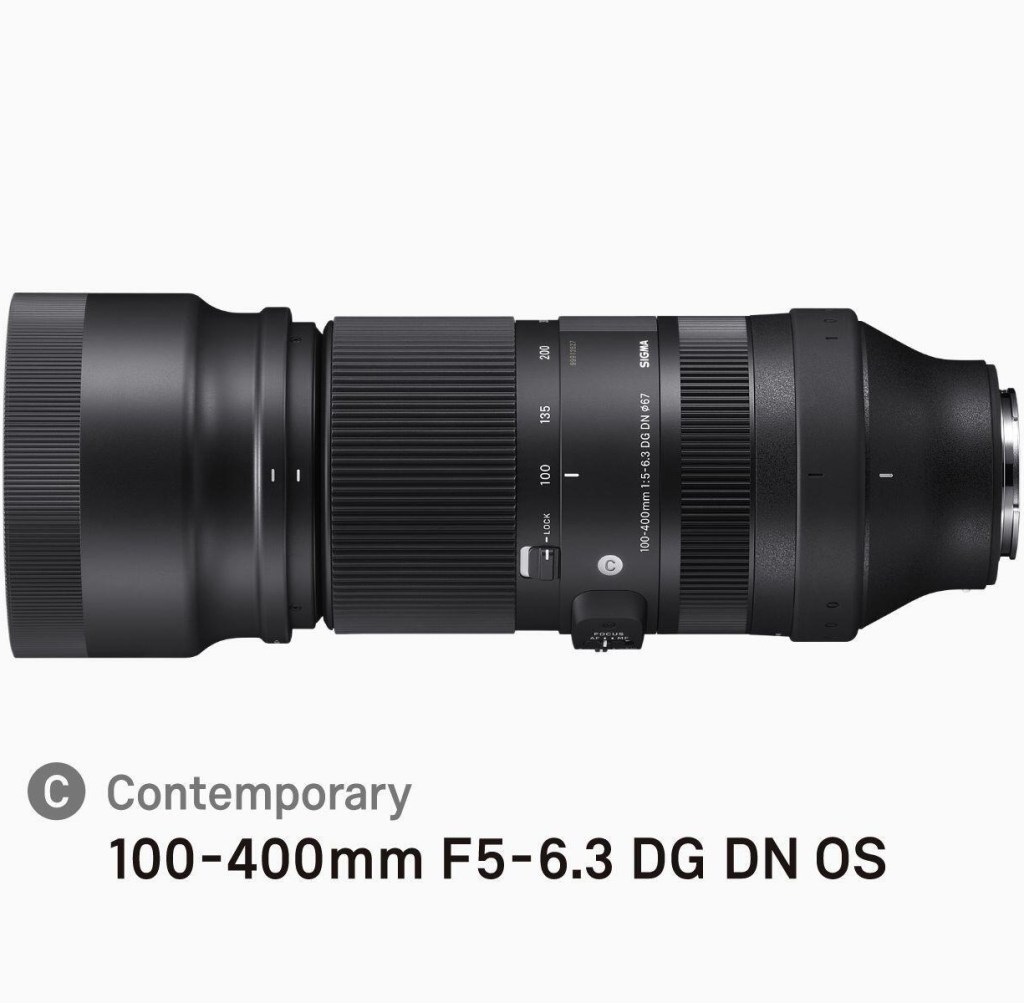
- USP: Longer focal length range (up to 400mm)
- Pros: in-built image stabilization, dust-splash resistant
- Cons: Heavy (1.135 kg)
- Usage: Wildlife > Landscapes > Travel
Sample photos here
LEICA APO-Vario-Elmarit-SL 90-280 f/2.8-4
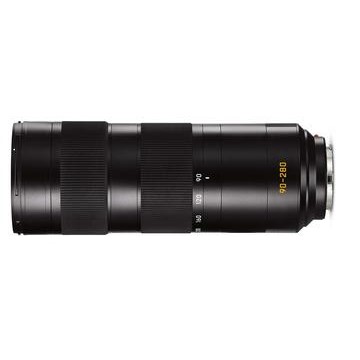
- USP: It is Leica, known for its best optics
- Pros: Exceptional image quality, focal length up to 280mm, inner zoom mechanism, in-built optical image stabilization (3.5 stops)
- Cons: Super expensive (INR 6.95 lacs), Very heavy (1.71 kg), variable aperture (F2.8-4)
- Usage: Wildlife > Landscape > Travel
LEICA Vario-Elmar-SL 100-400 f/5-6.3
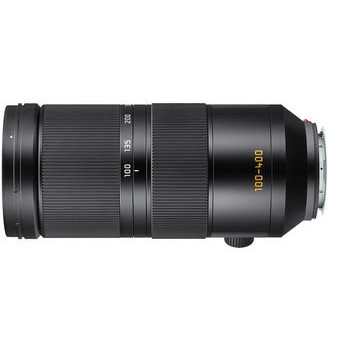
- USP: Best optics, longer focal length range (up to 400mm)
- Pros: Teleconverter-extendable (1.4x = 560mm), in-built optical image stabilization
- Cons: Heavy (1.482 kg), Expensive (INR 2.35 lacs), variably slower aperture (F5-6.3)
- Usage: Wildlife > Landscapes > Travel
Sample photos here
The Verdict
| Genre | Best Telephoto Lens | Why it is Best |
| Candid Wedding Photography | Sigma 70-200mm F2.8 DG DN OS | Sports | Most affordable; Constant F2.8 aperture; Lighter than Lumix 70-200mm F2.8 and Leica 90-280mm lenses. |
| Wildlife Photography | Leica Vario-Elmar-SL 100-400 f/5-6.3 | Longer focal length (up to 400mm) which can be further extended to 560mm (with 1.4x with teleconverter); Excellent optics; In-built optical image stabilization. |
| Travel Photography | Lumix S 28-200mm F4-7.1 Macro O.I.S. | Lightest (413g) and most compact design; focal length range as wide as 28mm to telephoto 200mm; Optical image stabilization for on-the-go shots. |
| Landscape Photography | Lumix S Pro 70-200mm F4 O.I.S. | Leica certified; Toughest for extreme weather (dust, splash and freeze resistant up to -10°C; Lighter (985g) and cheaper (INR 1.25 lacs) than 70-200mm F2.8 lenses, Focal length extendable up to 280mm and 400mm (with 1.4x and 2x teleconverter); In-built optical image stabilization (OIS) for handheld shots. |
| Fashion/Portraiture | Sigma 70-200mm F2.8 DG DN OS | Sports | Shallow depth of field and bokeh, Flattering focal lengths (85mm, 105mm) in one lens. |
| All Purposes | Sigma 70-200mm F2.8 DG DN OS | Sports | Can be used for candid wedding photography, indoor events, fashion, portraiture (thanks to F2.8 aperture), wildlife (extendable up to 280mm and 400mm with 1.4x and 2x teleconverter), landscapes. |
Discover more from Vivek Verma
Subscribe to get the latest posts sent to your email.
 Vivek Verma