
This book is an amazing compilation of learnings from the masters of street photography. While the book heavily relies on the quoted lines from several stalwarts of street photography, it nonetheless offers great learning as a whole when put together. From flow perspective, I found, some of the similar concepts and ideas are spread across different chapters.
What really impressed me about this book is that it does not attempt to be bible on street photography with each lessons cast in stone that you must follow. The author is humble and practical enough to admit:
“Don’t take everything in this book as “truth.” Rather, see the masters of photography as your personal guides. Take these lessons with a pinch of salt; pick and choose which lessons resonate with you, and throw away the rest.”
– Eric Kim
Eric rather emphasizes on knowing yourself better and finding your own personal vision and style in photography, with a dedicated chapter on why you must kill your masters some day (Chapter 28). One of the most valuable lessons that I derived from this book was following your heart. Being a full-time lawyer myself, I was also happy to get a validation that being an “amateur photographer” doesn’t mean that you are any less a photographer. It just means that you don’t make a living out of your photography (Chapter 54 and 96).
The book is pretty comprehensive and covers all that you need to learn to upscale your street photography game. I do not think, you need to read more books on street photography after this, if you bring these lessons into practice.
The book is available for free download here.
Out of the 100 lessons covered in this book, I would love to share my favorite five which I could very much relate to.

About the Author
In the vibrant realm of Berkeley, California, you’ll find Eric Kim, a photography guru on a quest. His mission? To passionately generate an abundance of “open-source” wisdom on photography, philosophy, and the pursuit of happiness throughout his brief stay on this celestial ball we call home.
No. of Pages: 283
Year of Publication: 2015
My Rating
1. Follow your Heart
Chapter 1, 4, 18, 21, 22, 34, 44, 49 and 76. Until late, I was not consciously following my heart or trusting my intuitions and gut feeling firmly to do street photography. This book helped me keep this lesson always and always first on my priority, and enjoy the process of creation itself. Following your heart and listening to your gut feeling helps your photography in many significant ways. Eric says- “the more you shoot with your heart, the more likely you are to strike an emotional chord with your viewer as well.” Further, it is also one of the best forms of self-therapy, a way to channel your emotions and discover yourself and your place in the world. Ultimately, what matters is how photography makes you feel. Shoot because you love it. We shouldn’t photograph what a subject looks like but what it feels like.
“My photography is not ‘brain photography’. I put my brain under the pillow when I shoot. I shoot with my heart and with my stomach.”
– Anders Petersen
However, the book also strikes a fine balance between heart and brain when it says – “Shoot from your gut when you’re out on the streets, but use your brain when you’re at home and editing (selecting) your shots.“
Later in this book, I also learnt why it is really important to connect with your subject first, than making a photograph. Photographs with expression and soul is more important than technical perfection (Andre Kertesz). (Chapter 94)
2. Don’t Shoot Fame or Likes but Yourself
Chapter 36, 51, 56, 75, 84, 92 and 95. If you are here to chase fame, followings and likes on social media, you will never grow to your fullest potential in photography. Achieving true excellence and originality (a style of your own) requires having a genuine passion to create great art work, no matter who likes or does not like your work. Ever since I finished this book, I have stopped caring about fame, rewards, accolades, social media likes and followings, and peacefully focusing on my work. I do not photograph for others but myself, and never try to be someone else.
“Photograph who you are!”
– Bruce Gilden
3. Have a Beginner Mindset
Chapter 17, 30, 54 and 69. This book made me realize how carefree I used to shoot when I had picked up camera for the first time many years back. I used to keenly look for beauty in the most mundane things. After reading this book, I have started to adopt that beginner mindset again and shoot with a completely open mind, free of any worries. I am trying to be as curious as I used to be in my initial years of photography.
“When we begin any sort of pursuit, hobby, or art in life, we are unburdened. We see the world as fresh and full of opportunities. We are excited, nimble, fresh, and open minded. We see possibilities, not obstructions.”
– Eric Kim
4. Embrace Failure and Rejections
Chapter 23, 39 and 79. I have come to embrace failure and rejections as part of learning, and do not expect my images to be successful all the time or people to say ‘Yes’ for a photograph. I know I can only control the efforts, not the results. However, I must always be prepared because luck only favors the prepared. So, in order to succeed more, I have to fail more.
“Street photography is 99.9% about failure.”
– Alex Webb
5. Create Context, Narrative and Intrigue
Chapter 12, 31, 32 and 88. This book explains very well how important it is to create context and compelling narrative in your photographs frame so that you never have to explain the back-story (akin to explaining a funny joke). At the same time, it should not be too obvious. You you should compose a frame with certain mystery and intrigue (an open photo), leaving it open for the viewer to interpret.
“It’s tempting to satisfy people’s curiosity as to what was “really going on” in a scene, but it always leaves a bad taste in my mouth. If there’s a mystery, the viewer should try to unravel it for him- or herself, subjectively, through intelligence, imagination and association. I want people to keep looking, not just move on to the next thing.”
– Richard Kalvar
I also learnt countless other tips for street photography from this book, including how to approach strangers for a photograph (Chapter 26, 27, 38 and 53) or how to get into the habit of clicking more often (Chapter 20, 67, 72, 85 and 89). A few notable ones which I would like to come back and revisit again are listed below as my personal book notes.
“If your photographs aren’t good enough, you’re not close enough.”
– Robert Capa
- Never take “rules” at face value and learn to challenge and contradict them. (Chapter 29)
- While we need a framework to keep us inspired and creative, we must at certain point break the framework after it becomes a cage, and question ourself. Unlearning and breaking the mold keeps us fresh and dynamic. (Chapter 37, 70 and 98)
- Projects can take even a decade to complete. So have patience and do not leave it too soon. The more depth you have with your project the more unique and meaningful image you will make. (Chapter 41, 50 and 93)
- Photographs are never “right” or “wrong”; they are simply our subjective view of reality. (Chapter 45)
- Even when you think you have got the photograph, try to take 25% more, to increase your chances of getting even better photograph.
- Do not edit (i.e., select) your photos for at least a week (or longer), so as to truly disassociate yourself emotionally from those photographs, and have a much more objective and unbiased view on your work. You are not your photos. Keep you ego aside and detach yourself. And when you edit, be a ruthless editor of your own work to always choose the best. (Chapter 6, 11 33, 82 and 83)
- Pay attention to the corners of your frame. Avoid cropping as much as possible. (Chapter 9 and 10)
- Put “creative constraints” on yourself and follow certain rules to make more intriguing and interesting photographs. (Chapter 19 and 90)
- Don’t label yourself (as street photographer or so). Photography is photography. Do what makes you feel happy without letting these labels hold you back from experimenting or doing something new and different. (Chapter 40 and 91)
- Less is more. Eliminate distractions from the frame to keep it simple and subject-wise strong. (Chapter 52)
- Get out of your comfort zone, to create difficult images, something you are not used to, something that you are afraid of. (Chapter 57 and 58)
- Don’t push yourself so hard that you no longer enjoy the process of creation, or forget to enjoy your life.
- A photo either works or it doesn’t work. If you have even an iota of doubt as to whether it works or not, then it doesn’t work. (Chapter 87).
- You are only as good as your last photo.

Bryan Peterson’s Understanding Street Photography: Book Review & Notes
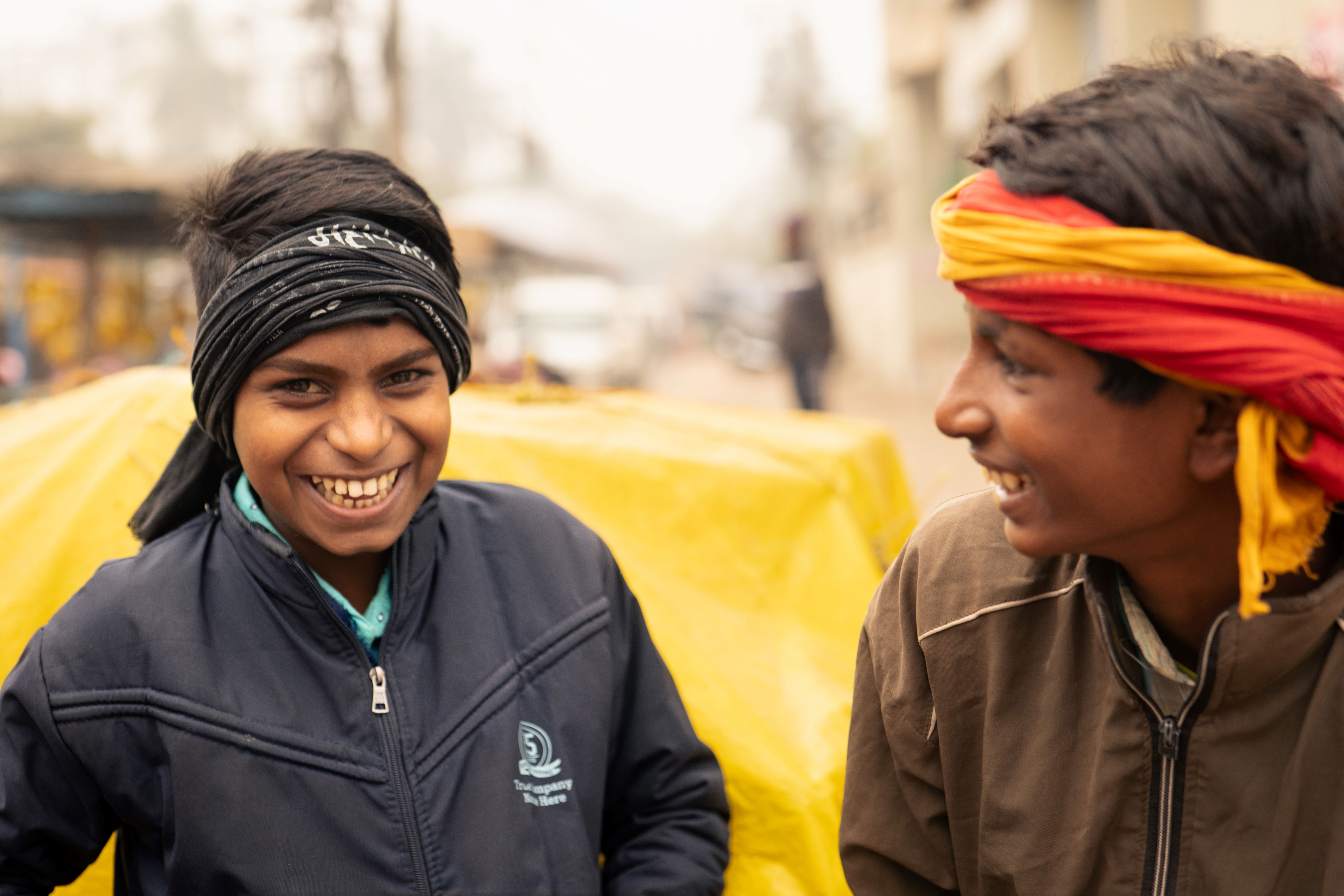
Street Photography Now: Book Review & Notes
My Street Photography Portfolio
Discover more from Vivek Verma
Subscribe to get the latest posts sent to your email.
 Vivek Verma