PATIENCE – Keep shooting and wait for a little longer than your mood dictates.
SERENDIPITY – Be quick with your camera (and settings) to capture serendipitous moment.
TRUST – Build the trust first by taking sincere interest in the subject. And when you have built the trust, stay a little longer (than you wish to) to shoot all frames and compositions.
Composition Aspect
Great composition can salvage poor light.
JUXTAPOSITION & MERGERS – Use juxtaposition to add humor or contrast.
ORIENTATION – Experiment with different orientations to give new meaning to the same image.
FRAME WITHIN FRAME – Be mindful of your surroundings and use them as a frame.
POINT OF VIEW – Use anything but eye level. – Look everywhere, even what is below and above you.
What to look for?
DAPPLED LIGHT – makes ordinary subject interesting.
COLOURS – one of the seven key elements of visual art.
SHADOWS & SHADOW POCKETS (BLACK GOLD) – Shadow pocket(s) keeps the image neat and distraction-free. – Shadow(s) brings interest to the otherwise boring part of the frame.
REFLECTIONS – Helps create symmetry. – Brings abstraction at times.
SILHOUETTE – Amplifies shape of the subject, which is one of the key elements of visual art.
ABSTRACTS – Use texture to create abstraction. – Don’t miss the macro shots in a look out for bigger picture.
Subject Selection
CONTRAST – Look for contrast not only as we know it, but also in subject selection, stationary and moving objects.
CONNECTIONS – Show connections with colour or various elements in the frame.
SCALE – Include human figure to convey relative size of the subject.
MOTION – Capture motions of the moving objects. – Try panning. – Create intentional blur.
GRAFFITI – Use graffiti only as part of your art.
Camera Settings
Use evaluative metering for dappled light.
Avoid Auto White Balance (AWB) and shoot in Daylight/Sunny white balance.
Use continuous/burst/multiple shots mode to capture fast actions and decisive moments.
For panning, use shutter speed between 1/60s and 1/15s depending on the speed of your subject.
For blurred brush stroke of motion, use shutter speed of 1/4s, and if not, try 1/15 or 1/8s.
Use long depth of field to capture reflections.
Book Response
The book has received positive reviews from readers on both Amazon and Goodreads. The book has an average rating of 4.20 out of 5 on Goodreads, based on 5 ratings. On Amazon, the book has a rating of 4.5 out of 5 stars, based on 76 customer ratings
Eye-opening Lesson
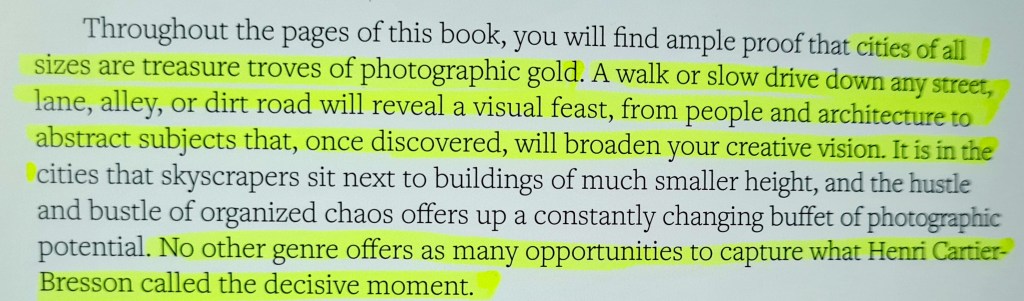
Before I read this book, I used to wait for my occasional travel plans to shoot landscapes or a paid assignment to ever pick my camera. This book just changed my outlook towards photography and convinced me how photographic gold can be found anywhere, and not just scenic locations and tourist sites. The result, I started seeing more than I ever saw around me, and shooting more often than ever before.
Your surrounding is a gold mine of photography opportunity.
Creativity and Failure
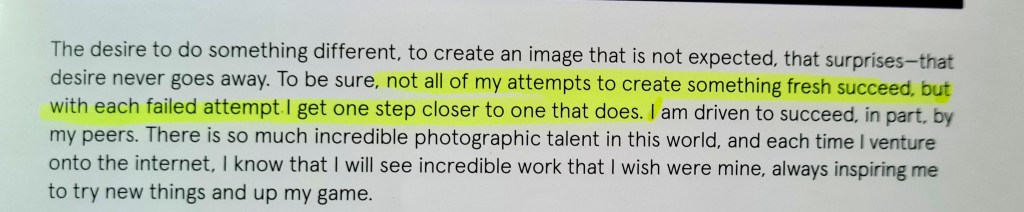
What I learnt: It is easy to fall in the trap of producing the kind of image people are liking (on social media or otherwise) or what is conveniently working for you for years. But we must strive to create something different, unexpected or surprising always. Failure, not one, but many, are bound to come along the way, but with each failure you will get one step closer to the successful image.
Create an image that is not expected, that surprises and embrace failure as part of learning.
Being Out with Camera
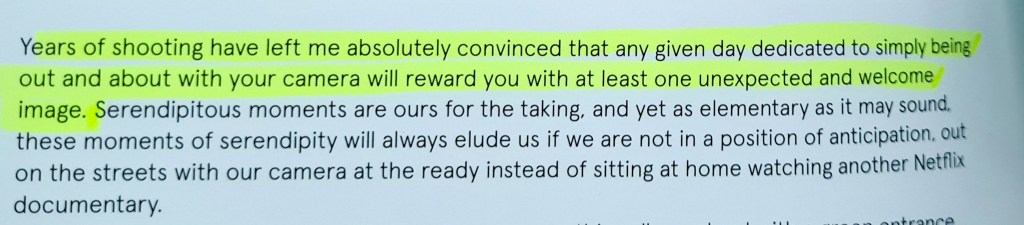
What I learnt: No matter what genre of photography you pursue, there is no escape from simply heading out with your camera and shoot, if you really want to master photography. I have observed that whenever I have headed out with the intention to keenly observe and shoot, I have always got at least one good image to keep.
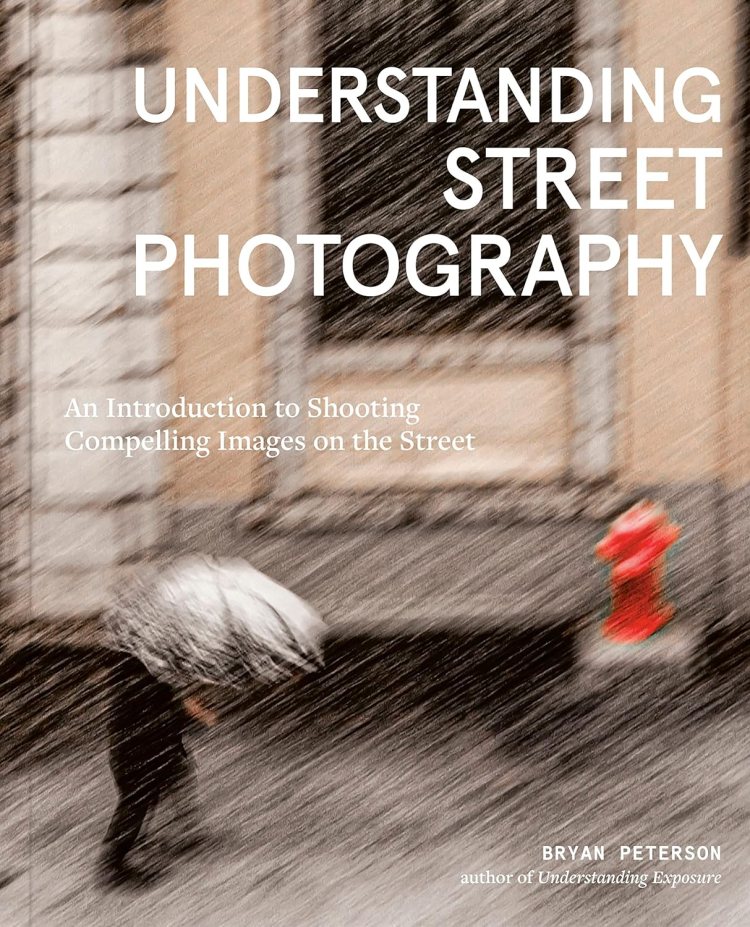
I had read “Understanding Flash Photography” from the same author and had found that book quite insightful. Based on my prior experience, I decided to pick this book as my first ever book on street photography, just to get a hang of what it is like to shoot on streets. Before I read this book, I never thought I will pursue street photography seriously, but this book definitely changed my whole perspective towards this genre. The introductory part of this book made me realize how much I have been enjoying this genre for a long time with random smartphone clicks and irresistible urge to capture anything beautiful that I come across.
The book is, thankfully, light on text and full of illustrative examples. No wonder, I could finish it in less than ten days. I must say the time and energy invested in reading this book was totally worth it, as I got to learn many simple things that I thought I knew, but had never implemented or paid adequate attention to, for stunning results. This is not a book on “how to do street photography” but a book on “what to watch out for when you do street photography”. The author gives you many examples from his photography work to elaborate and explain his ideas and concepts. Bryan’s photographs of India will make you believe that you need not go to any other country or big city to do street photography. You can find the photographic gold hidden all around you. On a side note, I was also happy to notice Indian street photographer, Mr. Vineet Vohra‘s name in this book for his amazing work. However, anyone already pursuing street photography as a genre for some time, may find many parts of this book familiar and already well known. Nonetheless, it is undoubtedly worthwhile to grab this book and see for yourself, what is still missing from your street photography work.
Discover more from Vivek Verma
Subscribe to get the latest posts sent to your email.


 Vivek Verma
Love it
Thank you! :)